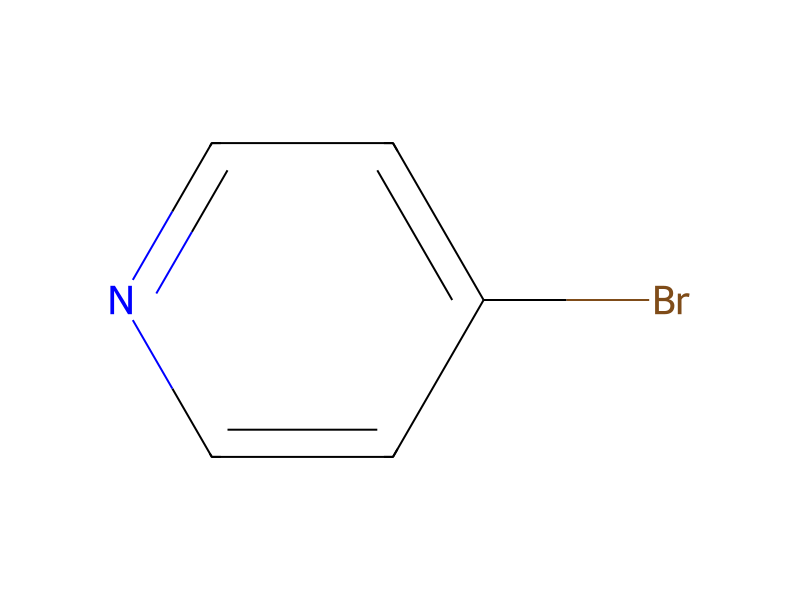
Aniline → N-phenylpyridin-4-amine
Reaction equation
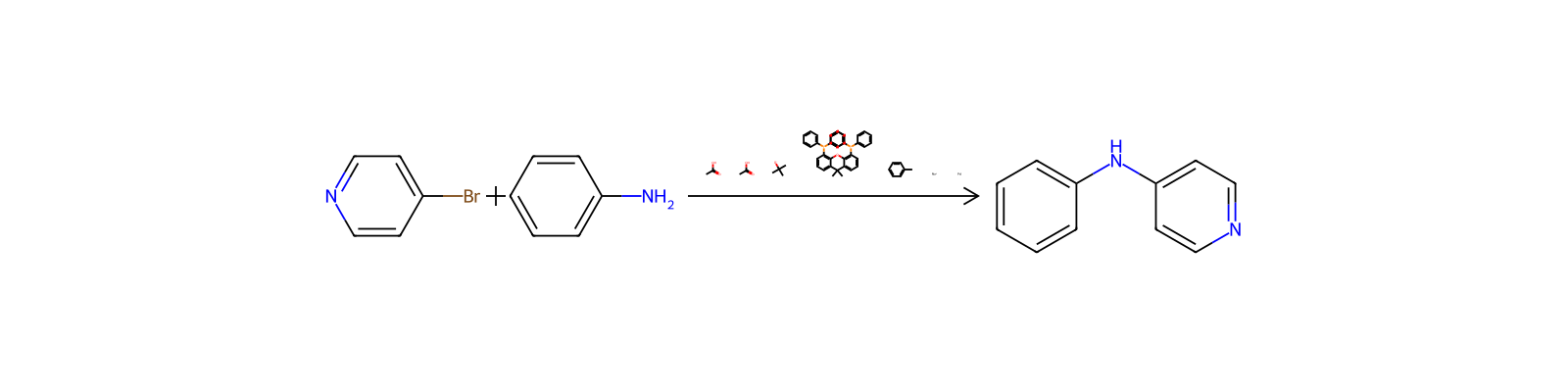
Brc1ccncc1.Nc1ccccc1>CC(=O)O.CC(=O)O.CC(C)(C)[O-].CC1(C)c2cccc(P(c3ccccc3)c3ccccc3)c2Oc2c(P(c3ccccc3)c3ccccc3)cccc21.Cc1ccccc1.[Na+].[Pd]>c1ccc(Nc2ccncc2)cc1Participants
7
Brc1ccncc1.Nc1ccccc1>CC(=O)O.CC(=O)O.CC(C)(C)[O-].CC1(C)c2cccc(P(c3ccccc3)c3ccccc3)c2Oc2c(P(c3ccccc3)c3ccccc3)cccc21.Cc1ccccc1.[Na+].[Pd]>c1ccc(Nc2ccncc2)cc1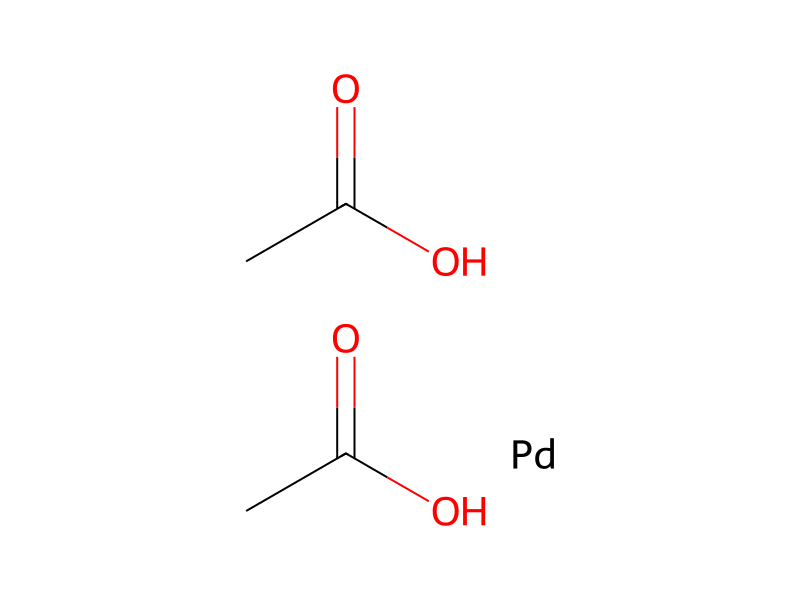
ANILINE (6.85 mL, 75.19 mmol) was added to 4-bromopyridine (9.9 g, 62.66 mmol), PALLADIUM(II) ACETATE (0.281 g, 1.25 mmol), XANTPHOS (2.175 g, 3.76 mmol) and SODIUM TERT-BUTOXIDE (8.43 g, 87.72 mmol) in toluene (500 mL) under nitrogen. The resulting mixture was stirred at 100 °C for 4 hours. The reaction mixture was evaporated to dryness and redissolved in EtOAc (200 mL), and washed sequentially with water (2 x 100 mL) and saturated brine (100 mL). The organic layer was dried over MgSO4, filtered and preadsorbed onto silica. The crude product was purified by flash silica chromatography, elution gradient 0 to 100% EtOAc in heptane. Pure fractions were evaporated to dryness to afford N-phenylpyridin-4-amine (2.160 g, 20.25 %) as a pale tan solid.
Loading…