Reaction equation

Clc1ccccn1.Nc1ncco1>C1COCCO1.CC(=O)O.CC(=O)O.CC1(C)c2cccc(P(c3ccccc3)c3ccccc3)c2Oc2c(P(c3ccccc3)c3ccccc3)cccc21.O=C([O-])[O-].[Cs+].[Cs+].[Pd]>c1ccc(Nc2ncco2)nc1Participants
Reactant 2


Product 1

Reagents, catalysts & solvents 4



Conditions
- Temperature
- 100 °C
Procedure
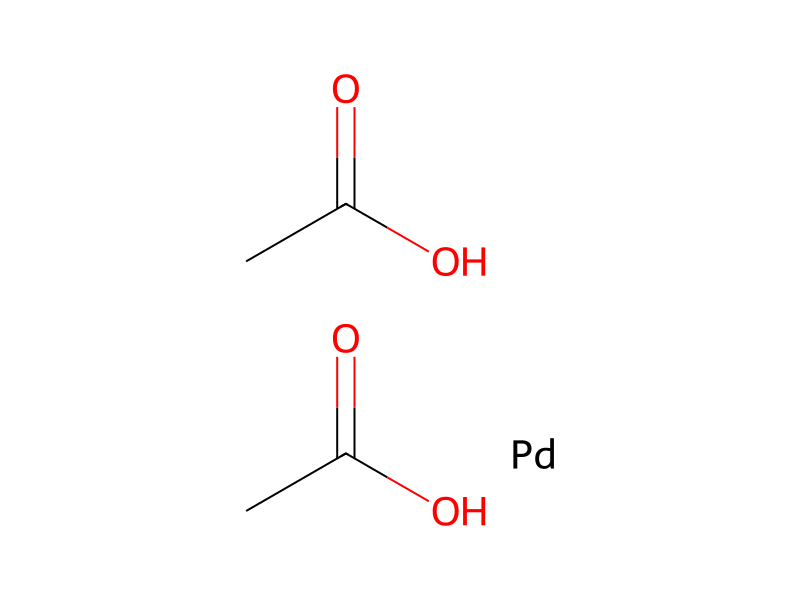
Palladium(II) acetate (4.49 mg, 0.02 mmol) and 9,9-dimethyl-4,5-bis(diphenylphosphino)xanthene (0.017 g, 0.03 mmol) were mixed together in a reaction vessel and evacuated and purged with nitrogen 3 times. Dioxane (1 mL) was added and the resulting mixture was heated to to 50°C for 30 minutes. oxazol-2-amine (0.101 g, 1.20 mmol) together with 2-chloropyridine (0.094 mL, 1.00 mmol) and cesium carbonate (0.456 g, 1.40 mmol) were placed in a second vessel, evacuated and purged with nitrogen 3 times and dioxane (3 mL) was added. The catalyst solution was added and the resulting mixture heated at 100 °C for 16 hours. **No oxazol-2-amine present in proton NMR of crude reaction mixture.** The starting material is decomposing under the reaction conditions, could be the route of the very low productivity in the C-N couplings using these substrates. Only chloropyridine observed in the proton NMR and LCMS of the crude reaction mixture. Conclusion: Experiment abandoned, none of the desired product isolated. .
Sources & evidence
- ORD record
- ord-cdacdc2f62e2433897c344ea48603986
- Source dataset
- 750 AstraZeneca ELN dataset
- Original link
- View source
Linked notes
Loading…