Reaction equation
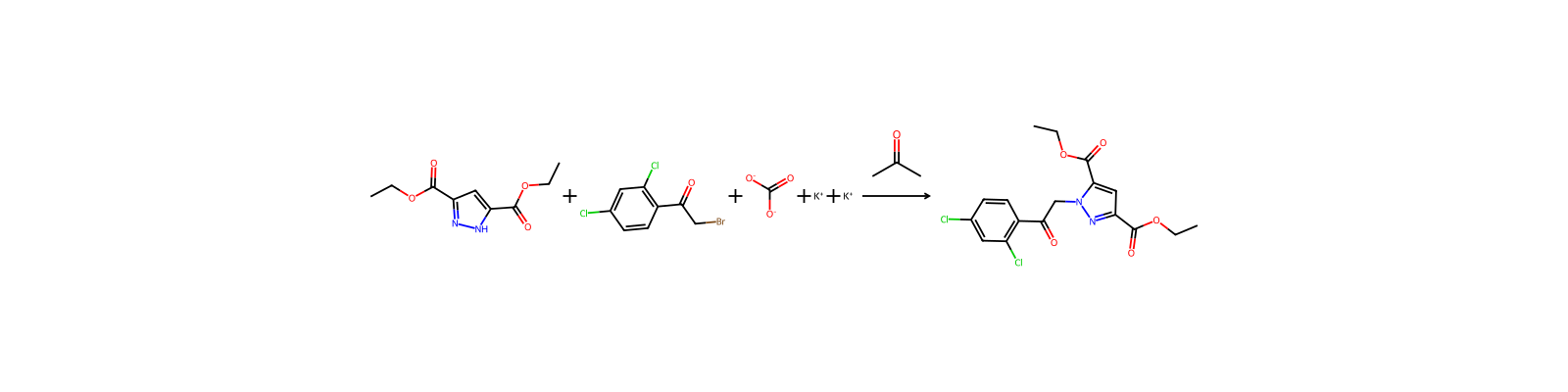
[NH:1]1[C:5]([C:6]([O:8][CH2:9][CH3:10])=[O:7])=[CH:4][C:3]([C:11]([O:13][CH2:14][CH3:15])=[O:12])=[N:2]1.[CH:16]1[C:21]([Cl:22])=[CH:20][C:19]([Cl:23])=[C:18]([C:24]([CH2:26]Br)=[O:25])[CH:17]=1.C(=O)([O-])[O-].[K+].[K+]>CC(C)=O>[Cl:23][C:19]1[CH:20]=[C:21]([Cl:22])[CH:16]=[CH:17][C:18]=1[C:24](=[O:25])[CH2:26][N:1]1[C:5]([C:6]([O:8][CH2:9][CH3:10])=[O:7])=[CH:4][C:3]([C:11]([O:13][CH2:14][CH3:15])=[O:12])=[N:2]1Participants
5




Procedure
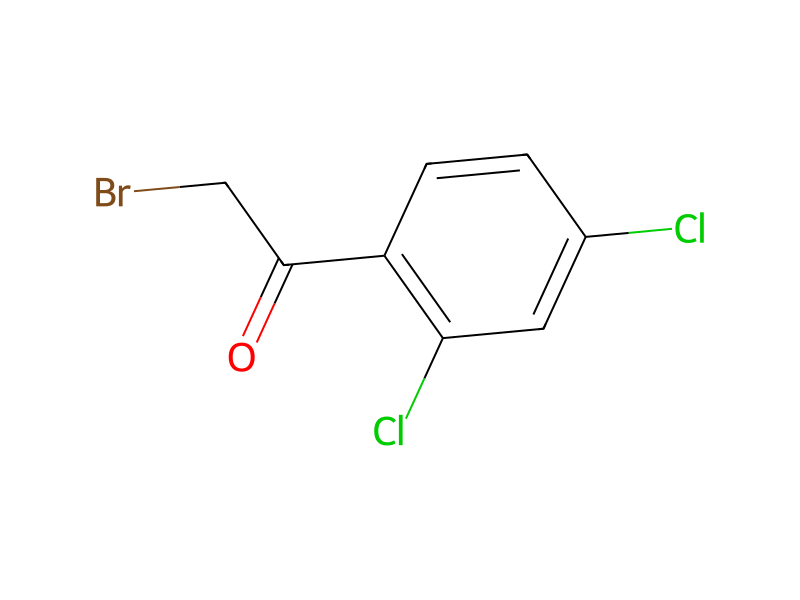
5 g (23.6 mmol) of diethyl 1H-pyrazole-3,5-dicarboxylate were dissolved in 100 ml of acetone, and 6.3 g (23.6 mmol) of 2-bromo-2,4-dichloroacetophenone and 3.6 g (26 mmol) of potassium carbonate were added. The mixture was stirred at RT for 12 h. The reaction mixture was concentrated and the residue was taken up in water and dichloromethane. The organic phase was washed with saturated aqueous sodium chloride solution, dried over magnesium sulfate and concentrated on a rotary evaporator. The residue was triturated with diethyl ether, and the solid was filtered off with suction. This gave 9.48 g (94% of theory) of the product as a solid.
Workup
- concentrationThe reaction mixture was concentrated
- washThe organic phase was washed with saturated aqueous sodium chloride solution
- dry with materialdried over magnesium sulfate
- concentrationconcentrated on a rotary evaporator
- customThe residue was triturated with diethyl ether
- filtrationthe solid was filtered off with suction
Sources & evidence
- ORD record
- ord-4b0855f0058e4b348a1a896657cb4178
- Source dataset
- uspto-grants-2016_09
- Patent number
- US09434731B2
Linked notes
Loading…