Methyl chloroformate → Methyl (6-hydroxyhexyl)carbamate
Reaction equation

[NH2:1][CH2:2][CH2:3][CH2:4][CH2:5][CH2:6][CH2:7][OH:8].C([O-])([O-])=O.[K+].[K+].[CH3:15][O:16][C:17](Cl)=[O:18]>O>[CH3:15][O:16][C:17]([NH:1][CH2:2][CH2:3][CH2:4][CH2:5][CH2:6][CH2:7][OH:8])=[O:18]Participants
5
Reactant 3
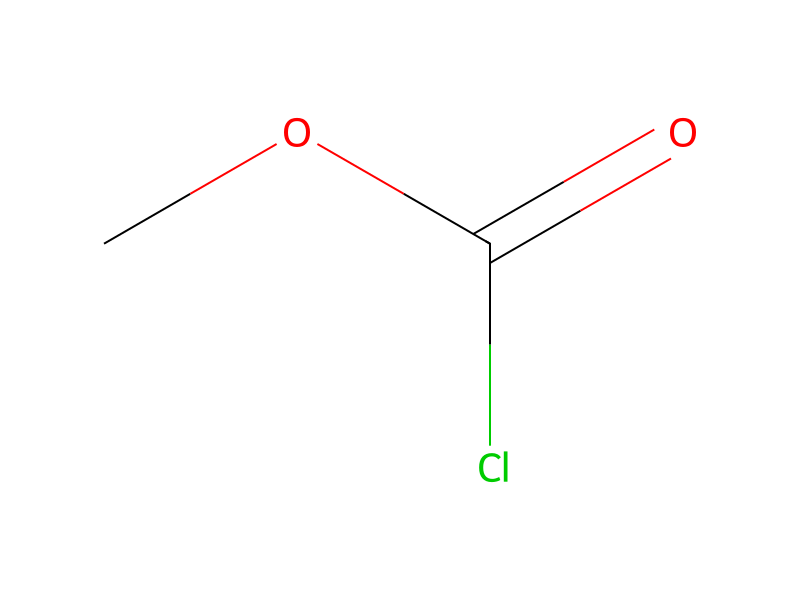


Product 1

Reagents, catalysts & solvents 1

Procedure
To a stirred solution of 6-aminohexanol in 50 ml of water basified with 11 g of K2CO3, was added 4.03 g of methylchloroformate at room temperature. After one night the resulting aqueous solution was extracted with 3×50 ml of dichloromethane. The organic phases were combined, evaporated to dryness and the residue was filtered over silica gel. This furnished 1.36 g (yield 91%) of N-methoxycarbonyl-6-aminohexanol as a white solid. Then, to a solution of N-methoxycarbonyl-6-aminohexanol (200 mg) in dichloromethane (5 ml) was added 361 mg of triphenylphosphine and 832 mg of tetrabromomethane.