HomeMCPWorkbenchSkills
HomeWorkbenchNotificationsMe
llms.txt · MCP GuidePrivacy Policy · Terms of Service · Supportv1.8.0
  1. Home
  2. /Reaction

Sodium Carbonate → 1H-Pyrrolo[2,3-B]pyridine-3-ethanol, 5-chloro-2-(triethylsilyl)-

HRID 58652
Notes
Print preview

Reaction equation

HRID 58652 reaction equation
[Cl:1][C:2]1[CH:3]=[C:4](I)[C:5]([NH2:8])=[N:6][CH:7]=1.[CH2:10]([Si:12]([CH2:20][CH3:21])([CH2:18][CH3:19])[C:13]#[C:14][CH2:15][CH2:16][OH:17])[CH3:11].[Cl-].[Li+].C(=O)([O-])[O-].[Na+].[Na+]>CN(C=O)C.ClCCl.C1(P(C2C=CC=CC=2)[C-]2C=CC=C2)C=CC=CC=1.[C-]1(P(C2C=CC=CC=2)C2C=CC=CC=2)C=CC=C1.[Fe+2]>[Cl:1][C:2]1[CH:3]=[C:4]2[C:14]([CH2:15][CH2:16][OH:17])=[C:13]([Si:12]([CH2:20][CH3:21])([CH2:10][CH3:11])[CH2:18][CH3:19])[NH:8][C:5]2=[N:6][CH:7]=1
ParticipantsProcedureWorkupSources & evidenceReaction notes

Participants

7

Reactant 4

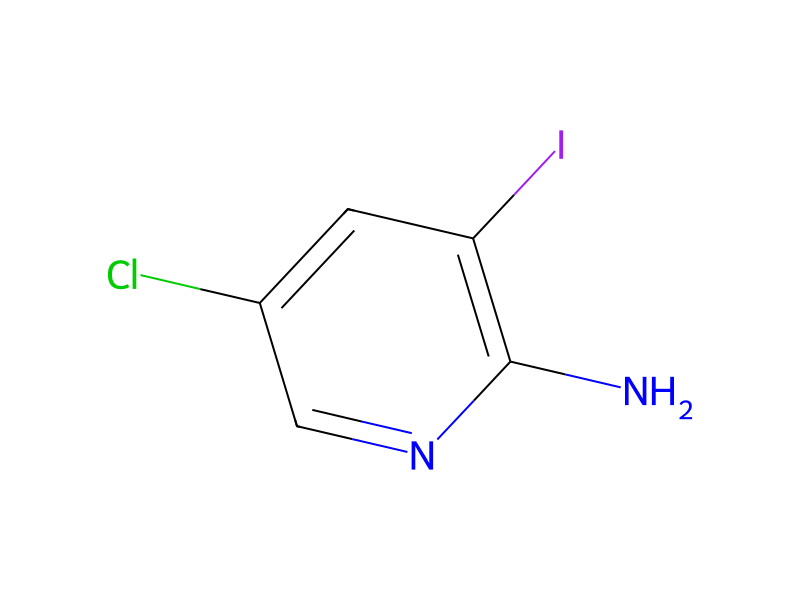
HCID 10340Sodium CarbonateHCID 433294Lithium ChlorideHCID 27606944-(Triethylsilyl)-3-butyn-1-olHCID 110760102-Amino-5-chloro-3-iodopyridine

Product 1

HCID 110560231H-Pyrrolo[2,3-B]pyridine-3-ethanol, 5-chloro-2-(triethylsilyl)-Yield 88%

Reagents, catalysts & solvents 2

HCID 178478483
HCID 178478483, compound
Catalyst
HCID 6228DimethylformamideSolvent

Procedure

A mixture of 5-chloro-3-iodopyridin-2-amine (2 g; 7.86 mmol), 4-(triethylsilyl)but-3-yn-1-ol (4.35 g; 23.58 mmol); (1,1′-bis(diphenylphosphino)ferrocene)-dichloromethane (0.321 g; 0.393 mmol), lithium chloride (0.333 g; 7.86 mmol) and sodium carbonate (1.67 g; 15.72 mmol) in DMF (15 mL) was heated at 100° C. for approximately 20 hours. After cooling, the mixture was concentrated under reduced pressure and the residue was partitioned between brine and ethyl acetate. After separation the organic layer was evaporated and the residue was purified by flash chromatography on silica gel (eluent 7 to 80% of ethyl acetate in heptane) to give 2.15 g (88%) of 2-(5-chloro-2-(triethylsilyl)-1H-pyrrolo[2,3-b]pyridin-3-yl)ethanol as a white solid.

Workup

  1. temperatureAfter cooling
  2. concentrationthe mixture was concentrated under reduced pressure
  3. customthe residue was partitioned between brine and ethyl acetate
  4. customAfter separation the organic layer
  5. customwas evaporated
  6. customthe residue was purified by flash chromatography on silica gel (eluent 7 to 80% of ethyl acetate in heptane)

Sources & evidence

ORD record
ord-1d5c56642e154c91964c6bf17170ed4f
Source dataset
uspto-grants-2016_09
DOI
10.6084/m9.figshare.5104873.v1
Patent number
US09434722B2

Reaction notes

Loading…

On this pageParticipantsProcedureWorkupSources & evidenceReaction notes