Reaction equation

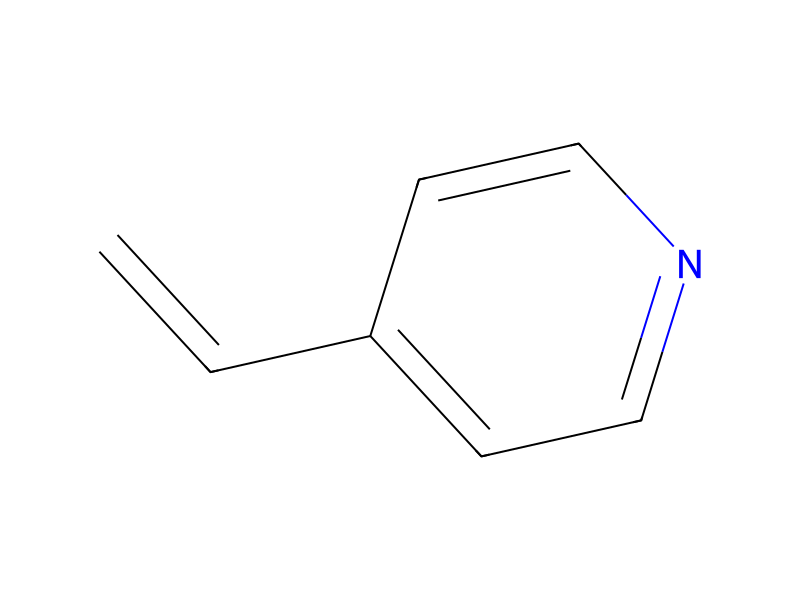
I[C:2]1[CH:7]=[CH:6][C:5]([N+:8]([O-:10])=[O:9])=[CH:4][CH:3]=1.[CH:11]([C:13]1[CH:18]=[CH:17][N:16]=[CH:15][CH:14]=1)=[CH2:12]>CC([O-])=O.CC([O-])=O.[Pd+2].CC#N>[N+:8]([C:5]1[CH:6]=[CH:7][C:2]([CH:12]=[CH:11][C:13]2[CH:18]=[CH:17][N:16]=[CH:15][CH:14]=2)=[CH:3][CH:4]=1)([O-:10])=[O:9]Participants
5
Reactant 2

Product 1

Reagents, catalysts & solvents 2


Conditions
- Temperature
- 100 °C
Procedure
To a CH3CN solution of 1-iodo-4-nitrobenzene (498 mg, 2 mmol) and 4-vinylpyridine (262 mg, 2.5 mmol) was added TEA (350 μL, 2.5 mmol) and Pd(OAc)2 (0.45 mg, 0.2 mmol). The mixture was heated to 100° C. for 48 hr in a capped Pyrex tube. It was then cooled to room temperature, quenched with 1N HCl (20 mL) and concentrated under reduced pressure. The mixture was filtered and the solid was taken up in EtOAc (30 mL) and washed with 1N NaOH (30 mL). The organic layer was concentrated, dried over Na2SO4 and concentrated to give 4-[2-(4-nitro-phenyl)-vinyl]-pyridine as yellow solid (160 mg, 37%).
Workup
- temperatureIt was then cooled to room temperature
- customquenched with 1N HCl (20 mL)
- concentrationconcentrated under reduced pressure
- filtrationThe mixture was filtered
- washwashed with 1N NaOH (30 mL)
- concentrationThe organic layer was concentrated
- dry with materialdried over Na2SO4
- concentrationconcentrated
Sources & evidence
- ORD record
- ord-f652f07d23a947f28cac53962537cb21
- Source dataset
- uspto-grants-2016_01
- Patent number
- US09227954B2
Linked notes
Loading…