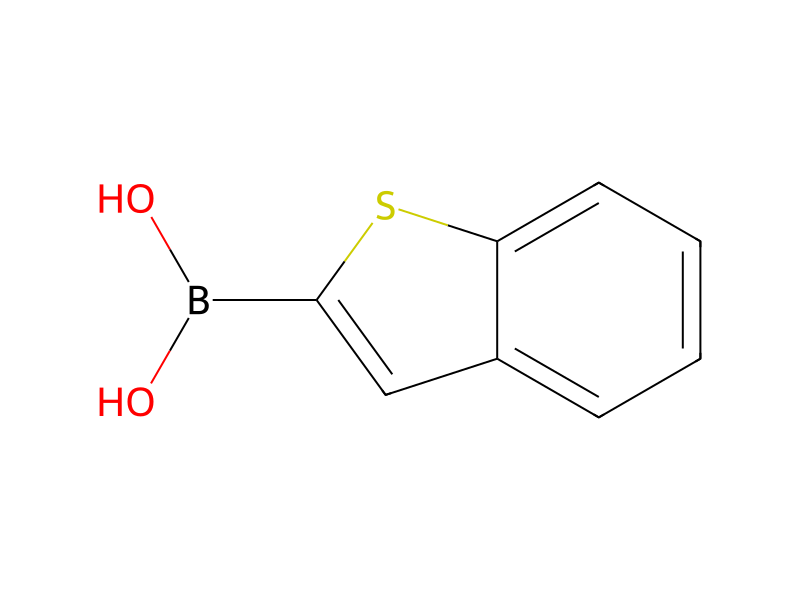
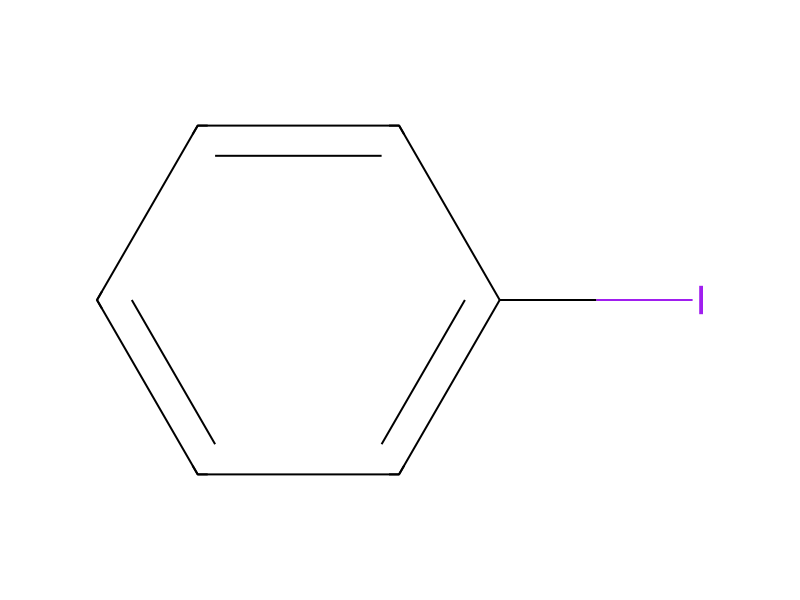
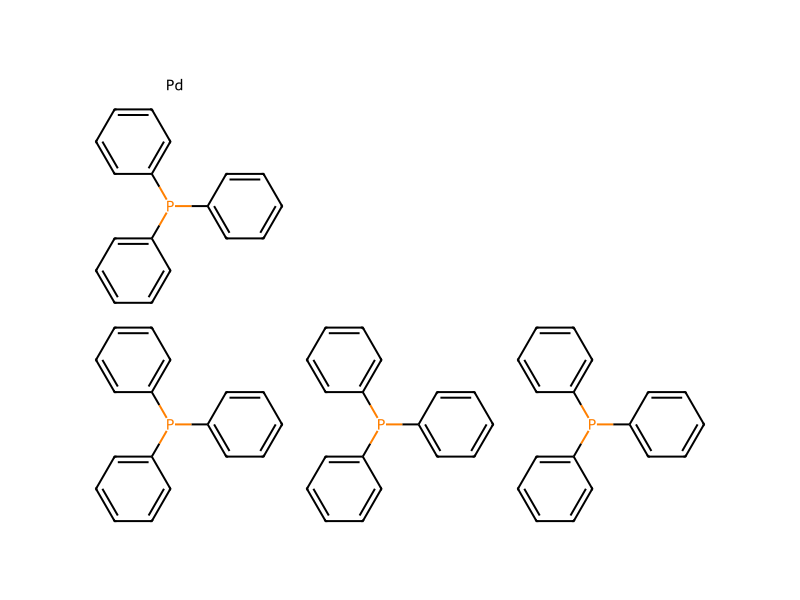
[S:1]1[C:5]2[CH:6]=[CH:7][CH:8]=[CH:9][C:4]=2[CH:3]=[C:2]1B(O)O.I[C:14]1[CH:19]=[CH:18][CH:17]=[CH:16][CH:15]=1.C(=O)([O-])[O-].[Na+].[Na+]>C(O)C.C1(C)C=CC=CC=1.O.C1(P(C2C=CC=CC=2)C2C=CC=CC=2)C=CC=CC=1.C1(P(C2C=CC=CC=2)C2C=CC=CC=2)C=CC=CC=1.C1(P(C2C=CC=CC=2)C2C=CC=CC=2)C=CC=CC=1.C1(P(C2C=CC=CC=2)C2C=CC=CC=2)C=CC=CC=1.[Pd]>[C:14]1([C:3]2[C:4]3[CH:9]=[CH:8][CH:7]=[CH:6][C:5]=3[S:1][CH:2]=2)[CH:19]=[CH:18][CH:17]=[CH:16][CH:15]=1A solution of benzothiopheneboronic acid (1 g, 5.61 mmol) in ethanol (23 mL) was added to a mixture of iodobenzene (560 μL, 5 mmol), palladium tetrakis(triphenylphosphine) (460 mg, 0.4 mmol) and sodium carbonate (2.38 g, 22.4 mmol) in a mixture of toluene (15 mL) and water (15 mL). The reaction mixture was refluxed for 6 hours and then concentrated in vacuo. The residue was partitioned between ethyl acetate (30 mL) and water (10 mL). The biphasic mixture was acidified with an aqueous solution of hydrochloric acid 1N until pH 2. The aqueous layer was extracted with ethyl acetate (2×20 mL) and the organic layer was washed with water (10 mL), brine (10 mL), dried over sodium sulfate, filtered and evaporated to dryness. The residue was purified by flash chromatography on silica gel (cyclohexane) to afford the desired product (3a) as a yellow solid (1.18 g, 5.61 mmol, 100%).