HomeMCPWorkbenchSkills
HomeWorkbenchNotificationsMe
llms.txt · MCP GuidePrivacy Policy · Terms of Service · Supportv1.8.3
  1. Home
  2. /Reaction

Toluene → 1-(3-cyano-benzoyl)-2-pyridin-3-yl-1H-indole-5-carbonitrile

HRID 593522
Print

Reaction equation

HRID 593522 reaction equation
[N:1]1[CH:6]=[CH:5][CH:4]=[C:3]([C:7]2[NH:8][C:9]3[C:14]([CH:15]=2)=[CH:13][C:12]([C:16]#[N:17])=[CH:11][CH:10]=3)[CH:2]=1.C[Si]([N-][Si](C)(C)C)(C)C.[K+].C1(C)C=CC=CC=1.[C:35]([C:37]1[CH:38]=[C:39]([CH:43]=[CH:44][CH:45]=1)[C:40](Cl)=[O:41])#[N:36]>C1COCC1>[C:35]([C:37]1[CH:38]=[C:39]([CH:43]=[CH:44][CH:45]=1)[C:40]([N:8]1[C:9]2[C:14](=[CH:13][C:12]([C:16]#[N:17])=[CH:11][CH:10]=2)[CH:15]=[C:7]1[C:3]1[CH:2]=[N:1][CH:6]=[CH:5][CH:4]=1)=[O:41])#[N:36]
ParticipantsProcedureWorkupSources & evidenceReaction notes

Participants

6

Reactant 4

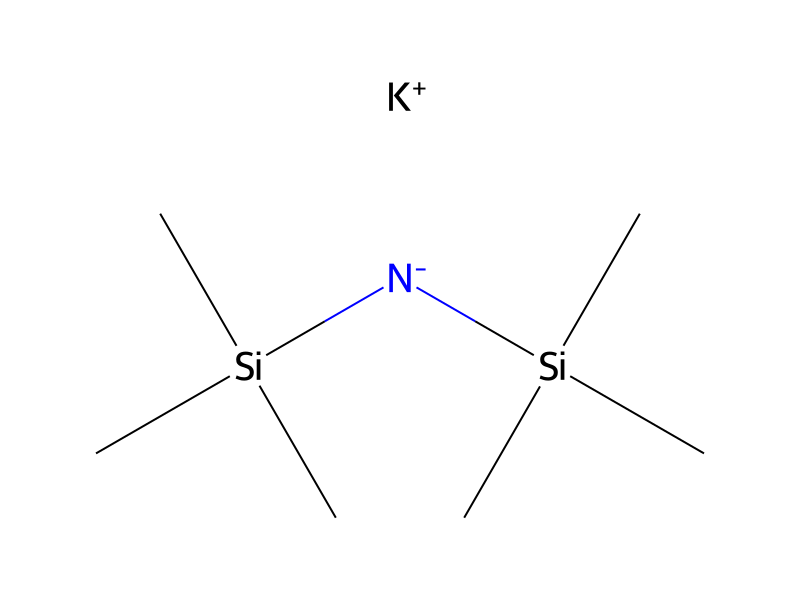
HCID 1140TolueneHCID 3084833-Cyanobenzoyl chlorideHCID 3251421Potassium bis(trimethylsilyl)amideHCID 445541352-pyridin-3-yl-1H-indole-5-carbonitrile

Product 1

HCID 582156941-(3-cyano-benzoyl)-2-pyridin-3-yl-1H-indole-5-carbonitrile

Reagents, catalysts & solvents 1

HCID 8028
Tetrahydrofuran
Solvent

Procedure

To a solution of 2-pyridin-3-yl-1H-indole-5-carbonitrile (Example 8, 210 mg, 0.96 mmol) in THF (20 mL) at room temperature is added 0.5 M KHMDS in toluene (4.10 mL, 2.05 mmol). After 30 min, 3-cyanobenzoyl chloride (510 mg, 3.08 mmol) is added. The mixture is stirred under N2 overnight. The reaction is quenched with aqueous ammonium chloride and the volatiles are removed in vacuo. The residue is redissolved in dichloromethane and poured into saturated aqueous sodium bicarbonate (100 mL). Extraction with dichloromethane, drying over sodium sulfate followed by concentration affords a residue which is purified on an XBridge RP18 using a 0.1% ammonium hydroxide in acetonitrile gradient. Further purification by silica gel flash chromatography (heptane-ethyl acetate, 3:2 to 2:3) affords 1-(3-cyano-benzoyl)-2-pyridin-3-yl-1H-indole-5-carbonitrile. 1H NMR (400 MHz, DMSO-d6) δ ppm 7.20 (d, J=0.5 Hz, 1H), 7.22-7.26 (m, 1H), 7.55 (t, J=7.8 Hz, 1H), 7.73-7.79 (m, 2H), 7.84 (d, 1H), 7.92-7.98 (m, 2H), 8.11 (t, J=1.5 Hz, 1H), 8.29-8.33 (m, 1H), 8.39 (dd, J=4.8, 1.5 Hz, 1H), 8.60 (dd, J=2.3, 0.8 Hz, 1H). HRMS (ESI) m/z 349.1106 [(M+H)+ Calcd for C22H13N4O: 349.1089].


Workup

  1. customThe reaction is quenched with aqueous ammonium chloride
  2. customthe volatiles are removed in vacuo
  3. dissolutionThe residue is redissolved in dichloromethane
  4. additionpoured into saturated aqueous sodium bicarbonate (100 mL)
  5. extractionExtraction with dichloromethane
  6. dry with materialdrying over sodium sulfate
  7. concentrationfollowed by concentration
  8. customaffords a residue which
  9. customis purified on an XBridge
  10. customFurther purification by silica gel flash chromatography (heptane-ethyl acetate, 3:2 to 2:3)

Sources & evidence

ORD record
ord-f042297fd86c4107a25e7381223dbdde
Source dataset
uspto-grants-2016_01
DOI
10.6084/m9.figshare.5104873.v1
Patent number
US09242963B2

Reaction notes

On this pageParticipantsProcedureWorkupSources & evidenceReaction notes