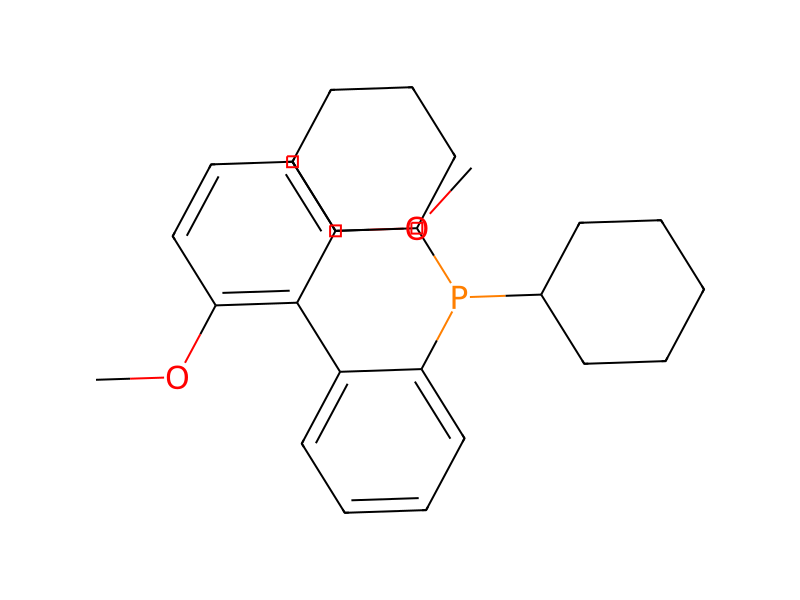
[NH2:1][C:2]1[CH:3]=[N:4][CH:5]=[C:6](Br)[CH:7]=1.[CH3:9][N:10]1[C:18]2[C:13](=[CH:14][CH:15]=[CH:16][CH:17]=2)[CH:12]=[C:11]1B(O)O.COC1C=CC=C(OC)C=1C1C=CC=CC=1P(C1CCCCC1)C1CCCCC1.P([O-])([O-])([O-])=O.[K+].[K+].[K+]>C1C=CC(/C=C/C(/C=C/C2C=CC=CC=2)=O)=CC=1.C1C=CC(/C=C/C(/C=C/C2C=CC=CC=2)=O)=CC=1.C1C=CC(/C=C/C(/C=C/C2C=CC=CC=2)=O)=CC=1.[Pd].[Pd].C1(C)C=CC=CC=1>[NH2:1][C:2]1[CH:7]=[C:6]([C:11]2[N:10]([CH3:9])[C:18]3[C:13]([CH:12]=2)=[CH:14][CH:15]=[CH:16][CH:17]=3)[CH:5]=[N:4][CH:3]=1A flask is charged with 3-amino-5-bromopyridine (0.173 g, 0.950 mmol), N-methyl-indole boronic acid (0.262 g, 1.425 mmol), s-Phos (0.030 g, 0.071 mmol), finely crushed potassium phosphate (0.407 g, 1.900 mmol) and toluene (4 mL). After degassing for 30 min, Pd2dba3 (0.018 g, 0.019 mmol) is added, the flask is flushed with nitrogen and the mixture is heated to 85° C. After 3 h, the mixture is allowed to cool to r.t., diluted with ethyl acetate and filtered through a plug of silica gel (elution with ethyl acetate). The residue is purified by silica gel flash chromatography (heptane-ethyl acetate, 3:7 to 0:1) to give 2-(5-amino-pyridin-3-yl)-1-methyl-1H-indole as an off-white powder. 1H NMR (400 MHz, DMSO-d6) δ ppm 3.74 (s, 3H), 5.49 (s, 2H), 6.56 (s, 1H), 7.05-7.09 (m, 1H), 7.09-7.10 (m, 1H), 7.17-7.21 (m, 1H), 7.49 (d, J=7.6 Hz, 1H), 7.57 (d, J=7.6 Hz, 1H), 7.94 (d, J=2.0 Hz, 1H), 7.99 (d, J=2.5 Hz, 1H). MS (ESI) m/z 224 (M+H)+.
Loading…