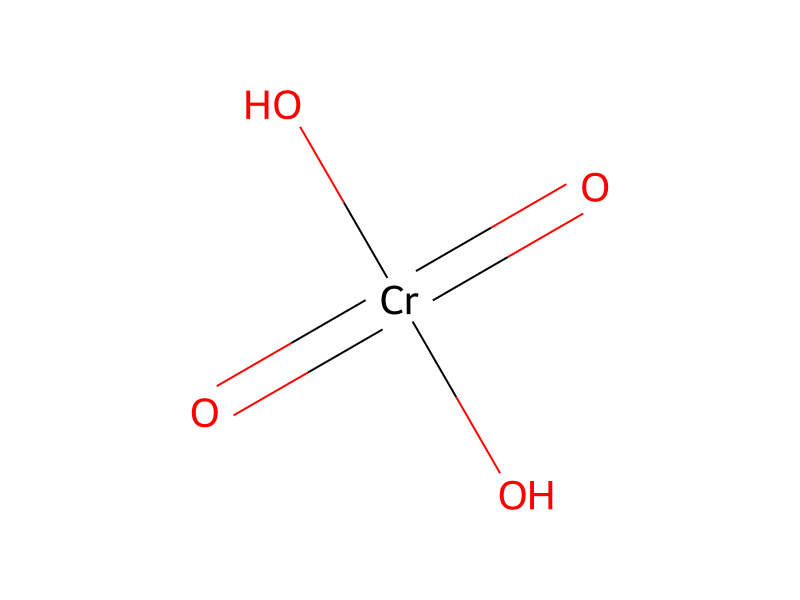
[S:1]1[CH:5]=[CH:4][CH:3]=[C:2]1[CH2:6][C:7]([NH:9][CH:10]1[C:36](=[O:37])[N:12]2[CH:13]([C:20]([O:22][CH:23]([C:30]3[CH:35]=[CH:34][CH:33]=[CH:32][CH:31]=3)[C:24]3[CH:29]=[CH:28][CH:27]=[CH:26][CH:25]=3)=[O:21])[C:14]([CH:17]([OH:19])[CH3:18])=[CH:15][S:16][C@H:11]12)=[O:8].CC(C)=O.[Cr](O)(O)(=O)=O>C(O)(C)C>[S:1]1[CH:5]=[CH:4][CH:3]=[C:2]1[CH2:6][C:7]([NH:9][CH:10]1[C:36](=[O:37])[N:12]2[CH:13]([C:20]([O:22][CH:23]([C:24]3[CH:29]=[CH:28][CH:27]=[CH:26][CH:25]=3)[C:30]3[CH:31]=[CH:32][CH:33]=[CH:34][CH:35]=3)=[O:21])[C:14]([C:17](=[O:19])[CH3:18])=[CH:15][S:16][C@H:11]12)=[O:8]To a stirred solution of 2.98 g. of benzhydryl 7-(2-thienylacetamido)-3-(1-hydroxyethyl)-2-cephem-4-carboxylate in 200 ml. of acetone was added dropwise 2.83 ml. of a 2.26 molar chromic acid solution. The reaction mixture was allowed to stir at room temperature for ten minutes, after which time approximately 10 ml. of isopropanol was added. The reaction mixture was stirred for 5 minutes and then evaporated in vacuo to dryness. The residue was taken up in a mixture of ethyl acetate and water and transferred to a separatory funnel with the aid of ethyl acetate. The organic layer was separated and washed successively with brine (4X), sodium bicarbonate solution, water, 1N.HCl, and brine (2X) and then dried over anhydrous sodium sulfate. The residue obtained upon evaporation in vacuo of the solution thereby obtained was chromatographed on a silica gel column using a toluene-ethyl acetate gradient to provide 2.11 g. (71.2 percent) of the title product:
Loading…