Reaction equation

[N+]([C:4]1[C:17]2[C:16](=[O:18])[C:15]3[C:10](=[CH:11][CH:12]=[CH:13][CH:14]=3)[C:9](=[O:19])[C:8]=2[CH:7]=[CH:6][CH:5]=1)([O-])=O.[N+](C1C=CC2C(=O)C3C(=CC=CC=3)C(=O)C=2C=1[N+]([O-])=O)([O-])=O>>[CH:11]1[C:10]2[C:9](=[O:19])[C:8]3[C:17](=[CH:4][CH:5]=[CH:6][CH:7]=3)[C:16](=[O:18])[C:15]=2[CH:14]=[CH:13][CH:12]=1Participants
3


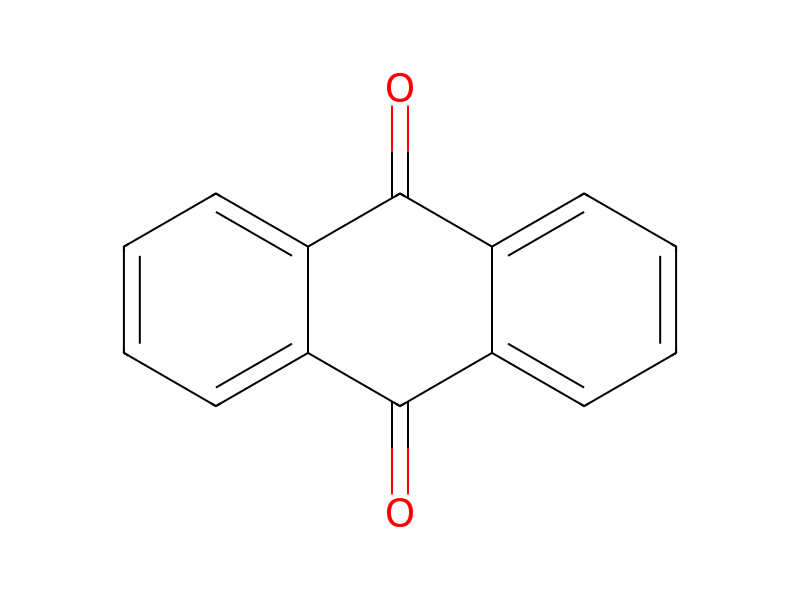
Procedure
In general the crude 1-nitroanthraquinone, which is contaminated by dinitroanthraquinone may be produced from anthraquinone by any of the known nitration methods, for example by nitration of anthraquinone in the presence of sulphuric acid or phosphoric acid or by nitration of anthraquinone with concentrated nitric acid alone; the last-named method can be carried out, for example, at -40° C to the boiling point of the reaction medium and in the presence of a great excess of nitric acid of at least 90% strengh. The nitration product can be submitted to the process of this invention as obtained after separation and washing, for example as a moist or dry filtercake, or if desired after intermediate purification.
Sources & evidence
- ORD record
- ord-abe22784a0b6498dbaf1d96e93df4d4c
- Source dataset
- uspto-grants-1977_03
- Patent number
- US04012426
Linked notes
Loading…