5-Hydroxy-2-pentanone → HCID 21449343, compound
Reaction equation
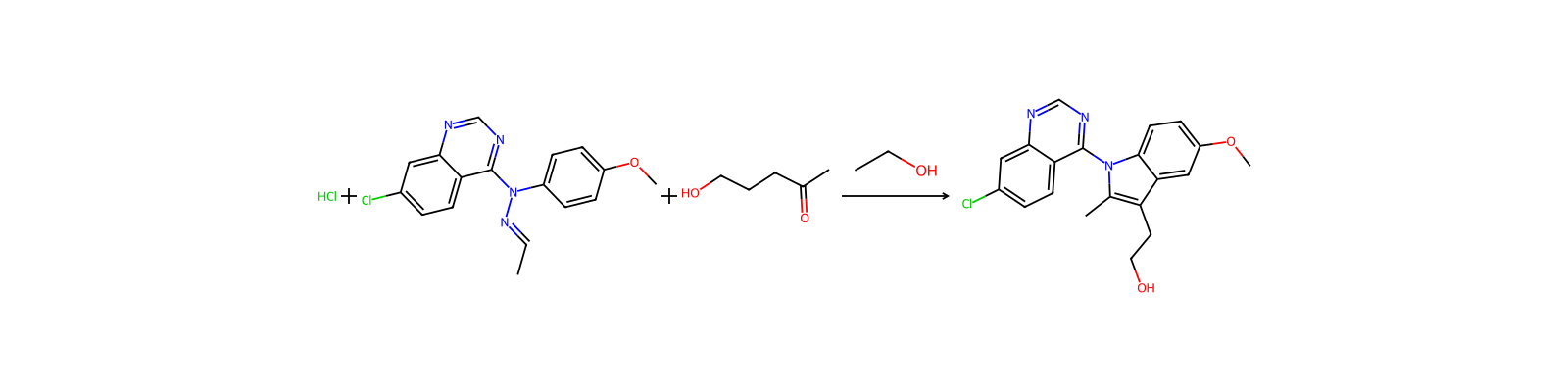
Cl.[Cl:2][C:3]1[CH:12]=[C:11]2[C:6]([C:7]([N:13]([C:17]3[CH:22]=[CH:21][C:20]([O:23][CH3:24])=[CH:19][CH:18]=3)N=CC)=[N:8][CH:9]=[N:10]2)=[CH:5][CH:4]=1.[OH:25][CH2:26][CH2:27][CH2:28][C:29](=O)[CH3:30]>C(O)C>[Cl:2][C:3]1[CH:12]=[C:11]2[C:6]([C:7]([N:13]3[C:17]4[C:22](=[CH:21][C:20]([O:23][CH3:24])=[CH:19][CH:18]=4)[C:28]([CH2:27][CH2:26][OH:25])=[C:29]3[CH3:30])=[N:8][CH:9]=[N:10]2)=[CH:5][CH:4]=1Participants
4
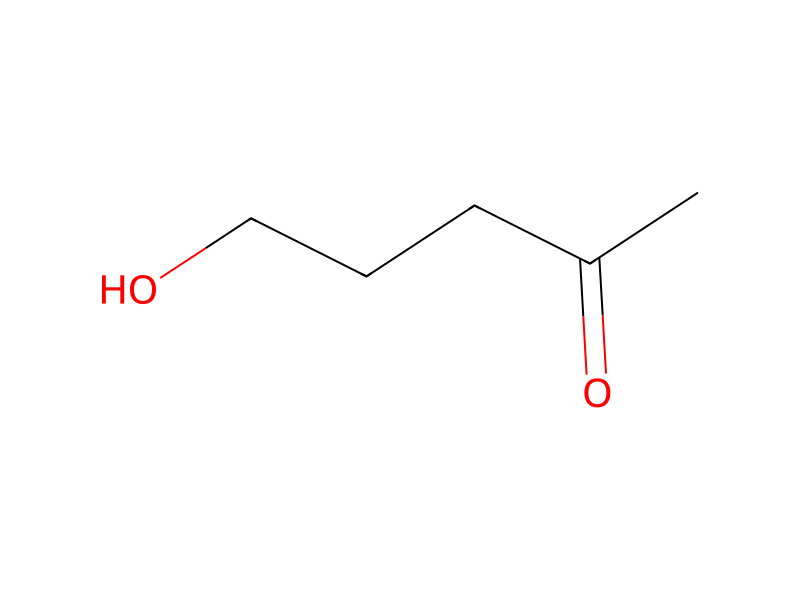
Reactant 2
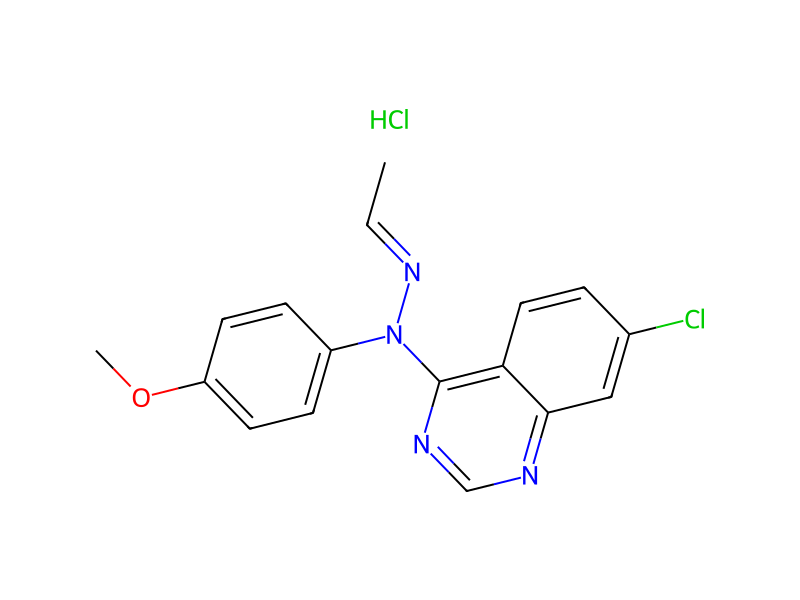
Product 1

Reagents, catalysts & solvents 1

Procedure
A solution of acetaldehyde N1 -(7-chloroquinazolin-4-yl)p-methoxyphenylhydrazone hydrochloride (3.2g.) and 5-hydroxy-pentane-2-one (1.1g.) in ethanol (60ml.) was refluxed for 18 hours. The mixture was cooled and filtered and the filtrate evaporated in vacuo. The residue was chromatographed on silica gel (100g.) using, as eluant, petroleum ether (b.p. 40° -60° C.) containing an increasing proportion of ether (polarity increased by incremental addition of 10% v/v ether) to give 1-(7-chloroquinazolin-4-yl)-3-(2-hydroxyethyl)-5-methoxy-2-methylindole, m.p. 148°-150° C.