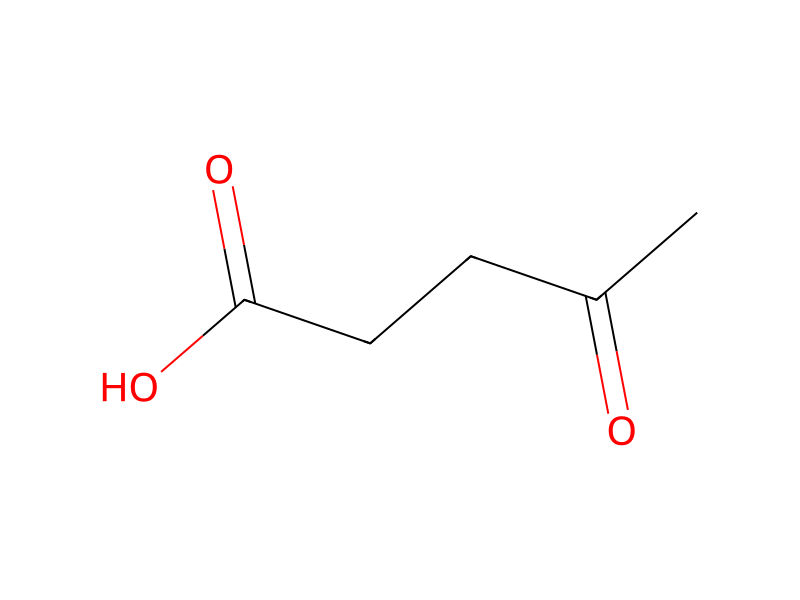
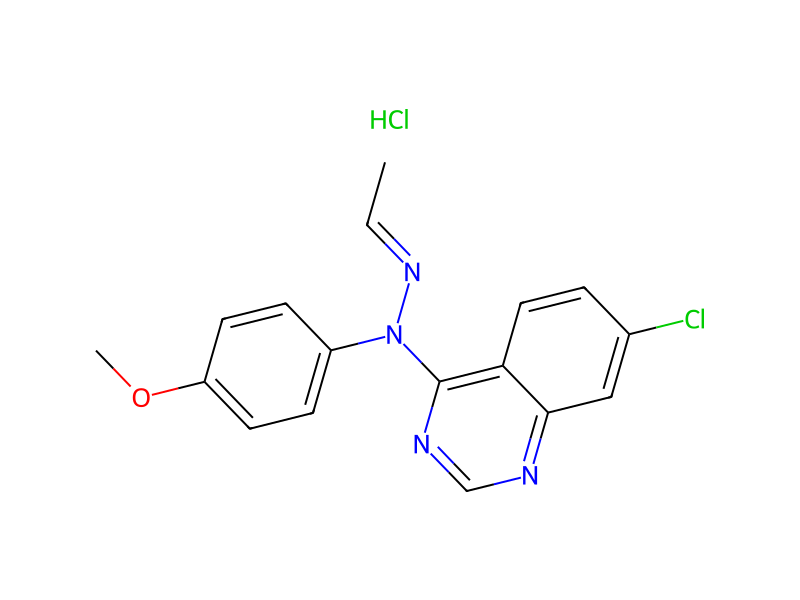
Cl.[Cl:2][C:3]1[CH:12]=[C:11]2[C:6]([C:7]([N:13]([C:17]3[CH:22]=[CH:21][C:20]([O:23][CH3:24])=[CH:19][CH:18]=3)N=CC)=[N:8][CH:9]=[N:10]2)=[CH:5][CH:4]=1.[CH3:25][C:26]([CH2:28][CH2:29][C:30]([OH:32])=[O:31])=O.O>C(O)(=O)C>[Cl:2][C:3]1[CH:12]=[C:11]2[C:6]([C:7]([N:13]3[C:17]4[C:22](=[CH:21][C:20]([O:23][CH3:24])=[CH:19][CH:18]=4)[C:28]([CH2:29][C:30]([OH:32])=[O:31])=[C:26]3[CH3:25])=[N:8][CH:9]=[N:10]2)=[CH:5][CH:4]=1A mixture of acetaldehyde N1 -(7chloroquinazolin-4-yl)-p-methoxyphenylhydrazone hydrochloride (25g.) and laevulinic acid (50g.) in acetic acid (120ml.) was heated under reflux for 1-2 hours. The dark red mixture was then added to water (1.5 1.). The solid obtained was separated by filtration and dissolved in a mixture of water (50ml.) and 5N-aqueous ammonium hydroxide solution (50ml.). The solution was extracted with ether (3 × 50ml.) and the aqueous layer acidified with acetic acid to pH4. The mixture was then extracted with ethyl acetate (3 × 50ml.) and the extracts washed with water (30ml.) and then with saturated sodium chloride solution (30ml.) before being dried (MgSO4). Evaporation of the solvent gave a dark brown syrup which crystallised on addition of methanol (40ml.) to give 1-(7-chloroquinazolin-4-yl)5-methoxy-2-methylindol-3-ylacetic acid as a yellow solid, m.p. 205°-208° C.