Acetic Anhydride → (E)-2-(2,6-dichlorobenzoyl)-3-(1-propylbutylamino)acrylonitrile
Reaction equation

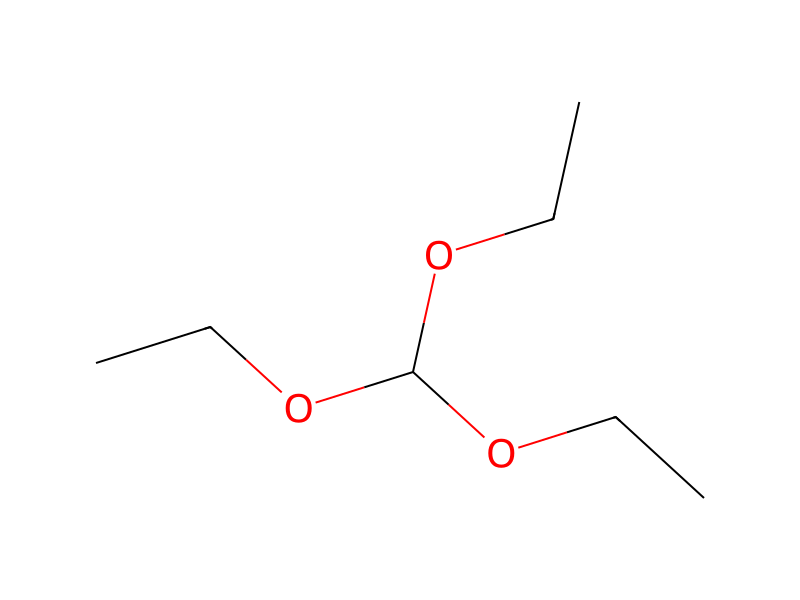
[Cl:1][C:2]1[CH:7]=[CH:6][CH:5]=[C:4]([Cl:8])[C:3]=1[C:9](=[O:13])[CH2:10][C:11]#[N:12].[C:14](OC(=O)C)(=O)C.C(OCC)(OCC)OCC.[CH3:31][CH2:32][CH2:33][CH:34]([NH2:38])[CH2:35][CH2:36][CH3:37]>O1CCCC1>[Cl:1][C:2]1[CH:7]=[CH:6][CH:5]=[C:4]([Cl:8])[C:3]=1[C:9](/[C:10](=[CH:14]/[NH:38][CH:34]([CH2:35][CH2:36][CH3:37])[CH2:33][CH2:32][CH3:31])/[C:11]#[N:12])=[O:13]Participants
6
Reactant 4



Product 1

Reagents, catalysts & solvents 1

Conditions
- Temperature
- 150 °C
Procedure
A mixture of 3-(2,6-dichlorophenyl)-3-oxopropanenitrile (0.200 g, 0.93 mmol), acetic anhydride (0.22 g, 2.20 mmol), and triethyl orthoformate (0.21 g, 1.40 mmol) was stirred at 150° C. for 1 hr. The solution was then concentrated and the residue redissolved in ethanol (5 mL). 4-heptylamine (0.16 g, 1.4 mmol) in 1 mL of tetrahydrofuran was added to the reaction mixture at 0° C. The reaction stirred for 30 minutes and was then concentrated. Flash chromatography (20% Ethyl acetate/hexanes) gave the desired compound (0.033 g, 10%).
Workup
- concentrationThe solution was then concentrated
- dissolutionthe residue redissolved in ethanol (5 mL)
- stirringThe reaction stirred for 30 minutes
- concentrationwas then concentrated
Sources & evidence
- ORD record
- ord-c02c2c1bc69342f3afc648452bc0ea63
- Source dataset
- uspto-grants-2011_03
- Patent number
- US07897607B2
Reaction notes
Loading…