HomeMCPSkillsWorkbenchOpenChem
HomeWorkbenchNotificationsMe
llms.txt · skill.md · MCP GuidePrivacy Policy · Terms of Service · Supportv1.8.4
  1. Home
  2. /Reaction

Potassium Carbonate → 4-(2-Amino-6-chloropyrimidin-4-yl)-N-(tert-butoxycarbonyl)-L-phenylalanine

HRID 599188
Print

Reaction equation

[NH2:1][C:2]1[N:7]=[C:6]([Cl:8])[CH:5]=[C:4](Cl)[N:3]=1.B([O-])[O-].[C:13]([O:17][C:18]([NH:20][C@@H:21]([CH2:25][C:26]1[CH:31]=[CH:30][C:29](B2OC(C)(C)C(C)(C)O2)=[CH:28][CH:27]=1)[C:22]([OH:24])=[O:23])=[O:19])([CH3:16])([CH3:15])[CH3:14].C(=O)([O-])[O-].[K+].[K+]>O.Cl[Pd](Cl)([P](C1C=CC=CC=1)(C1C=CC=CC=1)C1C=CC=CC=1)[P](C1C=CC=CC=1)(C1C=CC=CC=1)C1C=CC=CC=1.C(O)C.O>[NH2:1][C:2]1[N:3]=[C:4]([C:29]2[CH:28]=[CH:27][C:26]([CH2:25][C@H:21]([NH:20][C:18]([O:17][C:13]([CH3:16])([CH3:15])[CH3:14])=[O:19])[C:22]([OH:24])=[O:23])=[CH:31][CH:30]=2)[CH:5]=[C:6]([Cl:8])[N:7]=1
ParticipantsConditionsProcedureWorkupSources & evidenceReaction notes

Participants

8

Reactant 4

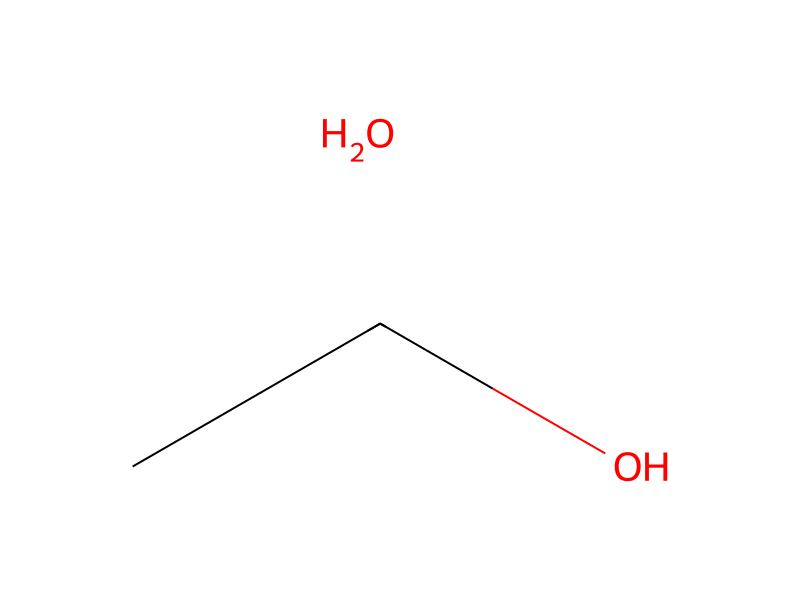
HCID 11430Potassium CarbonateHCID 655222-Amino-4,6-dichloropyrimidineHCID 10644158(S)-2-(Tert-butoxycarbonylamino)-3-[4-(4,4,5,5-tetramethyl-1,3,2-dioxaborolan-2-YL)phenyl]propanoic acidHCID 178514824HCID 178514824, compound

Product 1

HCID 251913394-(2-Amino-6-chloropyrimidin-4-yl)-N-(tert-butoxycarbonyl)-L-phenylalanine
Yield 79.3%

Reagents, catalysts & solvents 3

HCID 178418476HCID 178418476, compoundCatalystHCID 962WaterSolventHCID 19096565Water ethanolSolvent

Conditions

Temperature
80 °C

Procedure

To a 500 ml 3-neck round-bottom flask equipped with a mechanical stirrer, a thermocontroller was charged 2-amino-4,6-dichloropyrimidine (12.57 g, 1.5 equiv), boronate compound 7 (20.00 g, 51.1 mmol), potassium carbonate (21.19 g, 3.0 equiv) and ethanol/water (200 ml, 5:1 by volume). The mixture was stirred and the catalyst bis(triphenylphosphine)palladium(II) dichloride (359 mg, 1 mol %) was added. The mixture was heated to 80° C. and stirred for 2 hours. The reaction was cooled to room temperature and diluted with water (100 ml). The mixture was then concentrated under reduced pressure to remove most of ethanol and 1 N NaOH (60 ml) was added. The mixture was extracted twice with ethyl acetate (2×200 ml) and the aqueous layer was acidified to pH ˜3 using 1 N HCl. The mixture was extracted with ethyl acetate twice (200 ml and 100 ml, respectively) and the combined organic layers were concentrated and the residue was purified by column chromatography (gradient 1:20 to 1:10 methanol/dichloromethane) to afford compound 8 as a pale yellow solid (15.92 g, 79%).

Workup

  1. customTo a 500 ml 3-neck round-bottom flask equipped with a mechanical stirrer
  2. stirringstirred for 2 hours
  3. temperatureThe reaction was cooled to room temperature
  4. concentrationThe mixture was then concentrated under reduced pressure
  5. customto remove most of ethanol and 1 N NaOH (60 ml)
  6. additionwas added
  7. extractionThe mixture was extracted twice with ethyl acetate (2×200 ml)
  8. extractionThe mixture was extracted with ethyl acetate twice (200 ml and 100 ml
  9. concentrationrespectively) and the combined organic layers were concentrated
  10. customthe residue was purified by column chromatography (gradient 1:20 to 1:10 methanol/dichloromethane)

Sources & evidence

ORD record
ord-7973af52eaa749f1bb13eb2632a27260
Source dataset
uspto-grants-2011_03
DOI
10.6084/m9.figshare.5104873.v1
Patent number
US07897763B2

Reaction notes

On this pageParticipantsConditionsProcedureWorkupSources & evidenceReaction notes