HomeMCPWorkbenchSkills
HomeWorkbenchNotificationsMe
llms.txt · MCP GuidePrivacy Policy · Terms of Service · Supportv1.8.0
  1. Home
  2. /Reaction

Cesium carbonate → 3-(6-chloro-8-oxo-9-(tetrahydro-2H-pyran-4-yl)-8,9-dihydro-7H-purin-2-ylamino)-4-nitrobenzonitrile

HRID 600402
Notes
Print preview

Reaction equation

HRID 600402 reaction equation
C1C=CC(P(C2C(C3C(P(C4C=CC=CC=4)C4C=CC=CC=4)=CC=C4C=3C=CC=C4)=C3C(C=CC=C3)=CC=2)C2C=CC=CC=2)=CC=1.Br[C:48]1[CH:49]=[C:50]([CH:53]=[CH:54][C:55]=1[N+:56]([O-:58])=[O:57])[C:51]#[N:52].[NH2:59][C:60]1[N:68]=[C:67]2[C:63]([NH:64][C:65](=[O:75])[N:66]2[CH:69]2[CH2:74][CH2:73][O:72][CH2:71][CH2:70]2)=[C:62]([Cl:76])[N:61]=1.C(=O)([O-])[O-].[Cs+].[Cs+]>C1(C)C=CC=CC=1.CC([O-])=O.CC([O-])=O.[Pd+2]>[Cl:76][C:62]1[N:61]=[C:60]([NH:59][C:48]2[CH:49]=[C:50]([CH:53]=[CH:54][C:55]=2[N+:56]([O-:58])=[O:57])[C:51]#[N:52])[N:68]=[C:67]2[C:63]=1[NH:64][C:65](=[O:75])[N:66]2[CH:69]1[CH2:70][CH2:71][O:72][CH2:73][CH2:74]1
ParticipantsProcedureWorkupSources & evidenceReaction notes

Participants

7

Reactant 4

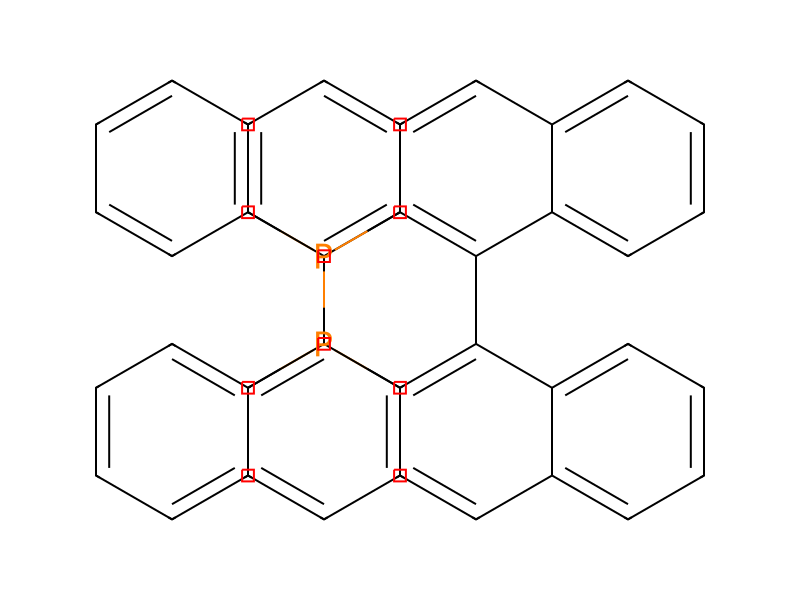
HCID 10796Cesium carbonateHCID 634876Binap, (A+-)-HCID 184132163-Bromo-4-nitrobenzonitrileHCID 576126442-amino-6-chloro-9-(tetrahydro-2H-pyran-4-yl)-7H-purin-8(9H)-one

Product 1

HCID 866229343-(6-chloro-8-oxo-9-(tetrahydro-2H-pyran-4-yl)-8,9-dihydro-7H-purin-2-ylamino)-4-nitrobenzonitrileYield 30.1%

Reagents, catalysts & solvents 2

HCID 167845palladium(II) acetateCatalystHCID 1140TolueneSolvent3×

Procedure

To an oven-dried 2-neck flask under Ar was added racemic BINAP (2.59 g, 4.17 mmol, 0.35 equiv.) followed by anhydrous toluene (20 mL) and Pd(OAc)2 (1.20 g, 1.79 mmol, 0.15 equiv.) and the mixture was stirred under Ar, at room temperature for 15 min. A deep yellow paste is formed. Then, 3-bromo-4-nitro-benzonitrile (3.51 g, 15.47 mmol, 1.3 equiv.), 2-amino-6-chloro-9-(tetrahydro-2H-pyran-4-yl)-7H-purin-8(9H)-one (3.2 g, 11.9 mmol, 1.0 equiv.) and cesium carbonate (5.81 g, 17.8 mmol, 1.5 equiv.) were added as solids, under Ar, followed by anhydrous toluene (27 mL), and the reaction mixture was stirred at room temperature for 10 min, then stirred at 100° C. for 22 h (LC-MS shows reaction to be complete). The reaction mixture was cooled to room temperature, diluted with toluene (450 mL) and passed through Celite. The filtrate was concentrated in vacuo to give a dark brown residue. The desired product was recrystallized as a bright orange solid from the residue using mixtures of 100 mL acetonitrile/100 mL water. Repeated recrystallizations resulted in isolation of 1.49 g of desired product (30% yield) in high purity. 1H NMR (300 MHz, CDCl3) δ, ppm: 10.40 (s, 1H), 9.33 (s, 1H), 8.35 (d, 1H), 7.85 (br s, 1H), 7.31 (d, 1H), 4.65-4.50 (m, 1H), 4.19 (dd, 2H), 3.55 (app t, 2H), 2.70 (tdd, 2H), 1.90 (br d, 2H); MS (EI) m/z 416.2 (MH)+.

Workup

  1. customA deep yellow paste is formed
  2. stirringthe reaction mixture was stirred at room temperature for 10 min
  3. stirringstirred at 100° C. for 22 h
  4. custom(LC-MS shows reaction to be complete)
  5. temperatureThe reaction mixture was cooled to room temperature
  6. concentrationThe filtrate was concentrated in vacuo
  7. customto give a dark brown residue
  8. customThe desired product was recrystallized as a bright orange solid from the residue
  9. customrecrystallizations

Sources & evidence

ORD record
ord-fa3defff98e84357920b195cc81bccf1
Source dataset
uspto-grants-2011_03
DOI
10.6084/m9.figshare.5104873.v1
Patent number
US07902187B2

Reaction notes

Loading…

On this pageParticipantsProcedureWorkupSources & evidenceReaction notes