Reaction equation

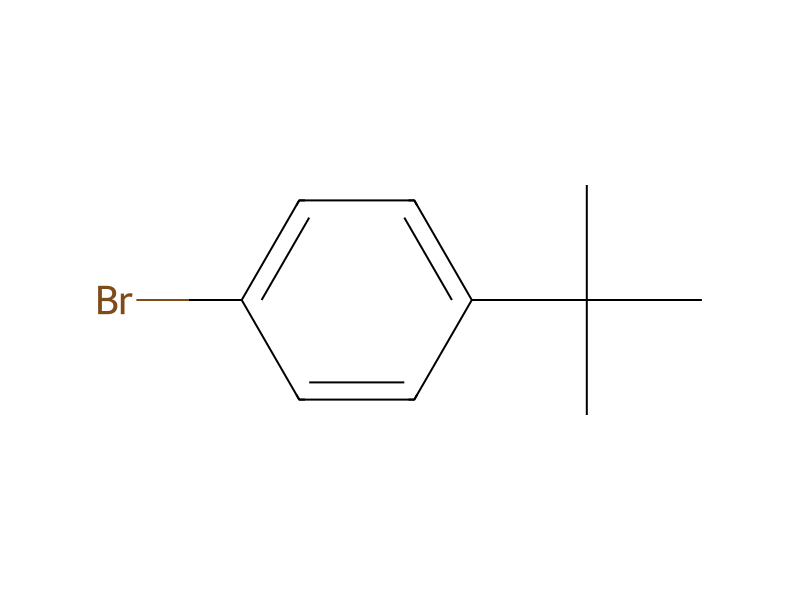
Br[C:2]1[CH:7]=[CH:6][C:5]([C:8]([CH3:11])([CH3:10])[CH3:9])=[CH:4][CH:3]=1.C([Li])CCC.[CH3:17][CH:18]1[CH2:22][CH2:21][CH2:20][C:19]1=O.Cl>C(OCC)C.CCCCCC>[CH3:17][C:18]1[CH2:22][CH:21]=[C:20]([C:2]2[CH:7]=[CH:6][C:5]([C:8]([CH3:11])([CH3:10])[CH3:9])=[CH:4][CH:3]=2)[CH:19]=1Participants






Procedure
1-Bromo-4-t-butylbenzene (18 mL, 104 mmol) was dissolved in diethyl ether (100 mL) and added dropwise at −30° C. with a solution (66 mL, 104 mmol, 1.57 N) of n-butyllithium in hexane. The resultant solution was warmed to room temperature, stirred night and day and added dropwise at −20° C. to a solution of 3-methyl-2-cyclopentanone (10 g, 104 mmol) in diethyl ether (10 mL). Immediately after dropwise addition, the solution was warmed to room temperature and stirred for 3 hours. After termination of the reaction, the reaction solution was added with dilute hydrochloric acid and subjected to layer separation. The organic layer was dried with magnesium sulfate and then had the solvent distilled off under reduced pressure. The crude product was distilled under reduced pressure (105 to 115° C./0.16 mmHg) to obtain 1-methyl-3-(4-t-butylphenyl)-cyclopentadiene (15.3 g, yield: 69%).
Workup
- additionImmediately after dropwise addition
- stirringstirred for 3 hours
- customAfter termination of the reaction
- customsubjected to layer separation
- dry with materialThe organic layer was dried with magnesium sulfate
- distillationdistilled off under reduced pressure
- distillationThe crude product was distilled under reduced pressure (105 to 115° C./0.16 mmHg)
Sources & evidence
- ORD record
- ord-1f47fe57eb444ffb856be1ac35fc2d0f
- Source dataset
- uspto-grants-2011_03
- Patent number
- US07906599B2
Linked notes
Loading…