HomeMCPWorkbenchSkills
HomeWorkbenchNotificationsMe
llms.txt · MCP GuidePrivacy Policy · Terms of Service · Supportv1.8.0
  1. Home
  2. /Reaction

Cyanogen Bromide → 3-[(S)-(3-{(1S)-1-[3-(5-amino-1,3,4-oxadiazol-2-yl)-5-fluorophenyl]-2-fluoro-2-methylpropyl}azetidin-1-yl)(4-chlorophenyl)methyl]benzonitrile

HRID 602998
Notes
Print preview

Reaction equation

HRID 602998 reaction equation
[Cl:1][C:2]1[CH:7]=[CH:6][C:5]([C@@H:8]([C:29]2[CH:34]=[CH:33][CH:32]=[C:31]([C:35]#[N:36])[CH:30]=2)[N:9]2[CH2:12][CH:11]([C@@H:13]([C:18]3[CH:19]=[C:20]([CH:25]=[C:26]([F:28])[CH:27]=3)[C:21]([NH:23][NH2:24])=[O:22])[C:14]([F:17])([CH3:16])[CH3:15])[CH2:10]2)=[CH:4][CH:3]=1.C([O-])(O)=O.[Na+].[N:42]#[C:43]Br>O1CCOCC1.O>[NH2:42][C:43]1[O:22][C:21]([C:20]2[CH:19]=[C:18]([C@H:13]([CH:11]3[CH2:12][N:9]([C@@H:8]([C:5]4[CH:4]=[CH:3][C:2]([Cl:1])=[CH:7][CH:6]=4)[C:29]4[CH:30]=[C:31]([CH:32]=[CH:33][CH:34]=4)[C:35]#[N:36])[CH2:10]3)[C:14]([F:17])([CH3:16])[CH3:15])[CH:27]=[C:26]([F:28])[CH:25]=2)=[N:23][N:24]=1
ParticipantsProcedureWorkupSources & evidenceReaction notes

Participants

6

Reactant 3

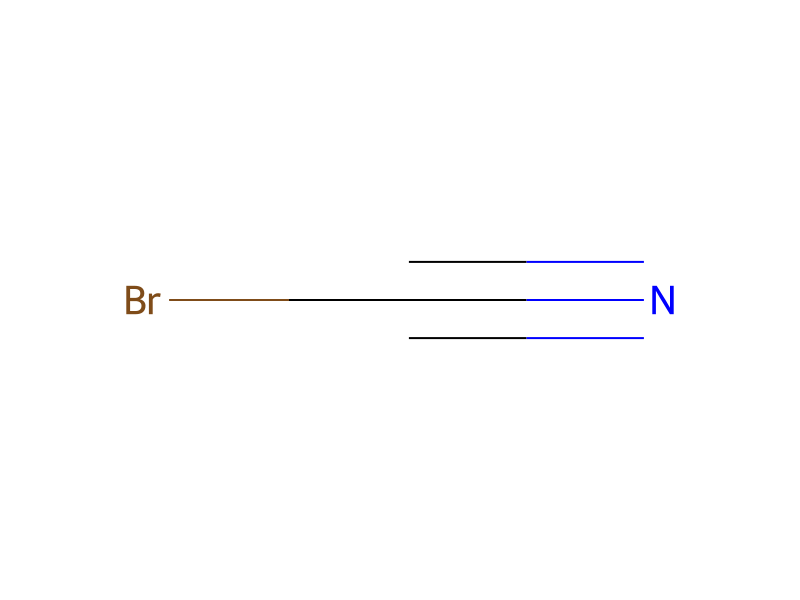
HCID 10476Cyanogen BromideHCID 516892Sodium BicarbonateHCID 670553323-((1S)-1-{1-[(S)-(4-chlorophenyl)(3-cyanophenyl)methyl]azetidin-3-yl}-2-fluoro-2-methylpropyl)-5-fluorobenzohydrazide

Product 1

HCID 667056803-[(S)-(3-{(1S)-1-[3-(5-amino-1,3,4-oxadiazol-2-yl)-5-fluorophenyl]-2-fluoro-2-methylpropyl}azetidin-1-yl)(4-chlorophenyl)methyl]benzonitrile

Reagents, catalysts & solvents 2

HCID 962WaterSolvent
HCID 312751,4-DioxaneSolvent

Procedure

To a mixture of 53 mg (0.104 mmol) of 3-((1S)-1-{1-[(S)-(4-chlorophenyl)(3-cyanophenyl) methyl]azetidin-3-yl}-2-fluoro-2-methylpropyl)-5-fluorobenzohydrazide in 3 mL of dioxane, 11.4 mg (0.135 mmol) of NaHCO3 in 1 mL of water was added 13 mg (0.125 mmol) cyanogen bromide and the solution was stirred at rt. After 2.5 h, it was concentrated to remove solvents. The residue was dissolved in 20 mL of CH2Cl2 and 5 mL of water and the pH was adjusted to 7-8 with aq NaHCO3. The aqueous layer was extracted with CH2Cl2, and the combined organic layer was concentrated. The residue was purified by silica gel chromatography with CH2Cl2/acetone to afford the title compound as a white solid; 1H-NMR (CDCl3) δ 1.22(d, 3H, J=22 Hz), 1.28(d, 3H, J=22 Hz), 2.34 (br, 1H) 2.88 (br, 1H), 2.96 (m, 1H), 3.10 (dr, 1H), 3.24 (m, 1H), 3.63 (br, 1H), 4.27 (s, 1H), 5.50(s, 2H), 7.01-7.66 (m, 11H); Mass Spectrum: m/e=534 (M+1, 35Cl), 536 (M+1, 37Cl).

Workup

  1. concentrationit was concentrated
  2. customto remove solvents
  3. dissolutionThe residue was dissolved in 20 mL of CH2Cl2
  4. extractionThe aqueous layer was extracted with CH2Cl2
  5. concentrationthe combined organic layer was concentrated
  6. customThe residue was purified by silica gel chromatography with CH2Cl2/acetone

Sources & evidence

ORD record
ord-0cfabaf554cd443b8a058e0d2d1cade3
Source dataset
uspto-grants-2011_03
DOI
10.6084/m9.figshare.5104873.v1
Patent number
US07906652B2

Reaction notes

Loading…

On this pageParticipantsProcedureWorkupSources & evidenceReaction notes