Water → Daidzein diacetate
HRID 603265
Reaction equation

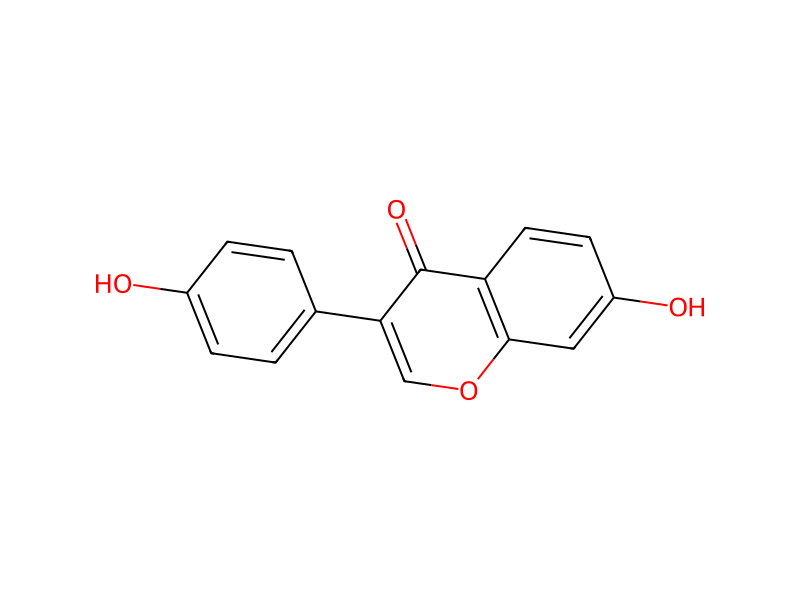
[CH:1]1[C:6]([C:7]2[C:16](=[O:17])[C:15]3[CH:14]=[CH:13][C:12]([OH:18])=[CH:11][C:10]=3[O:9][CH:8]=2)=[CH:5][CH:4]=[C:3]([OH:19])[CH:2]=1.[C:20](OC(=O)C)(=[O:22])[CH3:21].N1[CH:32]=[CH:31]C=CC=1.[OH2:33]>>[CH3:21][C:20]([O:19][C:3]1[CH:4]=[CH:5][C:6]([C:7]2[C:16](=[O:17])[C:15]3[CH:14]=[CH:13][C:12]([O:18][C:31]([CH3:32])=[O:33])=[CH:11][C:10]=3[O:9][CH:8]=2)=[CH:1][CH:2]=1)=[O:22]Participants
5




Procedure
A mixture of daidzein (1.0 g, 3.9 mmol), acetic anhydride (5 ml) and pyridine (5 ml) was left in the dark at room temperature for 24 h. The reaction mixture was poured into water (100 ml), stirred for 2 h and then extracted with dichloromethane (3×50 ml). The dichloromethane layer was washed with water, dried over anhydrous sodium sulfate and evaporated. The white residue was crystallised from methanol to yield daidzein diacetate as white prisms (1.1 g, 83%). 1H NMR (CDCl3): δ 2.32 (s, 3H, OCOCH3), 2.36 (s, 3H, OCOCH3), 7.18 (d, 2H, J 9.2 Hz, ArH), 7.19 (d, 1H, J 9.0 Hz, H6), 7.31 (d, 1H, J 2.0 Hz H8), 7.59 (d, 2H, J 9.2 Hz, ArH), 8.00 (s, 1H, H2), 8.33 (d, 2H, J 8.2 Hz, ArH).