Reaction equation

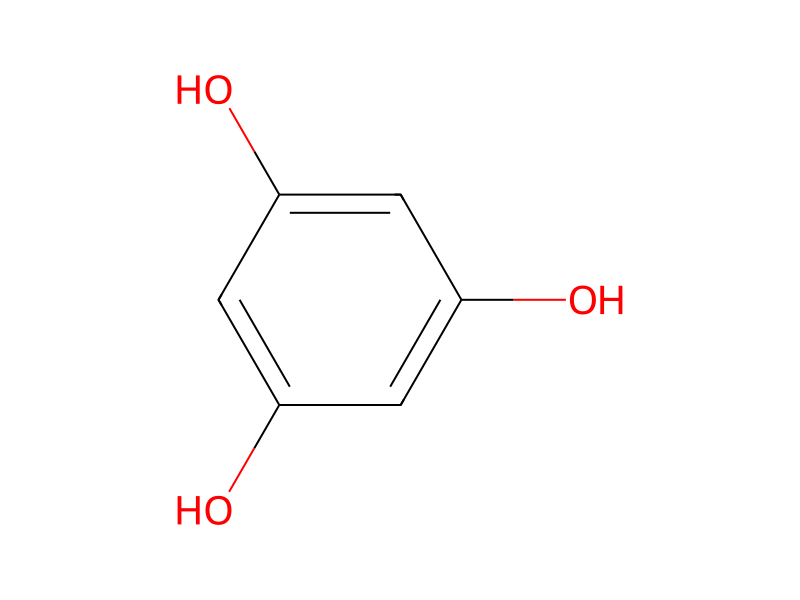
C1(N)C([N+:7]([O-:9])=[O:8])=C(N)C([N+]([O-])=O)=C(N)C=1[N+]([O-])=O.[C:19]1([CH:27]=[C:25]([OH:26])[CH:24]=[C:22]([OH:23])[CH:21]=1)[OH:20].[N:28]([O-:30])=[O:29].[Na+].[N+:32]([O-])([OH:34])=[O:33]>>[N+:7]([C:27]1[C:19]([OH:20])=[C:21]([N+:28]([O-:30])=[O:29])[C:22]([OH:23])=[C:24]([N+:32]([O-:34])=[O:33])[C:25]=1[OH:26])([O-:9])=[O:8]Participants




Procedure
Another method of synthesizing TATB from phloroglucinol is described in GB 2355715. The phloroglucinol is nitrated using sodium nitrite and nitric acid, forming trinitrophloroglucinol (“TNPG”), which is also known as 1,3,5-trihydroxy-2,4,6-trinitrobenzene. The nitric acid is added sequentially or in multiple additions. When cooled, a solid is produced, which is filtered, washed with 3M hydrochloric acid (“HCl”), and dried, yielding a solid product that is a monohydrate of TNPG. The monohydrate of TNPG is a free-flowing solid. The TNPG is alkoxylated using a trialkyl orthoformate, such as triethyl orthoformate (“TEOF”), forming 1,3,5-triethoxy-2,4,6-trinitrobenzene (“TETNB”). The alkoxylation of TNPG requires a ninefold molar excess of triethyl orthoformate, producing a waste stream of ethyl formate, ethanol, and diethyl ether. The ethanol and ethyl formate are removed by distillation. The solution of TETNB is concentrated, yielding TETNB as a solid, which is recrystallized from ethanol. The purified TETNB is aminated using liquid ammonia, filtered, washed with N-methylpyrrolidinone and methanol, and dried, yielding crystals of the TATB. The TATB synthesis utilizes multiple drying and isolation acts to produce solid products of TNPG, TETNB, and TATB.
Sources & evidence
- ORD record
- ord-6ae7368fdd3443b4a84e91c7c9a320ea
- Source dataset
- uspto-grants-2011_03
- Patent number
- US07910776B2
Linked notes
Loading…