HomeMCPWorkbenchSkills
HomeWorkbenchNotificationsMe
llms.txt · MCP GuidePrivacy Policy · Terms of Service · Supportv1.8.0
  1. Home
  2. /Compound

Phloroglucinol

HCID 359
New noteNew reactionRequest quotes
Print preview

Completing data — refresh the page later to see the latest
Basic informationOverviewNames & identifiersPropertiesSafety & regulationChemistry & industryRelated reactionsCompound notes
Substructure searchFind similar structures

Basic information

CAS
108-73-6
Standard SMILES
Oc1cc(O)cc(O)c1
InChIKey
QCDYQQDYXPDABM-UHFFFAOYSA-N
Molecular formula
C6H6O3
Average molar mass
126.11 g/mol
Monoisotopic mass
126.03169405

Overview

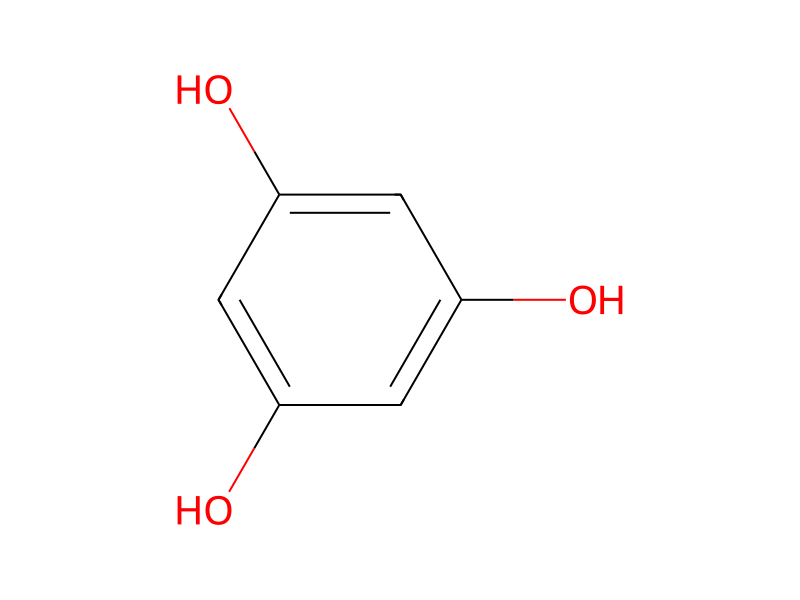
Phloroglucinol is a benzenetriol with hydroxy groups at position 1, 3 and 5. It has a role as an algal metabolite. It is a phenolic donor and a benzenetriol.

Names & identifiers

Preferred name
Phloroglucinol
IUPAC
benzene-1,3,5-triol
English name
Phloroglucinol
Molecular formula
C6H6O3
Molecular weight
126.11

Names & synonyms

phloroglucinol108-73-6Benzene-1,3,5-triol1,3,5-benzenetriol1,3,5-trihydroxybenzenePhloroglucinPhloroglucineSpasfon-LyocDilospan Ssym-Trihydroxybenzenes-TrihydroxybenzeneBenzene, trihydroxy
Show more names
3,5-DIHYDROXYPHENOLAnhydrous PhloroglucinolNero
FloroglucinFloroglucinolDHD7FFG6YSBenezene-1,3,5-triolNSC-1572DTXSID9048354CHEBI:16204RefChem:6129

Database identifiers

CAS
108-73-6
PubChem CID
359
DTXSID
DTXSID9048354
ChEMBL
CHEMBL473159
ChEBI
CHEBI:16204
UNII
DHD7FFG6YS
EC Number
203-611-2
Nikkaji
J2.866E

Properties

Computed structural propertiesFilling in

XLogP
0.2
Topological polar surface area
60.7 Ų
Hydrogen bond donors
3
Hydrogen bond acceptors
3
Rotatable bonds
0
Heavy atoms
9
Formal charge
0
Complexity
63.3

Experimental & physicochemical properties

Chemical ClassesOther Classes -> Phenols
DrugsPharmaceuticals -> Listed in ZINC15
Cosmetics · 2 items

Cosmetic ingredients (Phloroglucinol) -> CIR (Cosmetic Ingredient Review)

Hair dyeing

SpringerMaterials Properties13C nuclear magnetic resonance spectrum
LogP · 2 items

0.16

0.16

Solubility10.6 mg/mL at 20 °C
Endocrine DisruptorsPotential endocrine disrupting compound
Melting Point218.5 °C
Vapor Pressure0.00016 [mmHg]
Physical Description · 2 items

White solid; Discolored by light; [Merck Index] White or cream colored powder; [MSDSonline] Crystallizes in anhydrous or dihydrate form; Sweet tasting crystals; [Ullmann]

Safety & regulation

Safety information is for reference only and does not replace the supplier’s Safety Data Sheet (SDS), applicable regulations, or professional assessment.

GHS classification

GHS Classification · 5 items

This chemical does not meet GHS hazard criteria for 1.9% (2 of 108) of reports.

Warning

H315 (81.5%): Causes skin irritation [Warning Skin corrosion/irritation]

P203, P261, P264, P264+P265, P271, P272, P273, P280, P302+P352, P304+P340, P305+P351+P338, P318, P319, P321, P332+P317, P333+P317, P337+P317, P362+P364, P403+P233, P405, and P501 (click each P-code to see the statement)

Aggregated GHS information provided per 108 reports by companies from 23 notifications to the ECHA C&L Inventory. Each notification may be associated with multiple companies.

Hazard information

Regulatory Information · 3 items

Chemical: 1,3,5-Benzenetriol

Status: Active Update: 25-08-2022 https://echa.europa.eu/registration-dossier/-/registered-dossier/23677

Phloroglucinol: Does not have an individual approval but may be used under an appropriate group standard

Other Safety InformationIMAP assessments - 1,3,5-Benzenetriol: Environment tier I assessment
Hazards SummaryA skin and eye irritant; [eChemPortal: ERMA] An irritant; [MSDSonline] Oral LD50 (mouse) = 4550 mg/kg; [Ullmann]
Hazard Classes and CategoriesSkin Irrit. 2 (81.5%)

Toxicology

Toxicity Summary · 2 items

On the basis of the available data, the CIR Panel cannot conclude that Phloroglucinol is safe for use in cosmetic products until the appropriate safety data have been obtained and evaluated.

Chemistry & industry

Pharmacology

ATC Code · 2 items

A - Alimentary tract and metabolism

QA - Alimentary tract and metabolism

Metabolism/MetabolitesPhloroglucinol is a known human metabolite of Epicatechin and 2-(4-Hydroxyphenyl)-1-(2,4,6-trihydroxyphenyl)prop-2-en-1-one.
MeSH Pharmacological Classification · 1 item

Substances used for the detection, identification, analysis, etc. of chemical, biological, or pathologic processes or conditions. Indicators are substances that change in physical appearance, e.g., color, at or approaching the endpoint of a chemical titration, e.g., on the passage between acidity and alkalinity. Reagents are substances used for the detection or determination of another substance by chemical or microscopical means, especially analysis. Types of reagents are precipitants, solvents, oxidizers, reducers, fluxes, and colorimetric reagents. (From Grant & Hackh's Chemical Dictionary, 5th ed, p301, p499)

Uses & manufacturing

Uses · 3 items

CIR ingredient: Phloroglucinol

Used to decalcify bones, to make pharmaceuticals and dyes, to preserve cut flowers, and to dye and print textiles; [Hawley] Used in diazo-type printing, cosmetics (antioxidant), hair colorants, chemical reagents, cloud seeding, tree and shrub rooting, and pharmaceuticals (antispasmodic); [Merck Index] Isolated from bark of fruit trees in 1855; [Ullmann]

Textiles (Printing, Dyeing, or Finishing) [Category: Industry]

Use ClassificationCosmetics -> Hair dyeing
General Manufacturing Information1,3,5-Benzenetriol: ACTIVE
Applications · 5 items

Phloroglucinol can be used in verifications of antimony, arsenic, cerium, chromate, chromium, gold, iron, mercury, nitrites, osmium, palladium, tin, vanadium, vanillin and lignin, and measurement of furfural, pentose, pentosan, methanol, chloral hydrate, turpentine, Lignified cell tissues, free acid in gastric juice (HCl) and decalcified bone specimens. Besides it can also be used as biological reagent dyes.

Related reactions

99 records
New reaction record
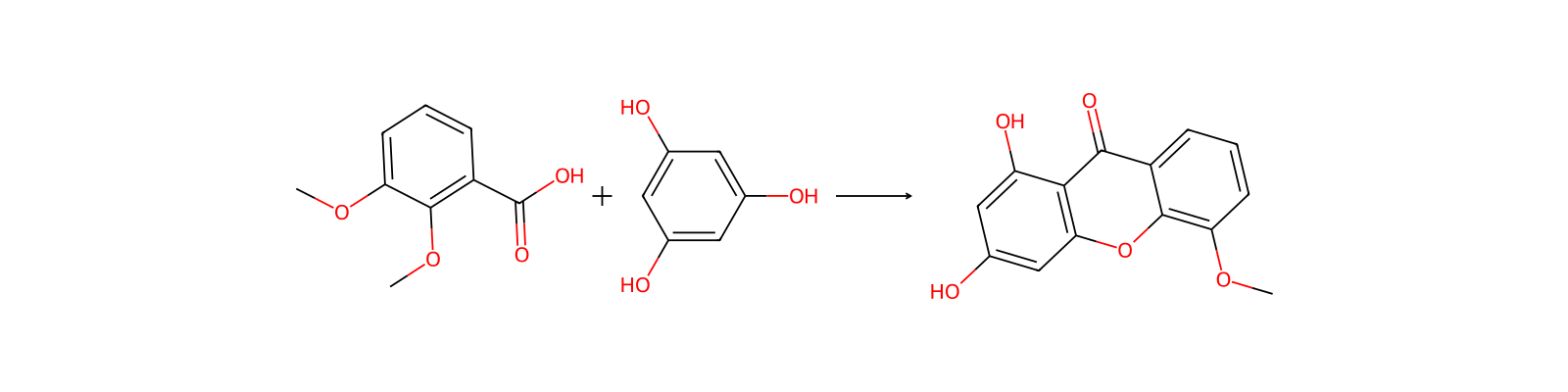
HRID 1185 reaction equation
HRID 1185As reactantuspto-grants-1998_03
HRID 15688 reaction equation
HRID 15688As reactantuspto-grants-2010_06
HRID 18036 reaction equation
HRID 18036As reactantuspto-grants-2010_06
HRID 29030 reaction equation
HRID 29030As reactantuspto-grants-2008_09
HRID 41065 reaction equation
HRID 41065As reactantuspto-grants-2013_09
HRID 44120 reaction equation
HRID 44120As reactantuspto-grants-2013_09
HRID 83089 reaction equation
HRID 83089As reactantuspto-grants-2014_09
HRID 83092 reaction equation
HRID 83092As reactantuspto-grants-2014_09
Page 1 of 13

Compound notes

Loading…

On this pageBasic informationOverviewNames & identifiersPropertiesSafety & regulationChemistry & industryRelated reactionsCompound notes
More actions
New noteNew reactionRequest quotes

Solid

Collision Cross Section121.6 Ų [M-H]- [CCS Type: DT; Buffer gas: N2; Ionization: ESI-; Dataset: TOXCAST; Source Identifier: DTXSID3046586]

Physicochemical properties

Melting point
215 · 215-220 °C
Boiling point
194.21 °C · 194.21°C (rough estimate)
Density
0.801 g/mL · 0.801 g/mL at 20 °C
bulk density
560 kg/m3 · 560kg/m3
vapor pressure
0.001 Pa · 0.001Pa at 25℃
refractive index
20 · n20/D 1.365
Flash point
14 °C · 14 °C
storage temp.
30 °C · Store below +30°C.
solubility
Soluble in diethyl ether, ethanol and pyridine.
form
Crystalline Powder
pka
1 · pK1:8.45(0);pK2:8.88(-1) (25°C)
color
White to light beige
Water Solubility
11.17 g/L · 11.17g/L(room temperature)
Sensitive
Light Sensitive & Hygroscopic
Merck
14 · 14,7328
BRN
1341907 · 1341907
Cosmetics Ingredients Functions
HAIR DYEING
InChI
1S/C6H6O3/c7-4-1-5(8)3-6(9)2-4/h1-3,7-9H
InChIKey
QCDYQQDYXPDABM-UHFFFAOYSA-N
SMILES
Oc1cc(O)cc(O)c1
LogP
0.55 at · 0.55 at 25℃
CAS DataBase Reference
108 · 108-73-6(CAS DataBase Reference)
EWG's Food Scores
3 · 3-6
FDA UNII
7 FFG6YS · DHD7FFG6YS
ATC code
3 AX12 · A03AX12
NIST Chemistry Reference
1 · 1,3,5-Benzenetriol(108-73-6)
EPA Substance Registry System
1 · 1,3,5-Benzenetriol (108-73-6)
UNSPSC Code
41116107 · 41116107
NACRES
11 · SE.11
Symbol(GHS)
7 · GHS07
Signal word
Warning
Hazard statements
303 · H303-H315-H319-H335
Precautionary statements
501 · P501-P261-P271-P264-P280-P302+P352-P312-P337+P313-P305+P351+P338-P362+P364-P332+P313-P304+P340+P312-P403+P233-P405
target organs
Respiratory system
PPE
95 · Eyeshields, Gloves, type N95 (US)
Hazard Codes
F,Xi
Risk Statements
11 · 11-36/37/38-34-43
Safety Statements
7 · 7-16-24/25-45-36/37/39-26-36/37-37/39
RIDADR
1170 · UN 1170 3/PG 2
WGK Germany
2 · 2
RTECS
1050000 · SY1050000
TSCA
TSCA listed
HS Code
29072900 · 29072900
Storage Class
11 · 11 - Combustible Solids
Hazard Classifications
2 Skin · Eye Irrit. 2Skin Irrit. 2Skin Sens. 1STOT SE 3
Toxicity
50 in · LD50 in mice, rats (g/kg): 4.7, 4.0 i.g. (Cahen)
REACH Registrations
Active

Ingredients for which the data are insufficient and their use in cosmetics is not supported

Drug Induced Liver Injury · 4 items

Drug-Induced Liver Injury Severity and Toxicity (DILIst)

Phloroglucinol

DILI Positive

DOI:10.1016/j.drudis.2019.09.022

Safety data

PPE
Eyeshields, Gloves, type N95 (US)
wgk
2
tsca
TSCA listed
rtecs
SY1050000
ridadr
UN 1170 3/PG 2
hs_code
29072900
Toxicity
LD50 in mice, rats (g/kg): 4.7, 4.0 i.g. (Cahen)
risk_code
11-36/37/38-34-43
Signal word
Warning
Symbol(GHS)
GHS07
hazard_code
F,Xi
safety_code
7-16-24/25-45-36/37/39-26-36/37-37/39
Storage Class
11 - Combustible Solids
target organs
Respiratory system
Hazard statements
H303-H315-H319-H335
REACH Registrations
Active
Hazard Classifications
Eye Irrit. 2Skin Irrit. 2Skin Sens. 1STOT SE 3
Precautionary statements
P501-P261-P271-P264-P280-P302+P352-P312-P337+P313-P305+P351+P338-P362+P364-P332+P313-P304+P340+P312-P403+P233-P405
Uses

DescriptionPhloroglucinol is a naturally occurring phenol that exhibits diverse biological activities. Phloroglucinol protects V79-4 Chinese hamster lung fibroblast cells from oxidative stress and inhibits lipid peroxidation by scavenging reactive oxygen species (ROS). It induces apoptosis in HT-29 human colon cancer cells and inhibits metastasis of BT549 and MDA-MB-231 human breast cancer cells. Phloroglucinol protects primary neurons from β-amyloid-induced dendritic spine loss in vitro and shortens the latency to find the platform in a Morris water maze test in an Alzheimer’s disease (AD) mouse model. Phloroglucinol has been used to stain histological plant sections and in the synthesis of numerous natural products. Phloroglucinol slows the frequency and decreases the amplitude of contraction in isolated rabbit and rat intestine at a concentration of 100 and 1 μM, respectively. Formulations containing phloroglucinol have been used as antispasmodics.

UsesPhloroglucinol is mainly used as a coupling agent in printing. It is an active component of Tollen's reagent and Gunzburg reagent used to test pentoses and hydrochloric acid in gastric juice respectively. In analytical chemistry, it is used to study condensed tannins by means of depolymerization. It is also involved in the synthesis of 2,4,6-triamino-1,3,5- trinitrobenzene, trinitrophloroglucinol and pharmaceuticals like flopropione.

UsesPhloroglucinol (1,3,5-trihydroxybenzene) is the core structure of a large family of substituted phenolics with broad, albeit weak, biological activity. Phloroglucinol is a useful metabolite for HPLC/DAD and bioassay dereplication.diagnostic aid growth hormone releasing factor. Antispasmodic.

General DescriptionPhloroglucinol is a trihydroxybenzene with antithrombotic, profibrinolytic, antimicrobial, antimalarial, cancer chemopreventive, anti-HIV and anti-leishmanial activities. Phloroglucinol (PG) is a biosynthetic precursor of the 2,4-diacetylphloroglucinol (DAPG) an antibiotic against soil-borne diseases. Phloroglucinol is a useful intermediate because it is polyfunctional.

Upstream & downstream products

Upstream raw materials

Tin granular2,4,6-TRINITROBENZOIC ACIDPhloroglucinol Impurity 1

Downstream products

5,7-Dihydroxy-4-methylcoumarin1,2,3-Trimethoxybenzene2,4,6-TRIIODOPHLOROGLUCINOLCALANOLIDE ACIS,CIS-1,3,5-CYCLOHEXANETRIOL DIHYDRATE1,3,5-Cyclohexanetriol1-(3-ACETYL-2,4,6-TRIHYDROXYPHENYL)ETHAN-1-ONE9H-Xanthen-9-one, 1,3-dimethoxy-5-methyl-2-CARBETHOXY-5,7-DIHYDROXY-4'-METHOXYISOFLAVONE2(4'-BROMOPHENYL)-2',4',6'-TRIHYDROXYACETOPHENONE

Additional notes

DefinitionChEBI: Phloroglucinol is a benzenetriol with hydroxy groups at position 1, 3 and 5. It has a role as an algal metabolite.