HomeMCPWorkbenchSkills
HomeWorkbenchNotificationsMe
llms.txt · MCP GuidePrivacy Policy · Terms of Service · Supportv1.8.0
  1. Home
  2. /Reaction

Acetaldehyde → N-(5-Bromo-pyridin-2-yl)-3-(7-isopropyl-pyrido[2,3-d]pyrimidin-4-ylamino)-4-[4-(ethyl-propyl-amino)-phenylsulfanyl]-benzamide

HRID 605328
Notes
Print preview

Reaction equation

HRID 605328 reaction equation
[Br:1][C:2]1[CH:3]=[CH:4][C:5]([NH:8][C:9](=[O:41])[C:10]2[CH:15]=[CH:14][C:13]([S:16][C:17]3[CH:22]=[CH:21][C:20]([NH:23][CH2:24][CH2:25][CH3:26])=[CH:19][CH:18]=3)=[C:12]([NH:27][C:28]3[C:29]4[CH:37]=[CH:36][C:35]([CH:38]([CH3:40])[CH3:39])=[N:34][C:30]=4[N:31]=[CH:32][N:33]=3)[CH:11]=2)=[N:6][CH:7]=1.[C:42](O[BH-](OC(=O)C)OC(=O)C)(=O)[CH3:43].[Na+].C(=O)C>ClCCl.CO>[Br:1][C:2]1[CH:3]=[CH:4][C:5]([NH:8][C:9](=[O:41])[C:10]2[CH:15]=[CH:14][C:13]([S:16][C:17]3[CH:18]=[CH:19][C:20]([N:23]([CH2:42][CH3:43])[CH2:24][CH2:25][CH3:26])=[CH:21][CH:22]=3)=[C:12]([NH:27][C:28]3[C:29]4[CH:37]=[CH:36][C:35]([CH:38]([CH3:40])[CH3:39])=[N:34][C:30]=4[N:31]=[CH:32][N:33]=3)[CH:11]=2)=[N:6][CH:7]=1
ParticipantsProcedureWorkupSources & evidenceReaction notes

Participants

5

Reactant 3

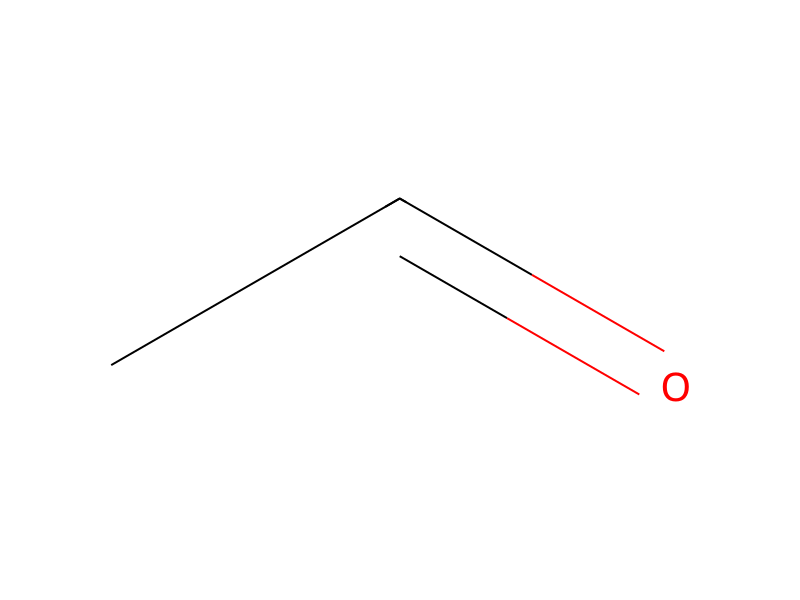
HCID 177AcetaldehydeHCID 5049666Sodium triacetoxyborohydrideHCID 67041086N-(5-Bromo-pyridin-2-yl)-3-(7-isopropyl-pyrido[2,3-d]pyrimidin-4-ylamino)-4-(4-propylamino-phenylsulfanyl)-benzamide

Product 1

HCID 67040430N-(5-Bromo-pyridin-2-yl)-3-(7-isopropyl-pyrido[2,3-d]pyrimidin-4-ylamino)-4-[4-(ethyl-propyl-amino)-phenylsulfanyl]-benzamideYield 77%

Reagents, catalysts & solvents 1

HCID 21226129Dichloromethane methanolSolvent

Procedure

To the product of Example 378 (31 mg, 0.05 mmol) and sodium triacetoxyborohydride (414 mg, 2.0 mmol) in dichloromethane/methanol (5 mL, 9:1) was added acetaldehyde (112 μL, 2.0 mmol). The mixture was stirred at room temperature for 16 hours and evaporated. The residue was partitioned between saturated sodium carbonate solution and ethyl acetate. The organic layer was washed with water, dried with magnesium sulfate, filtered and evaporated. The residue was purified by silica gel chromatography eluting with dichloromethane/methanol (99:1) to give the title compound (25 mg, 77%). 1H NMR (300 MHz, DMSO-D6) δ ppm: 0.90 (t, J=7.35 Hz, 3 H) 1.09 (t, J=6.99 Hz, 3 H) 1.34 (d, J=6.99 Hz, 6 H) 1.55 (m, 2 H) 3.24 (m, 3 H) 3.38 (q, J=6.99 Hz, 2 H) 6.71 (d, J=8.82 Hz, 2 H) 6.87 (d, J=8.82 Hz, 1 H) 7.26 (d, J=8.82 Hz, 2 H) 7.63 (d, J=8.46 Hz, 1 H) 7.88 (d, J=8.46 Hz, 1 H) 8.04 (d, J=2.57 Hz, 1 H) 8.07 (d, J=2.21 Hz, 1 H) 8.17 (m, 1 H) 8.49 (d, J=1.84 Hz, 1 H) 8.58 (s, 1 H) 8.89 (d, J=8.46 Hz, 1 H) 10.13 (s, 1 H) 10.91 (s, 1 H); (ESI+) m/z 656, 658 (M+H)+.

Workup

  1. customevaporated
  2. customThe residue was partitioned between saturated sodium carbonate solution and ethyl acetate
  3. washThe organic layer was washed with water
  4. dry with materialdried with magnesium sulfate
  5. filtrationfiltered
  6. customevaporated
  7. customThe residue was purified by silica gel chromatography
  8. washeluting with dichloromethane/methanol (99:1)

Sources & evidence

ORD record
ord-ac6f82e0f3a64e55b797af0c8467ade9
Source dataset
uspto-grants-2011_03
DOI
10.6084/m9.figshare.5104873.v1
Patent number
US07910595B2

Reaction notes

Loading…

On this pageParticipantsProcedureWorkupSources & evidenceReaction notes