Piperidine → (Z)-2-[3-(4-Fluoro-phenyl)-2-nitro-allyl]-[1,3]dioxolane
HRID 606616
Reaction equation

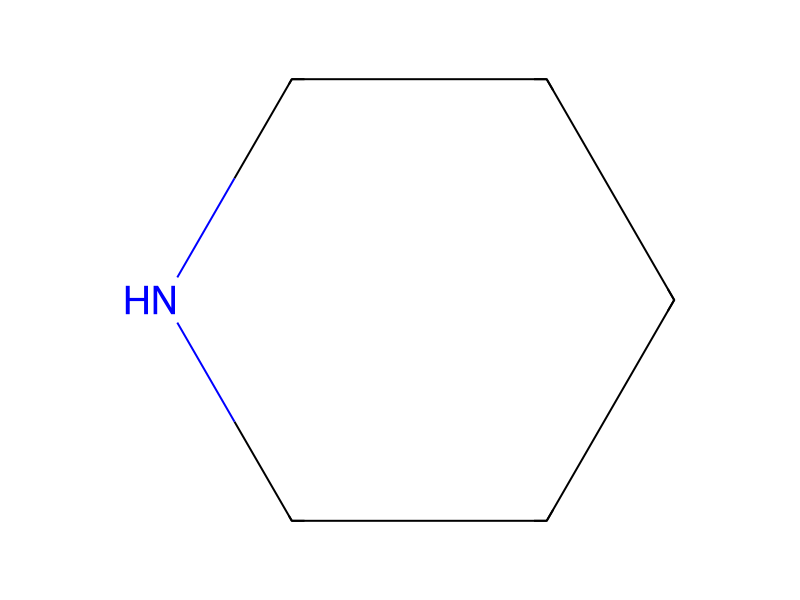
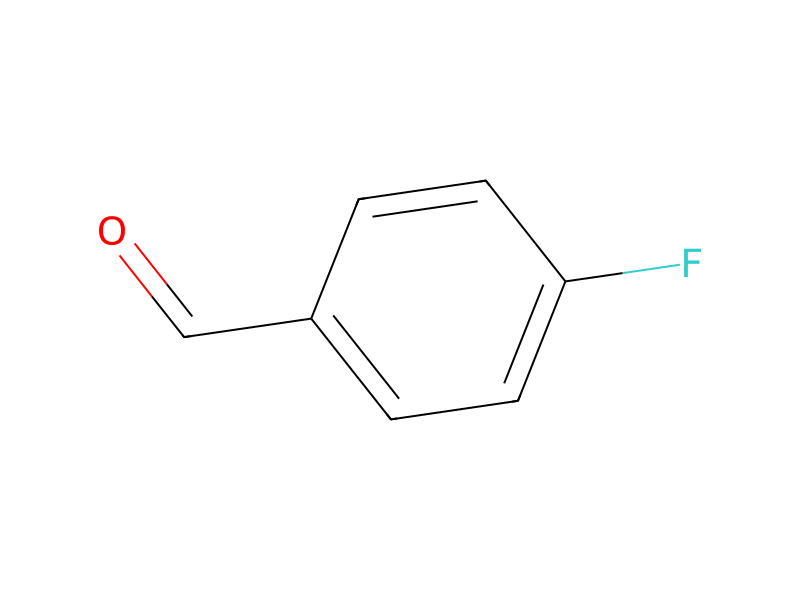
[N+:1]([CH2:4][CH2:5][CH:6]1[O:10][CH2:9][CH2:8][O:7]1)([O-:3])=[O:2].[F:11][C:12]1[CH:19]=[CH:18][C:15]([CH:16]=O)=[CH:14][CH:13]=1.N1CCCCC1>C1(C)C=CC=CC=1>[F:11][C:12]1[CH:19]=[CH:18][C:15](/[CH:16]=[C:4](\[N+:1]([O-:3])=[O:2])/[CH2:5][CH:6]2[O:10][CH2:9][CH2:8][O:7]2)=[CH:14][CH:13]=1Participants
5
Reactant 3

Product 1

Reagents, catalysts & solvents 1

Procedure
In a flask equipped with a Dean-Stark trap and a reflux condenser, a solution of 2-(2-nitro-ethyl)-[1,3]dioxolane (162.5 g, 1.1 mol) in toluene (1.2 L) was treated with 4-fluorobenzaldehyde (124 g, 1.0 mol) followed by piperidine (15 mL, 0.15 mol). The solution was heated at reflux under N2 for 16 h, then was cooled to rt and washed with water (2×300 mL) and satd. aq. NaCl (2×300 mL). Charcoal and MgSO4 were added, and the suspension was stirred for 1 h. Filtration and concentration of the filtrate provided the title compound, which was used in the next reaction without further purification. 1H NMR (400 MHz, CDCl3): 8.15 (s, 1H), 7.70-7.65 (m, 2H), 7.18-7.10 (m, 2H), 5.23 (t, J=4.5, 1H), 4.10-3.80 (m, 4H), 3.26 (d, J=4.5, 2H). The (Z)-olefin geometry was confirmed by nuclear Overhauser effect (NOE) studies (Stott et al. J. Magn. Reson. 1997, 125, 302-324) with a mixing time of 0.8 sec. When proton at 8.15 ppm was selectively inverted, NOE was observed at 3.25 ppm and 7.65 ppm.