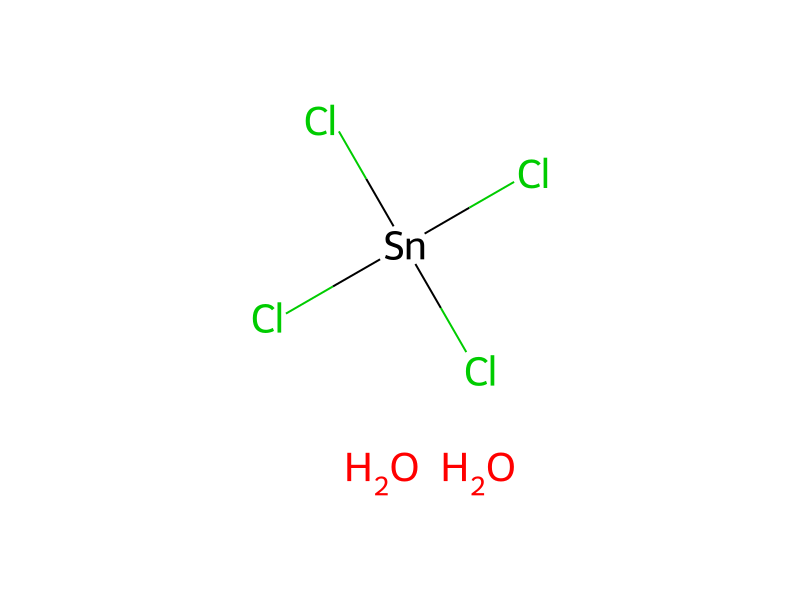
O.O.[Sn](Cl)(Cl)(Cl)Cl.[Cl:8][C:9]1[CH:10]=[N:11][CH:12]=[C:13]([C:15]#[C:16][C:17]2[CH:22]=[CH:21][C:20]([F:23])=[C:19]([N+:24]([O-])=O)[CH:18]=2)[CH:14]=1.C(O)C>O1CCCC1>[Cl:8][C:9]1[CH:14]=[C:13]([C:15]#[C:16][C:17]2[CH:22]=[CH:21][C:20]([F:23])=[C:19]([NH2:24])[CH:18]=2)[CH:12]=[N:11][CH:10]=1Add tin chloride dihydrate (7.13 mg, 31.6 mmol) to a solution of 3-chloro -5-(4-fluoro-3-nitrophenylethynyl)-pyridine, (prepared as described in EXAMPLE 189) (0.97 g, 3.51 mmol) in 2:1 ethanol:tetrahydrofuran (150 mL). Heat the mixture at 70° C. for 2.5 h. Cool to room temperature and concentrate. Dilute with a 50% solution of aqueous potassium hydroxide (300 g) and extract with diethyl ether (5×150 mL). Wash the combined extracts with water (1×50 mL) and saturated aqueous sodium chloride (1×50 mL). Dry (sodium sulfate), filter and concentrate. Purify by silica gel chromatography, eluting with 75:25 hexanes:ethyl acetate, to give the title compound as a light yellow solid (670 mg, 78%).