Reaction equation

[CH2:1]1[O:7][C@H:6]([C@@H:8]([CH2:10][OH:11])[OH:9])[C@H:4]([OH:5])[C@H:2]1[OH:3].OC[C@@H]([C@H]([C@@H]([C@@H](CO)O)O)O)O.S(=O)(=O)(O)O.CC1(C)O[C@]2(OC[C@@H]3OC(C)(C)O[C@@H]3C2=O)CO1.C1O[C@@H]([C@H](CO)O)[C@@H](O)[C@@H]1O.C(O)[C@H]([C@@H]([C@H]([C@H](CO)O)O)O)O.[BH4-].[Na+].O=C[C@H]([C@@H]([C@H]([C@H](CO)O)O)O)O>>[CH2:1]1[O:7][CH:6]([CH:8]([CH2:10][OH:11])[OH:9])[CH:4]([OH:5])[CH:2]1[OH:3]Participants
9




Procedure
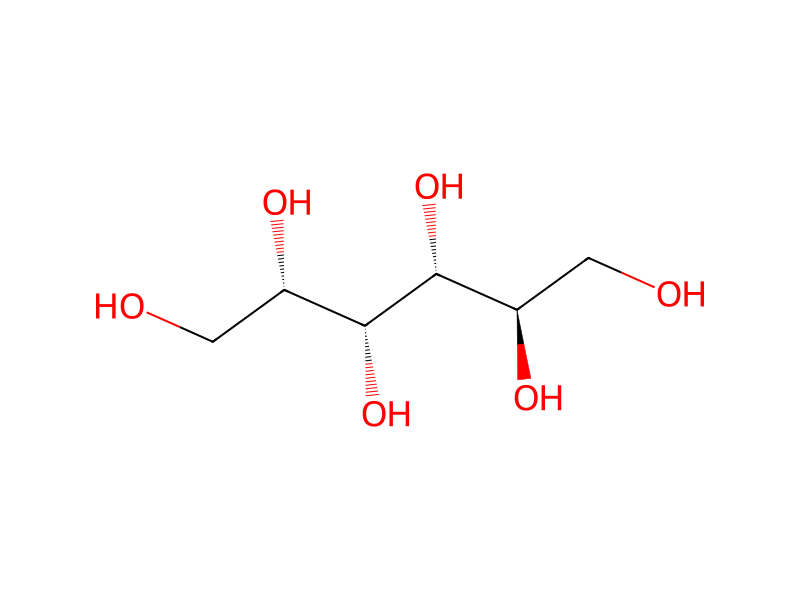
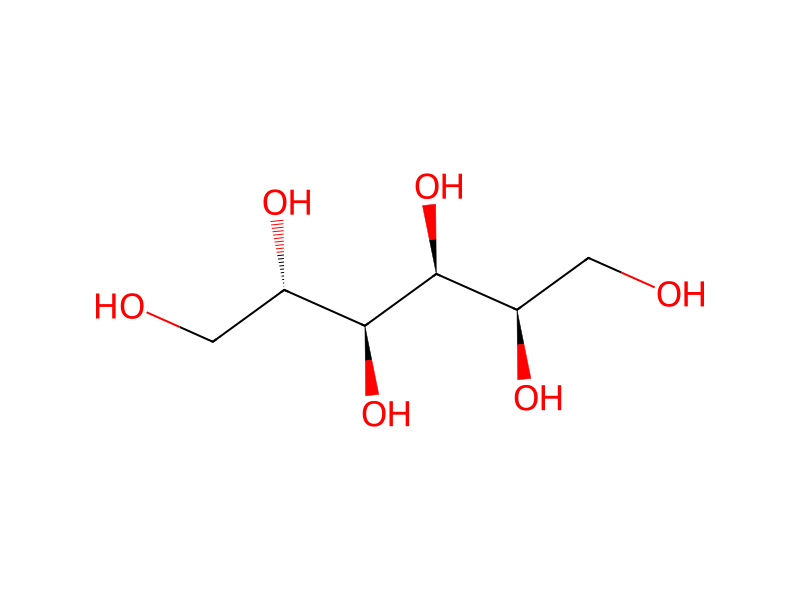
1,4-Anhydro-D-glucitol may be prepared using the procedure disclosed in Acta Chem. Scand., B35, 441-449 (1981), whereby D-sorbitol is heated with an aqueous mineral acid such as sulfuric acid. The L-enantiomer, 1,4-anhydro-L-glucitol, may be prepared from L-glucitol by an analogous procedure. L-glucitol may be prepared by sodium borohydride reduction of L-glucose. The D and L enantiomers may simply be combined to form a 1,4-anhydro-DL-glucitol mixture.
Sources & evidence
- ORD record
- ord-12288f4f8e3745ad93e985bd6c12d4c8
- Source dataset
- uspto-grants-1999_12
- Patent number
- US06007848
Linked notes
Loading…