Reaction equation

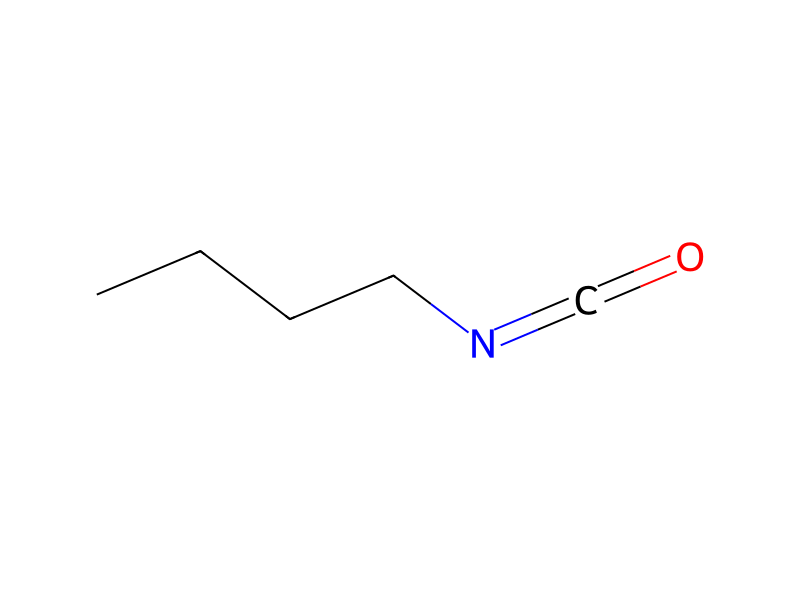
[C:1]1([C:11]2[CH:16]=[CH:15][CH:14]=[CH:13][CH:12]=2)[CH:6]=[CH:5][CH:4]=[CH:3][C:2]=1[S:7]([NH2:10])(=[O:9])=[O:8].C(N=[C:22]=[O:23])CCC.N12CCN(CC1)CC2.C(Cl)(Cl)=O>ClC1C=CC=CC=1>[C:1]1([C:11]2[CH:12]=[CH:13][CH:14]=[CH:15][CH:16]=2)[CH:6]=[CH:5][CH:4]=[CH:3][C:2]=1[S:7]([N:10]=[C:22]=[O:23])(=[O:9])=[O:8]Participants
Reactant 4



Product 1

Reagents, catalysts & solvents 1

Procedure
23.3 g of 2-biphenylylsulfonamide, 10.9. g of n-butyl isocyanate, a catalytic amount of 1,4-diazabicyclo[2,2,2]-octane and 180 ml of chlorobenzene were refluxed with stirring for 2 hours. Then, phosgene in a slight excess of the theroretical amount was blown through the reaction mixture over 2 hours while maintaining the internal temperature at 115°-120° C. At this time, any unreacted phosgene escaping from the reaction system was trapped in a dry ice trap and returned to the reactor. After addition of the phosgene, the reaction mixture was further stirred at the reflux temperature for a short time to complete the reaction. The mixture was cooled, and if necessary, it was filtered under reduced pressure to remove the insoluble matter. It was then concentrated under reduced pressure, to obtain 20.0 g of 2-biphenylylsulfonylisocyanate. B.p. 135°-137° C./0.7-0.8 mmHg.
Workup
- temperaturewhile maintaining the internal temperature at 115°-120° C
- stirringthe reaction mixture was further stirred at the reflux temperature for a short time
- customthe reaction
- temperatureThe mixture was cooled
- filtrationif necessary, it was filtered under reduced pressure
- customto remove the insoluble matter
- concentrationIt was then concentrated under reduced pressure
Sources & evidence
- ORD record
- ord-35c9e98dc0e14b8ea55cba1d7f3e5a81
- Source dataset
- uspto-grants-1985_02
- Patent number
- US04500342
Linked notes
Loading…