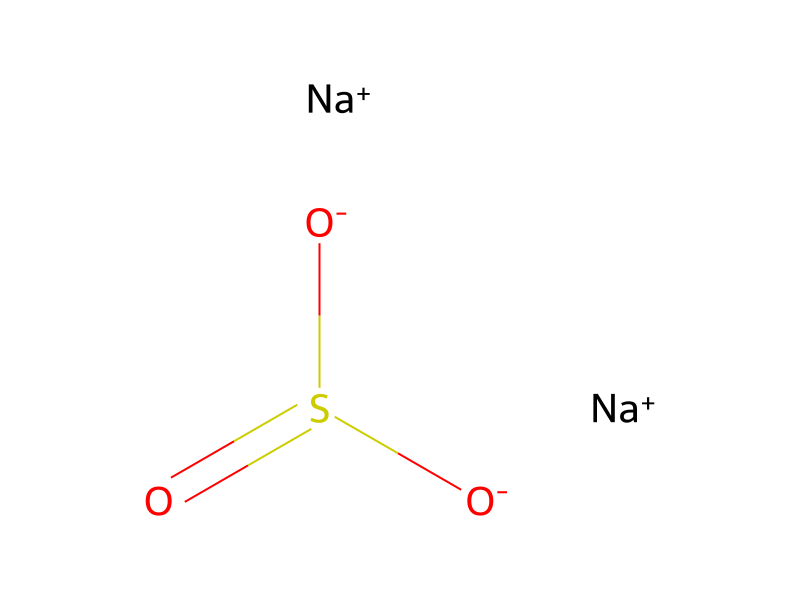
Thus, in a typical procedure, p-chlorobenzene sulfonyl chloride (24 g, 0.115 mol) was added to 250 ml H2O and the resulting suspension was cooled to 0° C. and stirred for 1 hour. Sodium sulfite (15.1 g, 0.120 mol) was then added and the reaction kept at 0° C., and a pH of 7.5 was maintained by addition of 15 percent NaOH using a pH-stat. After two hours the reaction was allowed to warm to 25° C. and stirred for an additional five hours. The resulting clear solution was filtered, the filtrate cooled to 0° C. and 12N HCl at 0° C. was added to the filtrate. The resulting precipitate was collected by filtration and dried under vacuum, to give p-chlorobenzenesulfinic acid as a white solid, 17.3 g (85 percent) mp 94°-96° C. (lit 93°-96° C.). The salt was generated by slurrying the acid in an EtOH/NaOH solution containing an excess of base. The sodium salt was purified by recrystallization from EtOH. Other metal sulfinate catalysts useful according to the present invention are similarly prepared.