Reaction equation

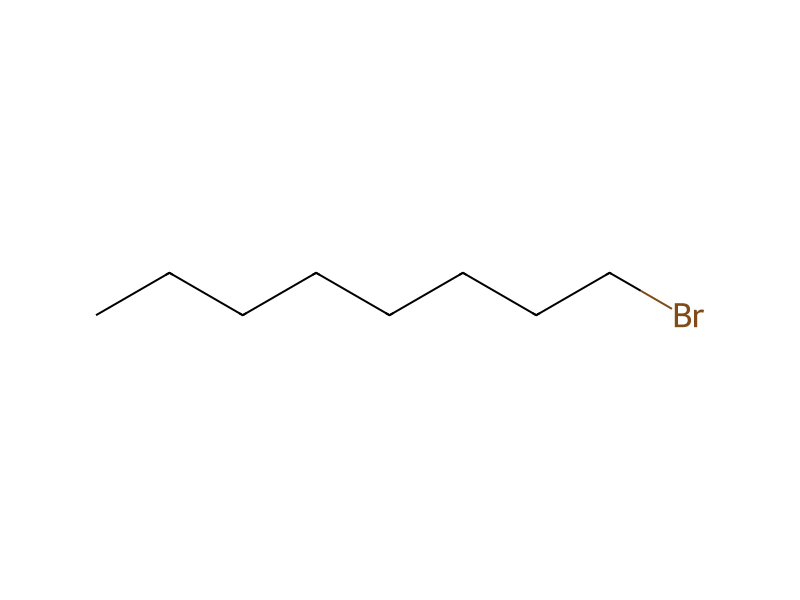
[CH2:1](Br)[CH2:2][CH2:3][CH2:4][CH2:5][CH2:6][CH2:7][CH3:8].[OH:10][C:11]1[CH:16]=[CH:15][C:14]([C:17]2[CH:25]=[CH:24][C:20]([C:21]([OH:23])=[O:22])=[CH:19][CH:18]=2)=[CH:13][CH:12]=1.[OH-].[Na+]>>[CH2:1]([O:10][C:11]1[CH:12]=[CH:13][C:14]([C:17]2[CH:25]=[CH:24][C:20]([C:21]([OH:23])=[O:22])=[CH:19][CH:18]=2)=[CH:15][CH:16]=1)[CH2:2][CH2:3][CH2:4][CH2:5][CH2:6][CH2:7][CH3:8]Participants
4



Conditions
- Temperature
- 70 °C
Procedure
n-Octyl bromide (0.102 mol) is added to a solution of 4-(4-hydroxyphenyl)benzoic acid (0.102 mol) and 2.5 N sodium hydroxide (0.102 mol) and the mixture stirred at 70° C. for a period of 18 hours. The reaction mixture is allowed to cool and then acidified to pH 3 and partitioned between ethyl acetate and water. The organic phase is washed with water and brine and the solvent then removed to obtain the 4'-n-octyloxy-[1,1'-biphenyl]-4-ylcarboxylic acid, C21H23O3, M.W. 326.4
Workup
- temperatureto cool
- custompartitioned between ethyl acetate and water
- washThe organic phase is washed with water and brine
- customthe solvent then removed
Sources & evidence
- ORD record
- ord-1b3a60408c6b4b91a7c7f2cdc4ed6e53
- Source dataset
- uspto-grants-1999_09
- Patent number
- US05948753
Linked notes
Loading…