Potassium Hydroxide → 3,6-dibromo-9-((oxiran-2-yl)methyl)-9H-carbazole
Reaction equation
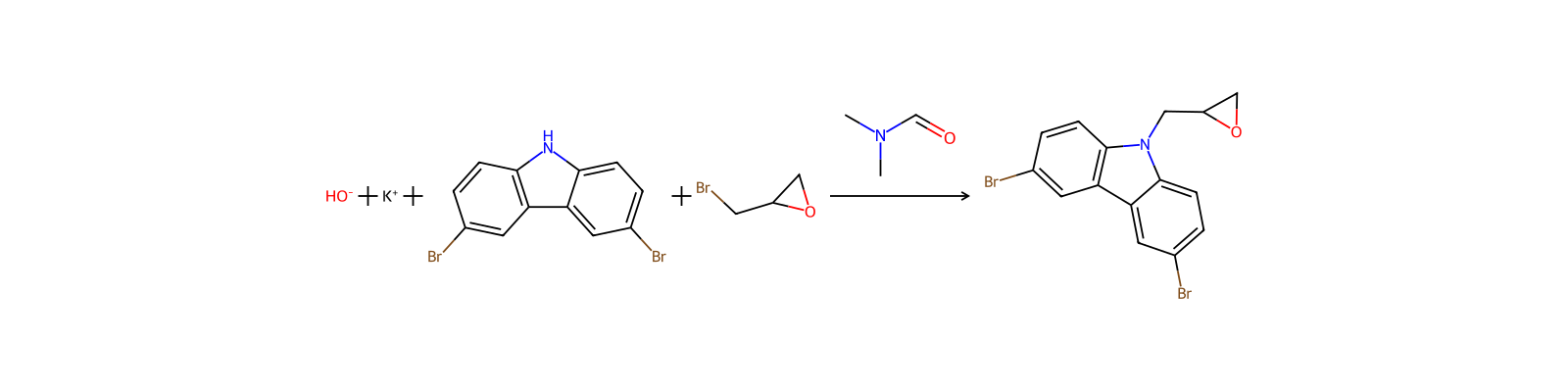
[OH-].[K+].[Br:3][C:4]1[CH:5]=[CH:6][C:7]2[NH:8][C:9]3[C:14]([C:15]=2[CH:16]=1)=[CH:13][C:12]([Br:17])=[CH:11][CH:10]=3.[CH2:18]([CH:20]1[O:22][CH2:21]1)Br>CN(C=O)C>[Br:17][C:12]1[CH:11]=[CH:10][C:9]2[N:8]([CH2:18][CH:20]3[CH2:21][O:22]3)[C:7]3[C:15]([C:14]=2[CH:13]=1)=[CH:16][C:4]([Br:3])=[CH:5][CH:6]=3Participants
5
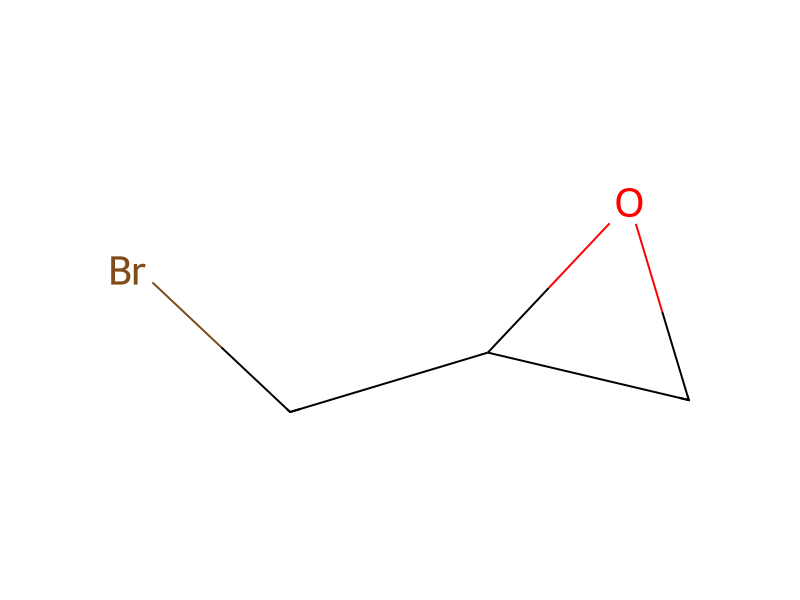
Reactant 3


Product 1

Reagents, catalysts & solvents 1

Procedure
Following a literature procedure (Asso, V.; Ghilardi, E.; Bertini, S.; Digiacomo, M.; Granchi, C.; Minutolo, F.; Rapposelli, S.; Bortolato, A.; Moro, S. Macchia, M. ChemMedChem, 2008, 3, 1530-1534) powdered KOH (0.103 g, 1.85 mmol) was added to a solution of 3,6-dibromocarbazole (0.500 g, 1.54 mmol) in DMF (1.5 mL) at ambient temperature and stirred for 30 min until dissolved. Epibromohydrin (0.32 mL, 3.8 mmol) was added via syringe and the reaction was stirred at room temperature overnight. Upon completion, the solution was partitioned between EtOAc and H2O. The aqueous layer was washed 3× with EtOAc, and the combined organics were washed with saturated aqueous NaCl, dried over Na2SO4, filtered, and concentrated in vacuo. The crude residue was recrystallized from EtOAc/Hexane to afford the desired product (389 mg, 66%).