Reaction equation

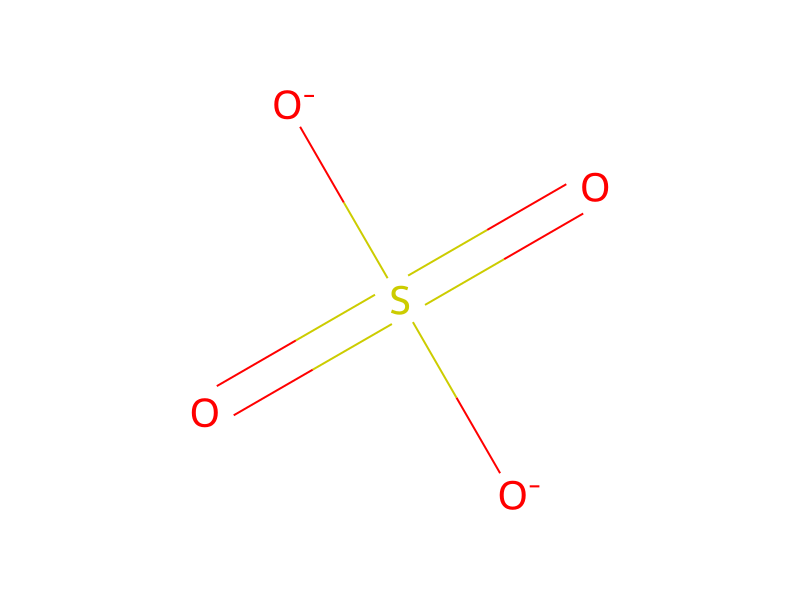
[F:1][C:2]1[C:10]([F:11])=[C:9]([F:12])[C:8]([F:13])=[C:4](C(O)=O)[C:3]=1C(O)=O.S([O-])([O-])(=O)=[O:18].[OH-].[Na+]>O>[F:1][C:2]1[CH:3]=[CH:4][C:8]([F:13])=[C:9]([F:12])[C:10]=1[F:11].[F:1][C:2]1[CH:3]=[CH:4][C:8]([OH:18])=[C:9]([F:12])[C:10]=1[F:11]Participants
Reactant 3


Product 2


Reagents, catalysts & solvents 1

Conditions
- Temperature
- 200 °C
Procedure
In an autoclave having an inner volume of 100 ml, 3.0 g (0.0126 mole) of 3,4,5,6-tetrafluorophthalic acid containing no sulfate ion, 0.5 g (0.0125 mole) of sodium hydroxide, and 50 g of water were placed and heated for reaction at 200° C. for 25 hours. After completion of the reaction, the reaction mixture was cooled to room temperature and extracted with 150 ml of diisopropyl ether. By analyzing this extract by gas chromatography using a 2 m column packed with SE52 and kept at 50° C., the reaction was found to have produced 2.9 mole % of 1,2,3,4-tetrafluorobenzene, 89.1 mole % of trifluorophenol, and substantially no 2,3,4,5-tetrafluorobenzoic acid based on the 3,4,5,6-tetrafluorophthalic acid used as the starting material [pH 2.75 at 25° C. at the time of charging].
Workup
- customAfter completion of the reaction
- temperaturethe reaction mixture was cooled to room temperature
- extractionextracted with 150 ml of diisopropyl ether
- extractionthis extract by gas chromatography
- customkept at 50° C.
Sources & evidence
- ORD record
- ord-cd5760b79d004bedb9f906022f11db42
- Source dataset
- uspto-grants-1988_09
- Patent number
- US04769492
Linked notes
Loading…