HomeMCPWorkbenchSkills
HomeWorkbenchNotificationsMe
llms.txt · MCP GuidePrivacy Policy · Terms of Service · Supportv1.8.3
  1. Home
  2. /Reaction

Pivalic acid → Ethyl 3-(2,5-dimethylbenzyl)imidazo[1,2-a]pyridine-2-carboxylate

HRID 626966
Print

Reaction equation

HRID 626966 reaction equation
[N:1]1[C:2]([C:10]([O:12][CH2:13][CH3:14])=[O:11])=[CH:3][N:4]2[CH:9]=[CH:8][CH:7]=[CH:6][C:5]=12.Cl[CH2:16][C:17]1[CH:22]=[C:21]([CH3:23])[CH:20]=[CH:19][C:18]=1[CH3:24].C(O)(=O)C(C)(C)C.C(=O)([O-])[O-].[Cs+].[Cs+]>C1(C)C=CC=CC=1.C([O-])(=O)C(C)(C)C.[Pd+2].C([O-])(=O)C(C)(C)C.C1(P(C2C=CC=CC=2)C2C=CC=CC=2C2C=CC=CC=2N(C)C)C=CC=CC=1>[CH3:24][C:18]1[CH:19]=[CH:20][C:21]([CH3:23])=[CH:22][C:17]=1[CH2:16][C:3]1[N:4]2[CH:9]=[CH:8][CH:7]=[CH:6][C:5]2=[N:1][C:2]=1[C:10]([O:12][CH2:13][CH3:14])=[O:11]
ParticipantsConditionsProcedureWorkupSources & evidenceReaction notes

Participants

8

Reactant 4

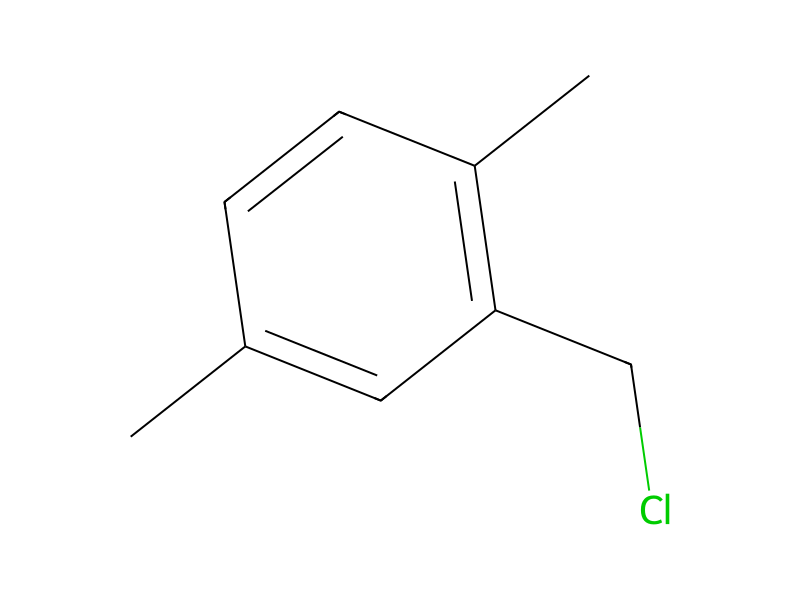
HCID 6417Pivalic acidHCID 10796Cesium carbonateHCID 69987Benzene, 2-(chloromethyl)-1,4-dimethyl-HCID 818807Ethyl imidazo[1,2-a]pyridine-2-carboxylate

Product 1

HCID 89924521Ethyl 3-(2,5-dimethylbenzyl)imidazo[1,2-a]pyridine-2-carboxylateYield 55%

Reagents, catalysts & solvents 3

HCID 27349392'-(diphenylphosphanyl)-N,N-dimethyl-[1,1'-biphenyl]-2-amineCatalyst
HCID 24905427palladium(II) pivalateCatalyst
HCID 1140TolueneSolvent

Conditions

Temperature
110 °C

Procedure

A mixture of ethyl imidazo[1,2-a]pyridine-2-carboxylate (0.48 g, 2.5 mmoL), 2-(chloromethyl)-1,4-dimethylbenzene (0.6 mL, 3.75 mmol), palladium pivalate (15 mg, 0.05 mmol), 2-(diphenylphosphino)-2′-(N,N-dimethylamino)biphenyl (38 mg, 0.1 mmol), pivalic acid (51 mg, 0.5 mmol) and cesium carbonate (1.22 g, 3.75 mmol) in toluene (5 mL) was degassed and flushed with N2 three times. The reaction mixture was heated with stirring at 110° C. until TLC or LCMS analysis indicated that the reaction was complete. The reaction mixture was allowed to cool to room temperature and evaporated in vacuo. The crude residue was suspended in EtOAc (30 mL) and washed with water. The aqueous phases were extracted with further EtOAc (4×30 mL), then the combined organic layers were dried (MgSO4), filtered and concentrated in vacuo. The crude material was purified by chromatography (SiO2; 2-60% EtOAc in DCM) to afford the title compound (420 mg, 55%) as a pale orange solid. δH (400 MHz, CDCl3) 7.74 (d, J 9.2 Hz, 1H), 7.66 (d, J 7.0 Hz, 1H), 7.20-7.26 (m, 1H), 7.11 (d, J 7.7 Hz, 1H), 6.94 (d, J 7.6 Hz, 1H), 6.75 (t, J 6.9 Hz, 1H), 6.39 (s, 1H), 4.70 (s, 2H), 4.50 (q, J 7.1 Hz, 2H), 2.41 (s, 3H), 2.12 (s, 3H), 1.44 (t, J 7.1 Hz, 3H). LCMS (ES+) (M+H)+ 308, RT 2.31 minutes.

Workup

  1. customwas degassed
  2. customflushed with N2 three times
  3. temperatureThe reaction mixture was heated
  4. temperatureto cool to room temperature
  5. customevaporated in vacuo
  6. washwashed with water
  7. extractionThe aqueous phases were extracted with further EtOAc (4×30 mL)
  8. dry with materialthe combined organic layers were dried (MgSO4)
  9. filtrationfiltered
  10. concentrationconcentrated in vacuo
  11. customThe crude material was purified by chromatography (SiO2; 2-60% EtOAc in DCM)

Sources & evidence

ORD record
ord-229726cad279485898b9d1a8165faad6
Source dataset
uspto-grants-2016_04
DOI
10.6084/m9.figshare.5104873.v1
Patent number
US09309243B2

Reaction notes

On this pageParticipantsConditionsProcedureWorkupSources & evidenceReaction notes