Reaction equation

[Cl:1][C:2]1[CH:3]=[C:4]([CH:8]=[CH:9][C:10]=1[F:11])[C:5](Cl)=[O:6].Cl[C:13]1C=CC=CC=1F.C(Cl)(=O)C.[Cl-].[Al+3].[Cl-].[Cl-].Cl>ClC(Cl)=C(Cl)Cl.C(Cl)Cl.C(=S)=S>[CH3:13][C:5]([C:4]1[CH:8]=[CH:9][C:10]([F:11])=[C:2]([Cl:1])[CH:3]=1)=[O:6]Participants
9
Reactant 5


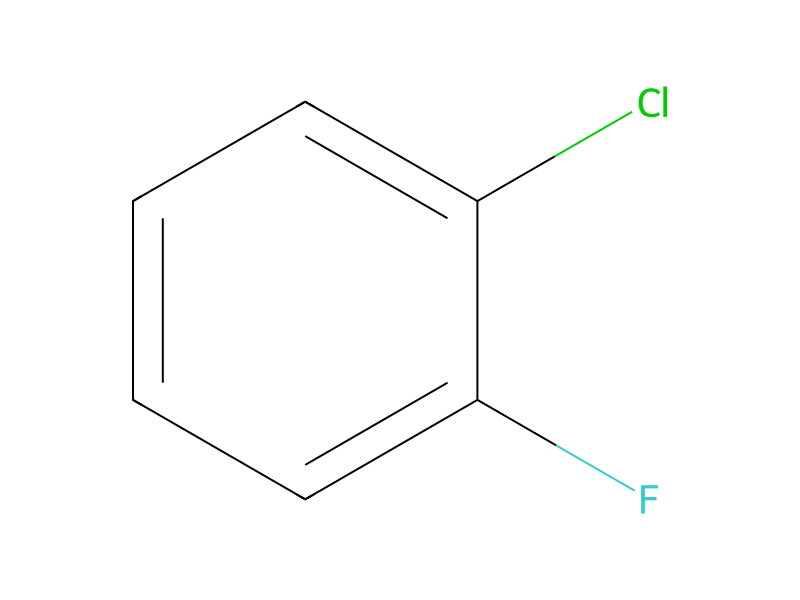


Product 1
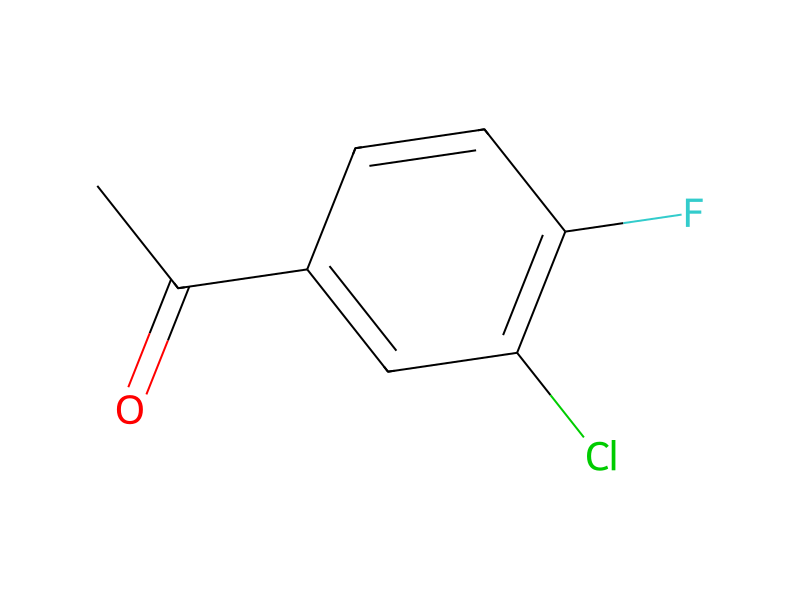
Reagents, catalysts & solvents 3



Procedure
3-Chloro-4-fluorobenzoyl chloride is available via a multi-stage synthesis. According to Diep et al., J. Chem. Soc. [1963], 2784-2787, ortho-chlorofluorobenzene is initially reacted with acetyl chloride in the presence of large amounts of aluminum chloride in the presence of carbon disulfide, methylene chloride or tetrachloroethylene, the reaction mixture is decomposed with dilute hydrochloric acid, the organic phase is washed with aqueous sodium hydroxide, then with water, and dried over sodium sulfate, the solvent is evaporated, and the residue is subjected to fractional distillation at reduced pressure. This method gives 3-chloro-4-fluoroacetophenone in a yield of about 80%.
Workup
- washthe organic phase is washed with aqueous sodium hydroxide
- dry with materialwith water, and dried over sodium sulfate
- customthe solvent is evaporated
- distillationthe residue is subjected to fractional distillation at reduced pressure
Sources & evidence
- ORD record
- ord-f9495f7508b342e992643886567fff12
- Source dataset
- uspto-grants-2001_02
- Patent number
- US06187952B1
Linked notes
Loading…