Reaction equation

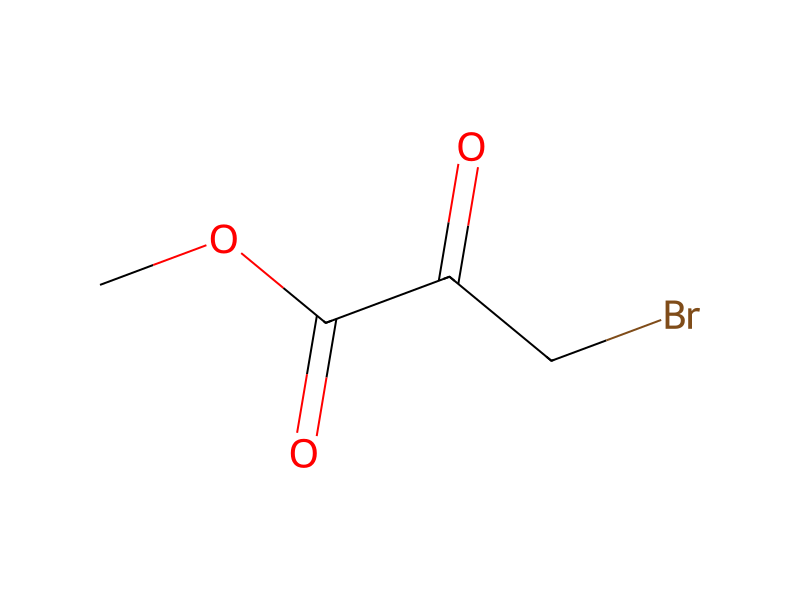
[C:1]1([C:7]2[N:8]=[N:9][S:10][C:11]=2[C:12](=[S:14])[NH2:13])[CH:6]=[CH:5][CH:4]=[CH:3][CH:2]=1.Br[CH2:16][C:17](=O)[C:18]([O:20][CH3:21])=[O:19].C(=O)([O-])O.[Na+]>ClC1C=CC=CC=1>[C:1]1([C:7]2[N:8]=[N:9][S:10][C:11]=2[C:12]2[S:14][CH:16]=[C:17]([C:18]([O:20][CH3:21])=[O:19])[N:13]=2)[CH:2]=[CH:3][CH:4]=[CH:5][CH:6]=1Participants
5



Procedure
In 20 ml of chlorobenzene were dissolved 1.1 g (5.0 mmol) of 4-phenyl-1,2,3-thiadiazole-5-carbothioamide and 0.92 g (5.0 mmol) of methyl bromopyruvate. The solution thus obtained was stirred for 3 hours with heating under reflux. After the reaction was completed, the reaction mixture was cooled to room temperature, a saturated aqueous solution of sodium hydrogen carbonate was added thereto, and the objective product was extracted with ethyl acetate. The solvent was distilled off from the extract solution under a reduced pressure, and the residue was purified by silica gel column chromatography using 3:1 mixture of n-hexane and ethyl acetate. Thus, 0.74 g of the objective compound was obtained.
Workup
- customThe solution thus obtained
- temperaturewith heating
- temperatureunder reflux
- extractionthe objective product was extracted with ethyl acetate
- distillationThe solvent was distilled off from the extract solution under a reduced pressure
- customthe residue was purified by silica gel column chromatography
- addition3:1 mixture of n-hexane and ethyl acetate
Sources & evidence
- ORD record
- ord-5de52b7505404866afc77c4c6bf0c9b3
- Source dataset
- uspto-grants-2001_02
- Patent number
- US06194444B1
Linked notes
Loading…