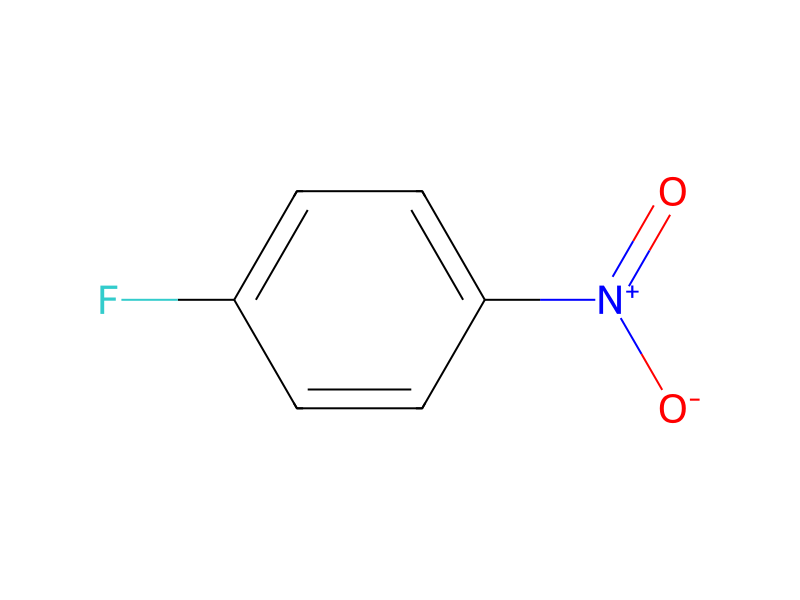
The crude 3-(3-Fluoro-pyrrolidin-1-yl)-propan-1-ol (assumed 3.06 mmol) was dissolved in THF (8 mL) and was cooled to 0° C. The 0° C. solution was treated consecutively with KOtBu (1.5 g, 13.5 mmol) then 4-fluoronitrobenzene (423.3 mg, 3 mmol). The resulting reaction mixture was allowed to warm to room temperature and stir for an additional 4.5 h. The reaction mixture was quenched with the addition of ice water (50 mL) followed by extraction with EtOAc (75 mL). The organics were subsequently washed with room temperature H2O (75 mL), then saturated NaHCO3(aq) (75 mL), and finally with brine (75 mL). The organics then were dried over anhydrous sodium sulfate, decanted and concentrated in vacuo to yield crude 3-Fluoro-1-[3-(4-nitro-phenoxy)-propyl]-pyrrolidine (660 mg) as a yellow oil. This material was carried on without further purification.