Chlorotrimethylsilane → Cyclopentyloxy cyclopentyl dimethoxysilane
Reaction equation

[CH:1]1([Si:6]([O:11][CH3:12])([O:9][CH3:10])[O:7][CH3:8])[CH2:5][CH2:4][CH2:3][CH2:2]1.[CH:13]1(O)[CH2:17]C[CH2:15][CH2:14]1.C[Si](C)(C)Cl>C[O-].[Na+]>[CH:10]1([O:9][Si:6]([CH:1]2[CH2:2][CH2:3][CH2:4][CH2:5]2)([O:11][CH3:12])[O:7][CH3:8])[CH2:15][CH2:14][CH2:13][CH2:17]1Participants
5
Reactant 3

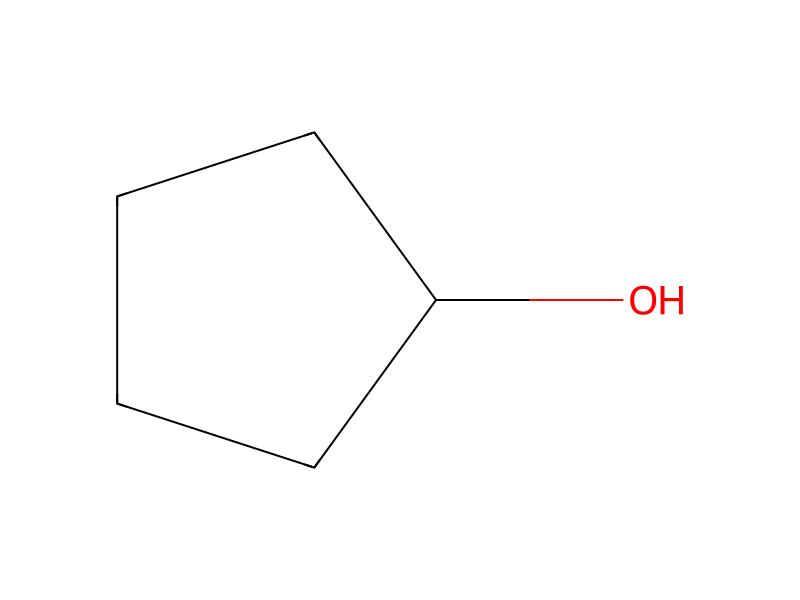

Product 1

Reagents, catalysts & solvents 1

Procedure
In a 50 ml three-neck flask provided with a magnetic stirrer and a reflux condenser were charged 5.0 g (0.0262 mole) of cyclopentyl trimethoxysilane, 22.5 g (0.262 mole) of cyclopentyl alcohol and 18.6 mg (0.34 m mole) of sodium methoxide, which were then reacted with each other at room temperature for 2 hours under stirring. Then, trimethylchlorosilane was added to neutralize the alkali. Then, 5.4 g (0.0223 mole) of cyclopentyloxy cyclopentyl dimethoxysilane were obtained by vacuum distillation. Its structure was confirmed as in Example 1. The yield was 85%.