Piperonylamine → 1-Phenyl-7,8,9,10-tetrahydrothieno[3,2-e]pyrido[4,3-b]indole
HRID 647942
Reaction equation

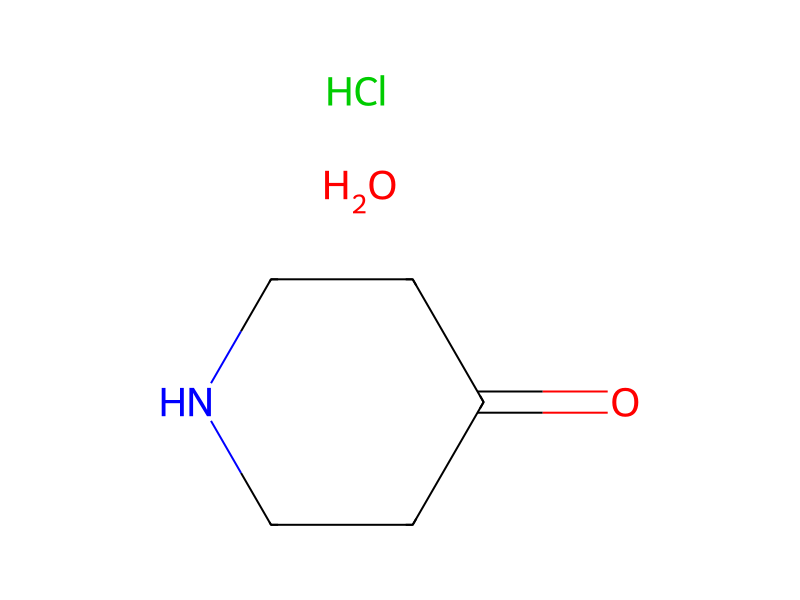
Cl.[NH:2]([C:4]1[CH:5]=[CH:6][C:7]2[S:11][CH:10]=[C:9]([C:12]3[CH:17]=[CH:16][CH:15]=[CH:14][CH:13]=3)[C:8]=2[CH:18]=1)N.O.Cl.[NH:21]1[CH2:26][CH2:25][C:24](=O)[CH2:23][CH2:22]1>C(O)(C)C>[C:12]1([C:9]2[C:8]3=[C:18]4[C:4](=[CH:5][CH:6]=[C:7]3[S:11][CH:10]=2)[NH:2][C:24]2[CH2:25][CH2:26][NH:21][CH2:22][C:23]4=2)[CH:17]=[CH:16][CH:15]=[CH:14][CH:13]=1Participants
4
Reactant 2

Product 1

Reagents, catalysts & solvents 1

Procedure
28 g of 5-hydrazino-3-phenylbenzothiophene hydrochloride are dissolved in 300 ml of isopropanol and the solution is combined with 20 g of 4-piperidone hydrochloride monohydrate under an inert gas. After boiling the mixture for 3 hours, the solvent is evaporated off, the residue is taken up in isopropanol and the product is precipitated with the addition of isopropyl ether. The precipitate is filtered off and taken up in water; a layer of methylene chloride is introduced under the solution and the mixture is shaken with NaOH solution. The organic phase is separated off and worked up. Melting point: 228° C. (decomposition)