Reaction equation

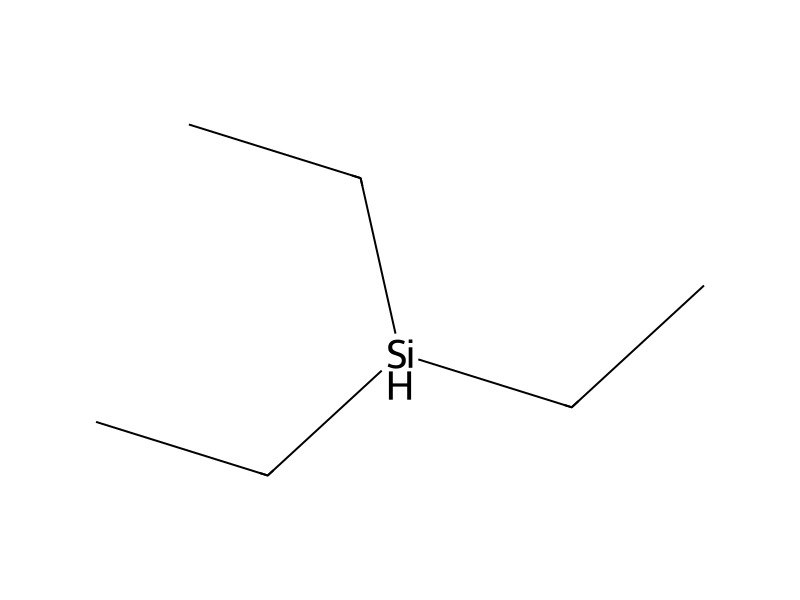
[SiH:1]([CH2:6][CH3:7])([CH2:4][CH3:5])[CH2:2][CH3:3].[CH3:8][C:9]([CH3:13])([CH3:12])[CH:10]=[CH2:11].[SiH:14]([Cl:17])([Cl:16])[Cl:15]>>[Si:14]([CH2:11][CH2:10][C:9]([CH3:13])([CH3:12])[CH3:8])([Cl:17])([Cl:16])[Cl:15].[Si:1]([CH2:11][CH2:10][C:9]([CH3:13])([CH3:12])[CH3:8])([CH2:6][CH3:7])([CH2:4][CH3:5])[CH2:2][CH3:3]Participants
5



Procedure
In a 100 ml apparatus, there were combined 11.6 g (0.1 mol) of Et3SiH, 8.4 g (0.1 mol) of 3,3-dimethyl-1-butene, and 13.6 g (0.1 mol) of Cl3SiH. Pt Catalyst solution was added (0.05 ml) at 24° C., causing a rapid exothermic reaction to 57° C. in 4 min. Vacuum distillation yielded 1.82 g (8.3%) of Cl3SiCH2CH2CMe3 and 11.95 g (59.8%) of Et3SiCH2CH2CMe3. This example shows that Cl3SiH is an effective promoter at the equimolar level for the reaction between Et3SiH and 3,3-dimethyl-1-butene.
Workup
- additionPt Catalyst solution was added (0.05 ml) at 24° C.
- customa rapid exothermic reaction to 57° C. in 4 min
- distillationVacuum distillation
Sources & evidence
- ORD record
- ord-d6cc982bfcfb45b499323fab4859e8a4
- Source dataset
- uspto-grants-1986_09
- Patent number
- US04614812
Linked notes
Loading…