Reaction equation

C(OP([CH2:9][C:10]1[CH:15]=[CH:14][CH:13]=[C:12]([Br:16])[CH:11]=1)(=O)OCC)C.O=[C:18]1[CH2:23][CH2:22][N:21]([C:24]([O:26][C:27]([CH3:30])([CH3:29])[CH3:28])=[O:25])[CH2:20][CH2:19]1.CC(C)([O-])C.[K+]>O1CCCC1>[Br:16][C:12]1[CH:11]=[C:10]([CH:9]=[C:18]2[CH2:23][CH2:22][N:21]([C:24]([O:26][C:27]([CH3:30])([CH3:29])[CH3:28])=[O:25])[CH2:20][CH2:19]2)[CH:15]=[CH:14][CH:13]=1Participants
5
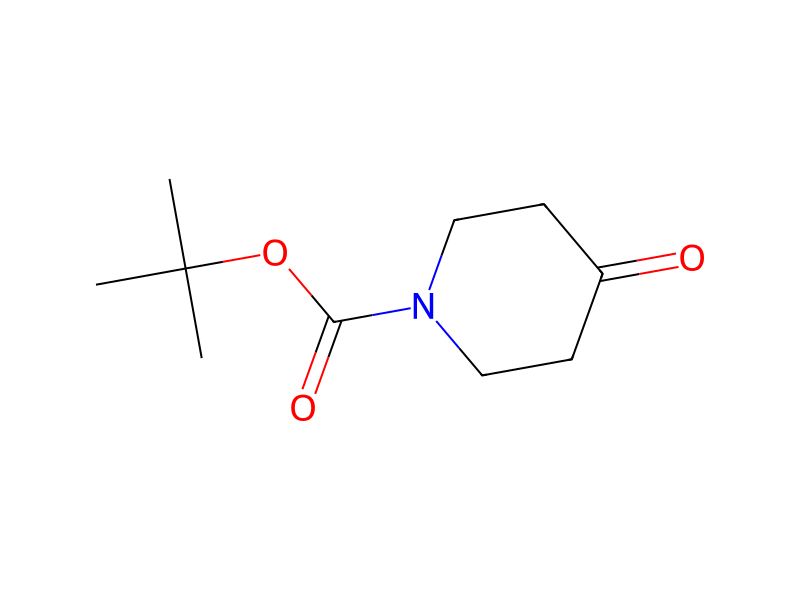




Procedure
To diethyl[(3-bromophenyl)methyl]phosphonate (100 g, 326 mmol) in a 2 L 3-neck flask with mechanical stirrer was added tetrahydrofuran (THF) (700 mL) followed by 1,1-dimethylethyl 4-oxo-1-piperidinecarboxylate (71.4 g, 358 mmol) and potassium tert-butoxide (38.4 g, 342 mmol), portion-wise with ice-bath cooling to keep the temperature between 20° C. and 25° C. The mixture became more orange and was then stirred at room temperature under nitrogen. Some material was present as a suspension and it was slightly more viscous. Another 3.8 gm (0.1 eq) of potassium tert-butoxide was added. After 1.25 h the mixture had practically gelled and an extra 150 mL of THF were added.
Workup
- temperaturecooling
- customthe temperature between 20° C. and 25° C
Sources & evidence
- ORD record
- ord-141f6ca92aef491a83ef478172401a35
- Source dataset
- uspto-grants-2011_12
- Patent number
- US08084449B2
Linked notes
Loading…