Reaction equation

[NH2:1][C:2]1[S:6][N:5]=[C:4]([C:7]([Cl:10])([Cl:9])[Cl:8])[N:3]=1.[C:11](Cl)(=[O:20])[C:12]1[CH:17]=[CH:16][C:15]([O:18][CH3:19])=[CH:14][CH:13]=1>C1(C)C(C)=CC=CC=1>[C:11]([NH:1][C:2]1[S:6][N:5]=[C:4]([C:7]([Cl:10])([Cl:9])[Cl:8])[N:3]=1)(=[O:20])[C:12]1[CH:17]=[CH:16][C:15]([O:18][CH3:19])=[CH:14][CH:13]=1Participants
4
Reactant 2
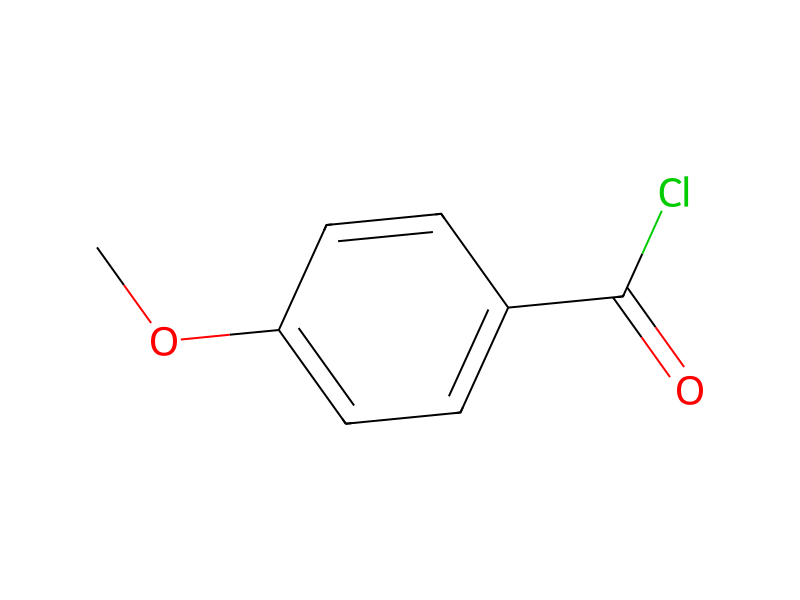

Product 1

Reagents, catalysts & solvents 1

Procedure
A solution of 11.0 g (0.05 mole) 5-amino-3-trichloromethyl-1,2,4-thiadiazole and 12.8 g (0.08 mole) 4-anisoyl chloride in 200 ml xylene was heated at reflux for 20 hours. Cooling of the reaction mixture resulted in precipitation of the crude product, which was then isolated by filtration. Purification was achieved by washing the crude product with hot hexane. Yield was 12.0 g (82%); m.p. 172° C.
Workup
- temperatureat reflux for 20 hours
- temperatureCooling of the reaction mixture
Sources & evidence
- ORD record
- ord-c5e879964bea48bfb1cb9bbca35b987c
- Source dataset
- uspto-grants-1982_08
- Patent number
- US04343945
Linked notes
Loading…