Reaction equation
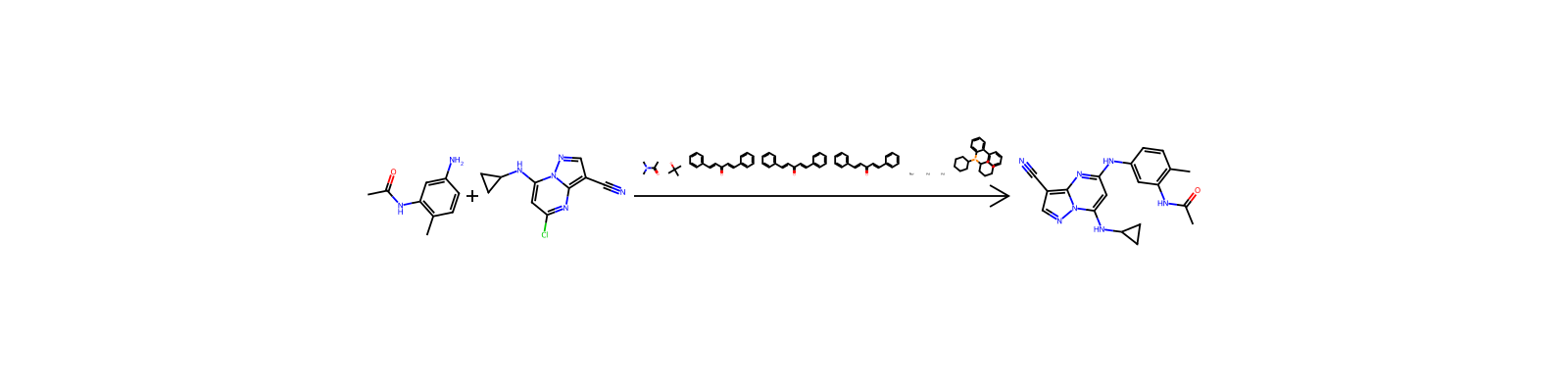
CC(=O)Nc1cc(N)ccc1C.N#Cc1cnn2c(NC3CC3)cc(Cl)nc12>CC(=O)N(C)C.CC(C)(C)[O-].O=C(/C=C/c1ccccc1)/C=C/c1ccccc1.O=C(/C=C/c1ccccc1)/C=C/c1ccccc1.O=C(/C=C/c1ccccc1)/C=C/c1ccccc1.[Na+].[Pd].[Pd].c1ccc(-c2ccccc2P(C2CCCCC2)C2CCCCC2)cc1>CC(=O)Nc1cc(Nc2cc(NC3CC3)n3ncc(C#N)c3n2)ccc1CParticipants
7
Reactant 2

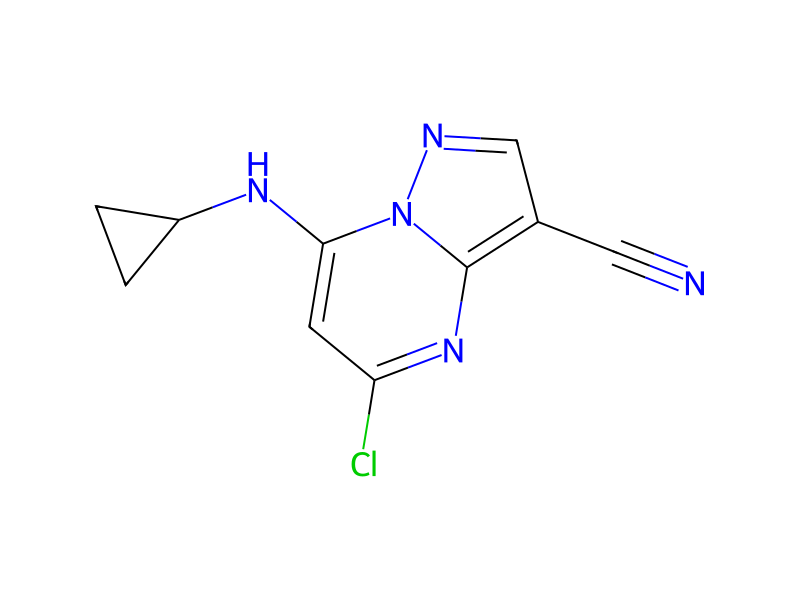
Product 1

Reagents, catalysts & solvents 4

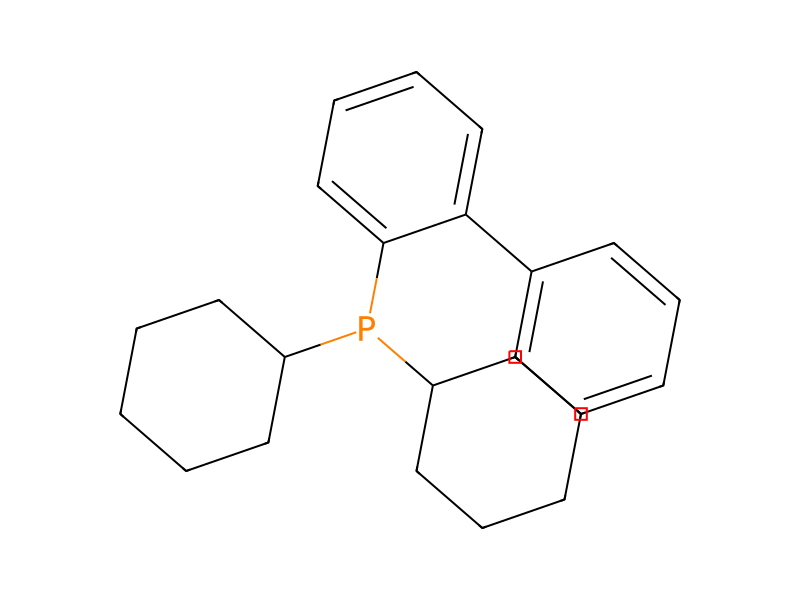


Conditions
- Temperature
- 120 °C
Procedure
In a 25 mL round-bottomed flask (t=g) was 5-chloro-7-(cyclopropylamino)pyrazolo[1,5-a]pyrimidine-3-carbonitrile (40 mg, 0.17 mmol), Pd2(dba)3 (7.84 mg, 8.56 µmol), and [Reactants] in DMA (1.5 mL) ([VOLUME]) to give a black suspension.[Reactants] and N-(5-amino-2-methylphenyl)acetamide (28.1 mg, 0.17 mmol) were added. stirred at 110C for 2 days. TLC showed major is SM, small amount of product was formed/ did not workup LCMS showed 349 mass ??
Sources & evidence
- ORD record
- ord-9d52138831044592b5c7c5511d53f49c
- Source dataset
- 750 AstraZeneca ELN dataset
- Original link
- View source
Linked notes
Loading…