Reaction equation

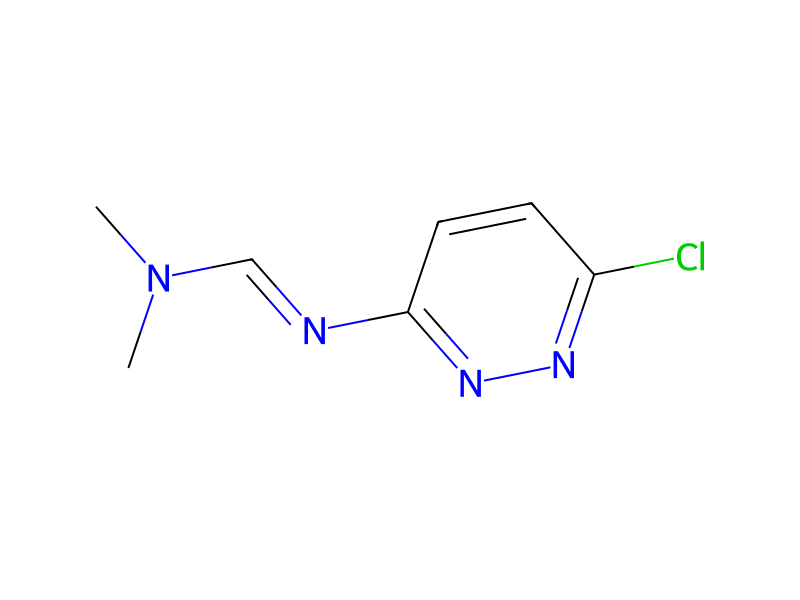
[Cl:1][C:2]1[N:7]=[N:6][C:5]([N:8]=[CH:9]N(C)C)=[CH:4][CH:3]=1.Br[CH2:14][C:15]([C:17]1[CH:18]=[C:19]2[C:24](=[CH:25][CH:26]=1)[N:23]=[CH:22][CH:21]=[CH:20]2)=[O:16].C(N(CC)CC)C>O>[Cl:1][C:2]1[CH:3]=[CH:4][C:5]2[N:6]([C:14]([C:15]([C:17]3[CH:18]=[C:19]4[C:24](=[CH:25][CH:26]=3)[N:23]=[CH:22][CH:21]=[CH:20]4)=[O:16])=[CH:9][N:8]=2)[N:7]=1Participants
5




Procedure
A mixture of N′-(6-chloro-pyridazin-3-yl)-N,N-dimethyl-formamidine (Stage 1.6, 2 g, 10.8 mmol), 2-bromo-1-quinolin-6-yl-ethanone (Stage 1.3, 3.36 g, 10.8 mmol) and triethylamine (1.1 g, 10.8 mmol) was stirred under reflux for 90 min. The reaction was allowed to cool and water (100 mL) was then added. The resulting red precipitate was filtered off to afford the title compound as a red solid (tR 1.2 min(conditions 1), MH+=309).
Workup
- temperatureunder reflux for 90 min
- temperatureto cool
- filtrationThe resulting red precipitate was filtered off
Sources & evidence
- ORD record
- ord-a3c3b3b4a60845de82fab6907bdca040
- Source dataset
- uspto-grants-2014_09
- Patent number
- US08822468B2
Linked notes
Loading…