Reaction equation
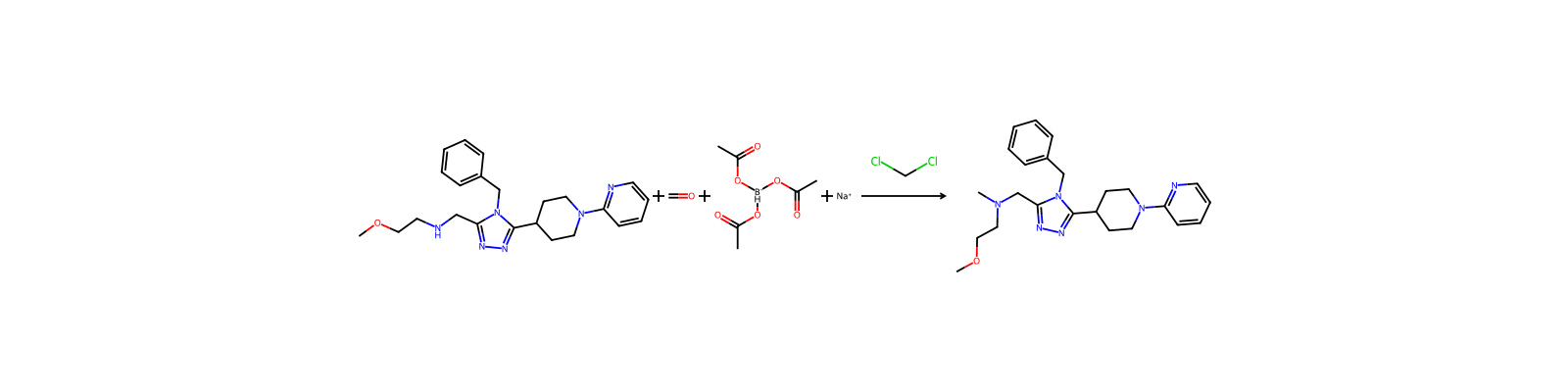
[CH2:1]([N:8]1[C:12]([CH:13]2[CH2:18][CH2:17][N:16]([C:19]3[CH:24]=[CH:23][CH:22]=[CH:21][N:20]=3)[CH2:15][CH2:14]2)=[N:11][N:10]=[C:9]1[CH2:25][NH:26][CH2:27][CH2:28][O:29][CH3:30])[C:2]1[CH:7]=[CH:6][CH:5]=[CH:4][CH:3]=1.C=O.[C:33](O[BH-](OC(=O)C)OC(=O)C)(=O)C.[Na+]>ClCCl>[CH2:1]([N:8]1[C:12]([CH:13]2[CH2:14][CH2:15][N:16]([C:19]3[CH:24]=[CH:23][CH:22]=[CH:21][N:20]=3)[CH2:17][CH2:18]2)=[N:11][N:10]=[C:9]1[CH2:25][N:26]([CH2:27][CH2:28][O:29][CH3:30])[CH3:33])[C:2]1[CH:3]=[CH:4][CH:5]=[CH:6][CH:7]=1Participants
5
Reactant 3


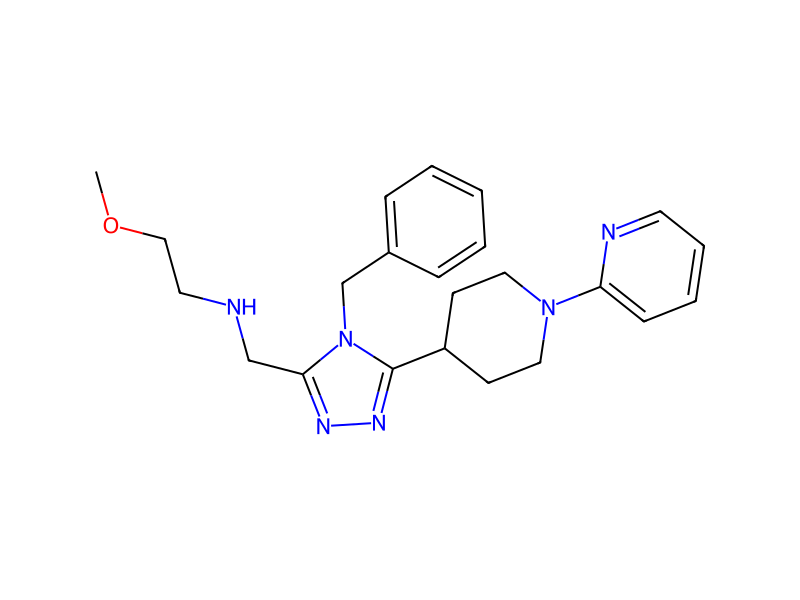
Product 1

Reagents, catalysts & solvents 1

Procedure
The amine from example 43 (50 mg, 0.12 mmol), formaldehyde (37% aq, 40 μl, 0.49 mmol) and sodium triacetoxyborohydride (51 mg, 0.24 mmol) in dichloromethane (1 ml) was stirred vigorously at room temperature for 21 hours. The reaction mixture was partitioned between dichloromethane and aqueous sodium carbonate solution, and the layers separated. The organic phase was dried (MgSO4), evaporated under reduced pressure, and the product triturated from ether to afford the title compound as a white solid.
Workup
- customThe reaction mixture was partitioned between dichloromethane and aqueous sodium carbonate solution
- customthe layers separated
- dry with materialThe organic phase was dried (MgSO4)
- customevaporated under reduced pressure
- customthe product triturated from ether
Sources & evidence
- ORD record
- ord-6f19733c657e4b04b7ed2ac578424390
- Source dataset
- uspto-grants-2006_08
- Patent number
- US07084145B2
Linked notes
Loading…