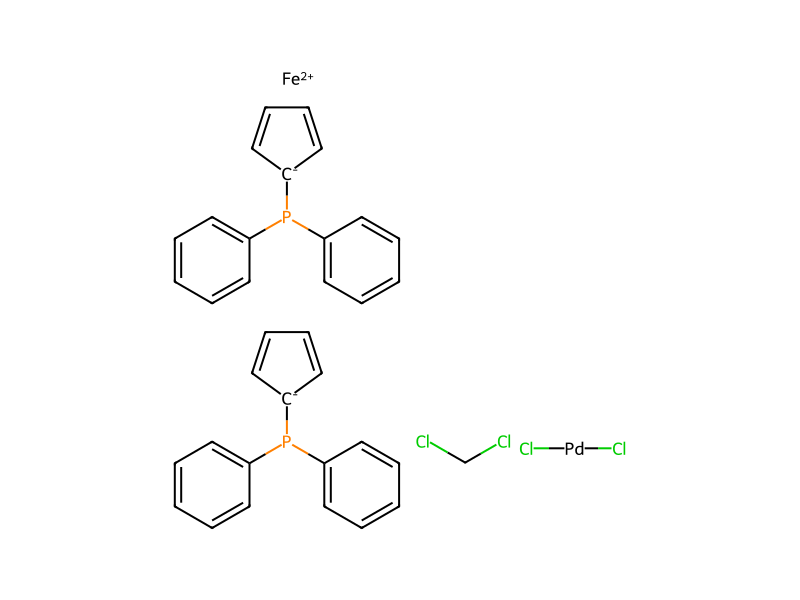
Tetrahydrofuran → Methyl 3-amino-6-(thiazol-2-yl)picolinate
HRID 69964
Reaction equation
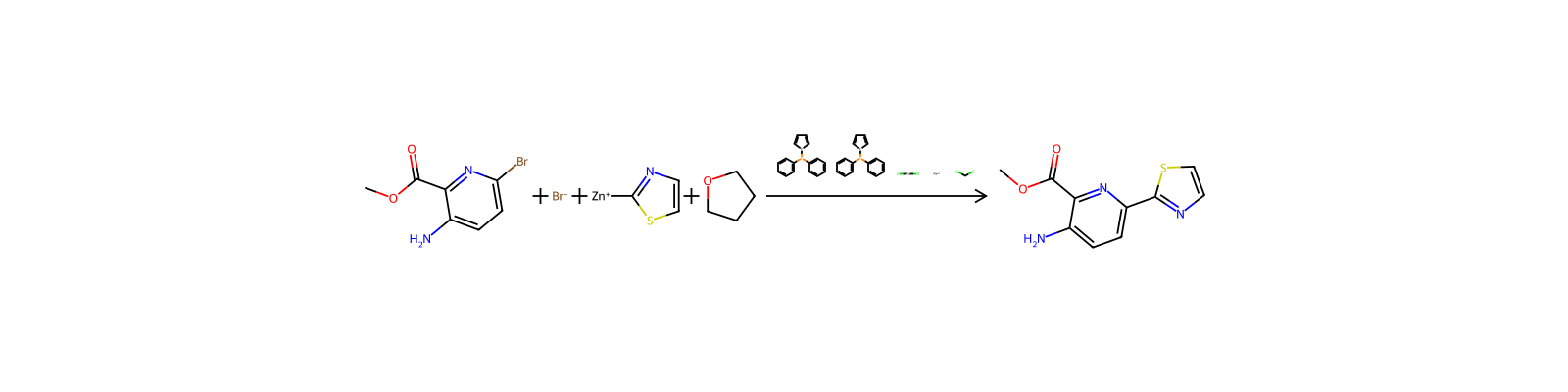
[NH2:1][C:2]1[C:3]([C:9]([O:11][CH3:12])=[O:10])=[N:4][C:5](Br)=[CH:6][CH:7]=1.[Br-].[S:14]1[CH:18]=[CH:17][N:16]=[C:15]1[Zn+].C1COCC1>C1C=CC(P(C2C=CC=CC=2)[C-]2C=CC=C2)=CC=1.C1C=CC(P(C2C=CC=CC=2)[C-]2C=CC=C2)=CC=1.Cl[Pd]Cl.[Fe+2].C(Cl)Cl>[NH2:1][C:2]1[C:3]([C:9]([O:11][CH3:12])=[O:10])=[N:4][C:5]([C:15]2[S:14][CH:18]=[CH:17][N:16]=2)=[CH:6][CH:7]=1Participants
5