Reaction equation

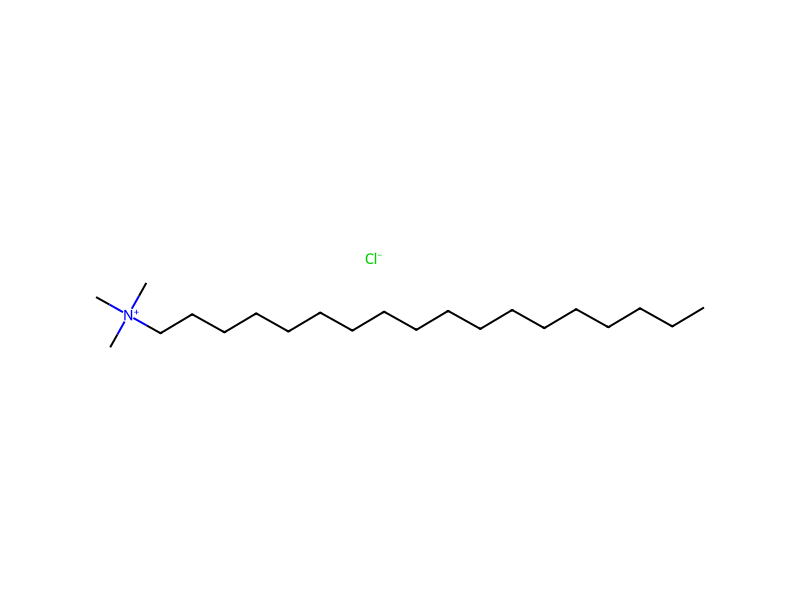
[C:1]([Ag-:3][C:4]#[N:5])#[N:2].[K+].[Cl-].[CH2:8]([N+:26]([CH3:29])([CH3:28])[CH3:27])[CH2:9][CH2:10][CH2:11][CH2:12][CH2:13][CH2:14][CH2:15][CH2:16][CH2:17][CH2:18][CH2:19][CH2:20][CH2:21][CH2:22][CH2:23][CH2:24][CH3:25]>>[C:1]([Ag-:3][C:4]#[N:5])#[N:2].[CH2:8]([N+:26]([CH3:29])([CH3:27])[CH3:28])[CH2:9][CH2:10][CH2:11][CH2:12][CH2:13][CH2:14][CH2:15][CH2:16][CH2:17][CH2:18][CH2:19][CH2:20][CH2:21][CH2:22][CH2:23][CH2:24][CH3:25]Participants
3


Procedure
In a refrigerator, 50 ml of an aqueous solution containing 1 m.mol of potassium dicyano silver (I) and 50 ml of an aqueous solution containing 1 m.mol of stearyl trimethyl ammonium chloride were jointly left standing for one dry. The resultant mixture was filtered to separate the turmed precipitate. The residue of the filtration was dried to form a colorless finely divided dicyano-silver (I)-stearyltrimethylammonium ion pair (Ag-CN18).
Workup
- customdry
- filtrationThe resultant mixture was filtered
- customto separate the turmed precipitate
- filtrationThe residue of the filtration
- customwas dried
Sources & evidence
- ORD record
- ord-71227198890240a4b0b4affbd65d9917
- Source dataset
- uspto-grants-1991_01
- Patent number
- US04981886
Linked notes
Loading…