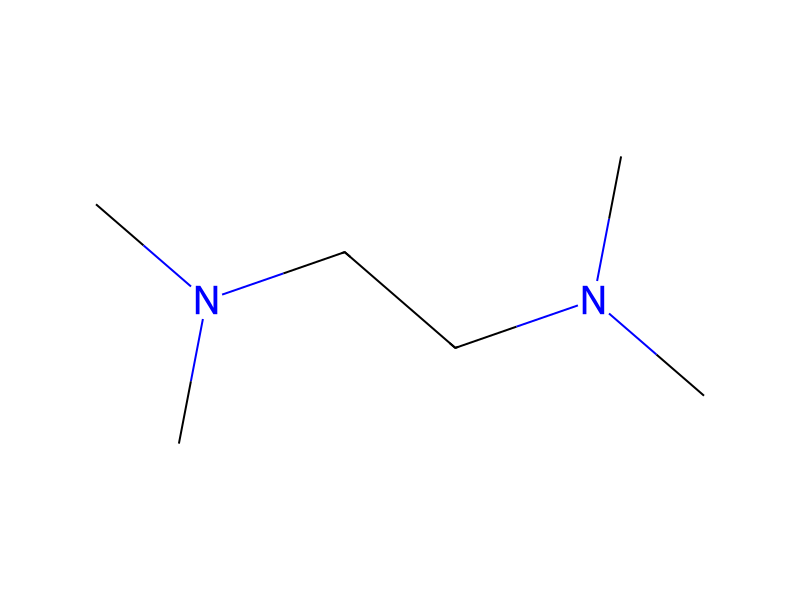
A mixture of 2.7 ml of tetramethylethylenediamine and 2.0 g of zinc-copper couple in 30 ml of tetrahydrofuran was stirred at room temperature, and a solution of 11.3 ml of chlorotrimethylsilane and 950 mg of 6-chlorobicyclo[4.2.0]oct-2-en-7 one, prepared as shown in Preparation 7, in 30 ml of tetrahydrofuran added dropwise. The mixture was stirred overnight at room temperature, then the precipitate filtered off, washed with ether and the combined filtrates evaporated under reduced pressure. The residue was treated with a mixture of diethylether and hexane, the precipitate filtered off and solvent removed from the filtrate under reduced pressure. The residue was dissolved in 10 ml of tetrahydrofuran, cooled to -78° C., 4 ml of 1.5M methyllithium added, stirred at -78° C. for 10 minutes, then at -30° C. for 10 minutes, recooled to -78° C. and a mixture of 5.1 g of methyl iodide and 2.1 ml of hexamethylphosphoramide added. The temperature was allowed to rise to room temperature while stirring. The mixture was poured into water, extracted with ether and the solvent removed from the extract carefully under moderately reduced pressure. The residue was chromatographed on silica gel, eluting with 10% ether in pentane, giving 400 mg of 6-methylbicyclo[4.2.0]oct-2-en-7-one, the compound of formula (8) where Y is hydrogen.