HomeMCPWorkbenchSkills
HomeWorkbenchNotificationsMe
llms.txt · MCP GuidePrivacy Policy · Terms of Service · Supportv1.8.3
  1. Home
  2. /Reaction

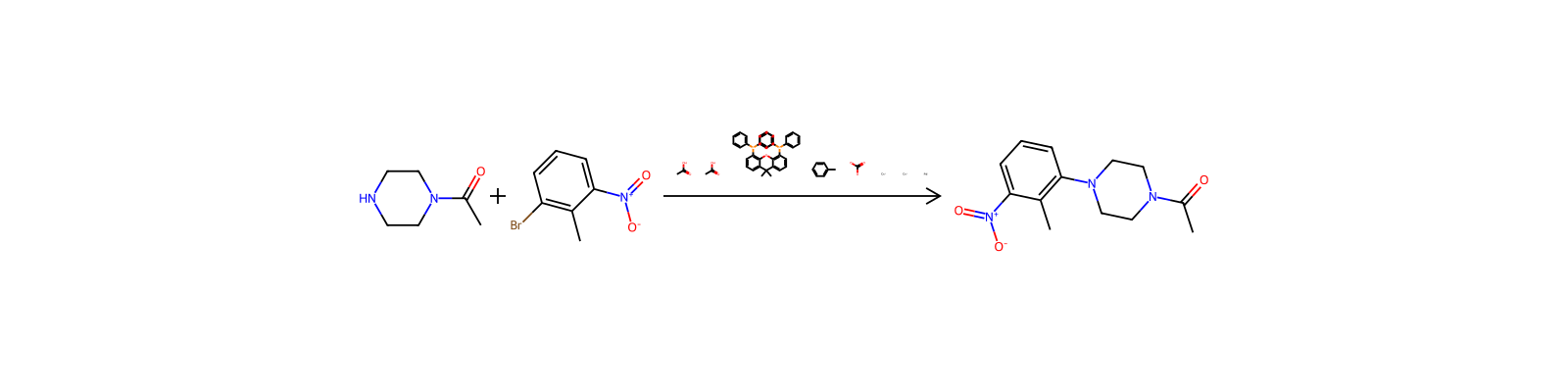
1-Acetylpiperazine → 1-[4-(2-Methyl-3-nitrophenyl)piperazin-1-yl]ethanone

HRID 71
Print

Reaction equation

HRID 71 reaction equation
CC(=O)N1CCNCC1.Cc1c(Br)cccc1[N+](=O)[O-]>CC(=O)O.CC(=O)O.CC1(C)c2cccc(P(c3ccccc3)c3ccccc3)c2Oc2c(P(c3ccccc3)c3ccccc3)cccc21.Cc1ccccc1.O=C([O-])[O-].[Cs+].[Cs+].[Pd]>CC(=O)N1CCN(c2cccc([N+](=O)[O-])c2C)CC1
ParticipantsConditionsProcedureSources & evidenceReaction notes

Participants

7

Reactant 2

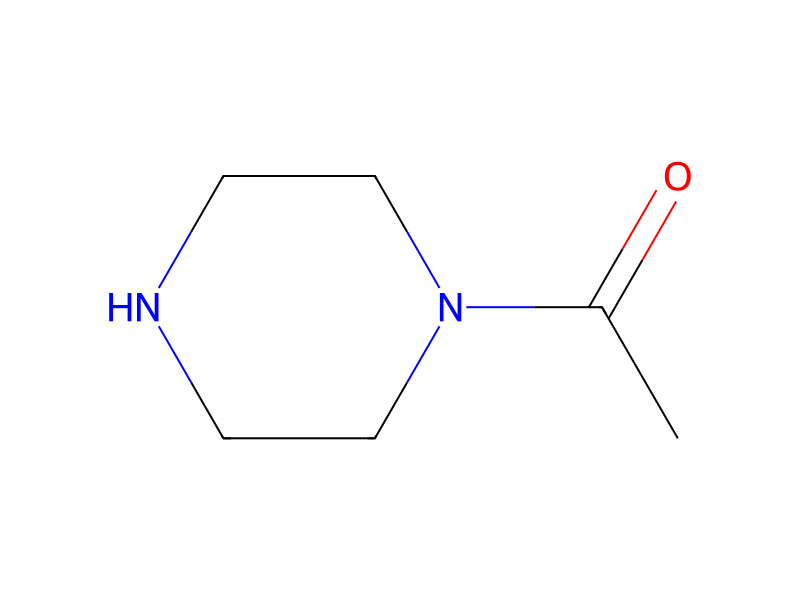
HCID 837951-AcetylpiperazineHCID 1235372-Bromo-6-nitrotoluene

Product 1

HCID 685929771-[4-(2-Methyl-3-nitrophenyl)piperazin-1-yl]ethanoneYield 98.46%

Reagents, catalysts & solvents 4

HCID 10796Cesium carbonateReagentHCID 6360441,1'-(9,9-Dimethyl-9H-xanthene-4,5-diyl)bis(1,1-diphenylphosphine)
Catalyst
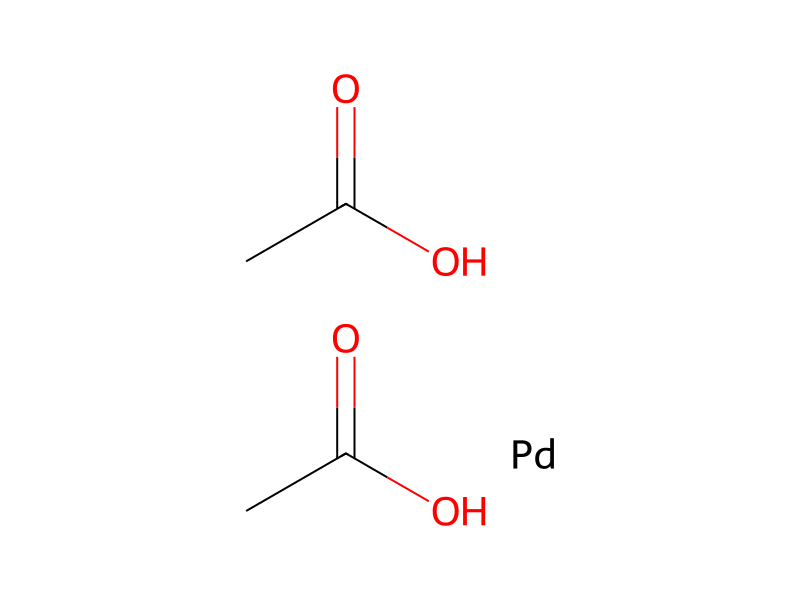
HCID 4144353Palladium (II) acetateCatalyst
HCID 1140TolueneSolvent

Conditions

Temperature
100 °C

Procedure

1-bromo-2-methyl-3-nitrobenzene (500 mg, 2.31 mmol), (9,9-dimethyl-9H-xanthene-4,5-diyl)bis(diphenylphosphine) (201 mg, 0.35 mmol) and cesium carbonate (1131 mg, 3.47 mmol) and diacetoxypalladium (52.0 mg, 0.23 mmol) were dissolved in toluene (10 mL) and sealed into a microwave tube degazed and purged with argon. The reaction was heated to 100 °C, over a period of 12 hours. The reaction mixture was cooled down to room temperature, filtered and the residue was evaporated. The crude product was purified by flash chromatography on silica gel eluting with 0 to 10% methanol in dichloromethane. The solvent was evaporated to dryness to afford 1-(4-(2-methyl-3-nitrophenyl)piperazin-1-yl)ethanone (600 mg, 98 %) as a solid.
Sources & evidence

ORD record
ord-57be3c43ca2f40d482cab5a1bd42b5d5
Source dataset
750 AstraZeneca ELN dataset
Original link
View source

Reaction notes

On this pageParticipantsConditionsProcedureSources & evidenceReaction notes