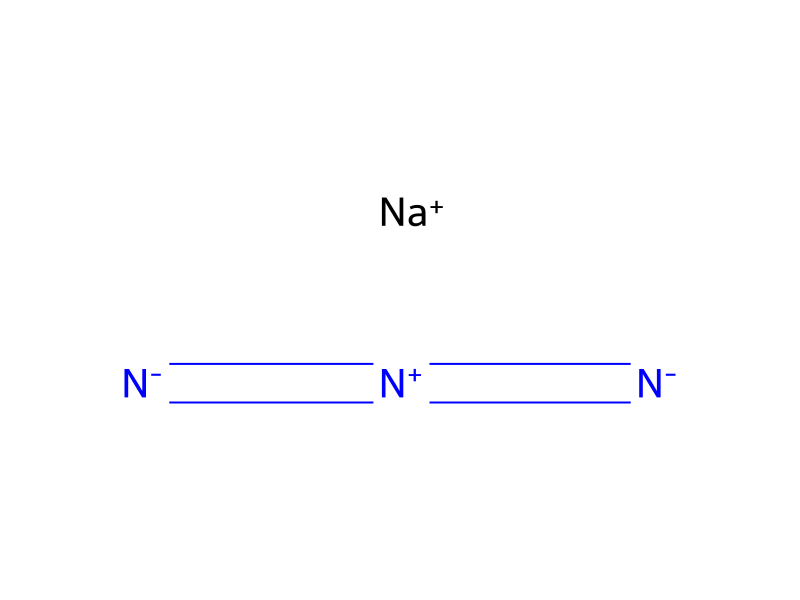
[NH2:1][C:2]1[CH:7]=[CH:6][C:5]([C@@H:8]2[O:13][CH2:12][CH2:11][N:10]([C:14]([O:16][C:17]([CH3:20])([CH3:19])[CH3:18])=[O:15])[CH2:9]2)=[CH:4][CH:3]=1.N([O-])=O.[Na+].[N-:25]=[N+:26]=[N-].[Na+].C(OCC)(=O)C>C(O)(=O)C>[N:1]([C:2]1[CH:7]=[CH:6][C:5]([C@@H:8]2[O:13][CH2:12][CH2:11][N:10]([C:14]([O:16][C:17]([CH3:20])([CH3:19])[CH3:18])=[O:15])[CH2:9]2)=[CH:4][CH:3]=1)=[N+:25]=[N-:26](S)-tert-Butyl 2-(4-aminophenyl)morpholine-4-carboxylate (150 mg, 0.54 mol) was dissolved in 3 M acetic acid, then cooled to 0° C. Sodium nitrite (93 mg, 1.35 mmol) was added and the yellow solution was stirred at 0° C. for 5 min. Then sodium azide (70 mg, 1.08 mmol) was added to the mixture and stirring was continued for 15 min. Ethyl acetate was added to dissolve the precipitate and stirring was continued for 15 min. The organic layer was separated and the aqueous layer was re-extracted with ethyl acetate. The combined organic layers were extracted with 0.1M citric acid solution and with 1M sodium bicarbonate solution subsequently. After drying with MgSO4 the organic layer was evaporated to yield crude (S)-tert-butyl 2-(4-azidophenyl)morpholine-4-carboxylate as an yellow oil (161 mg) which was used for the following cycloaddition reaction.