Reaction equation

[O:1]=[CH:2][C@@H:3]([C@H:5]([C@@H:7]([C@@H:9](CO)[OH:10])[OH:8])[OH:6])[OH:4]>C(O)C>[CH2:2]([OH:1])[C@@H:3]([C@H:5]([C@@H:7]([CH2:9][OH:10])[OH:8])[OH:6])[OH:4].[CH2:9]([OH:10])[C@@H:7]([OH:8])[CH:5]([OH:6])[C@H:3]([OH:4])[CH2:2][OH:1]Participants
4
Reactant 1

Product 2

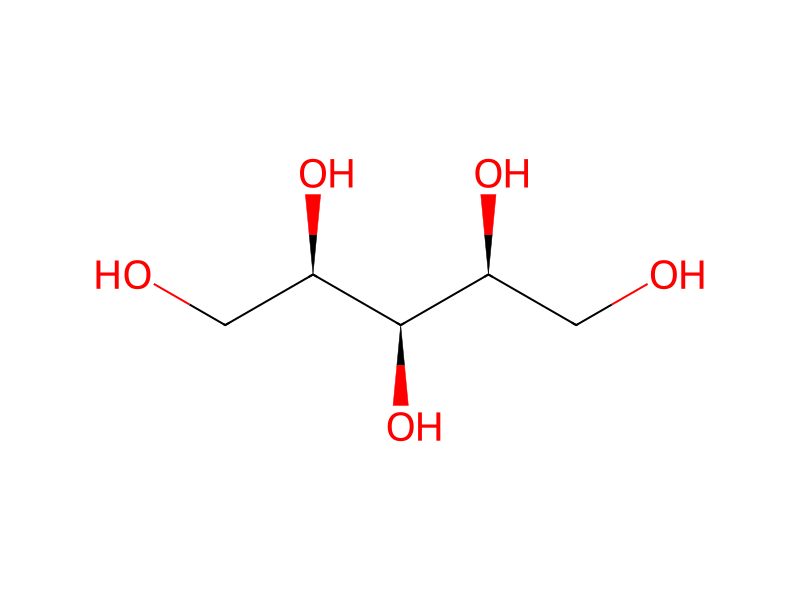
Reagents, catalysts & solvents 1

Procedure
The parent strain 3118 (ura+ version of 3099 prior to marker loopout) and the insertion site control strain 3862 produced 20-21 g/L ethanol in 55 hours, whereas strain 3082 produced 28 g/L in the same period (FIG. 33). In all three strains, glucose was depleted by nine hours. The additional ethanol formation in strain 3082 was correlated with an increased consumption of xylose. Strain 3082 produced less xylitol throughout the fermentation, and higher levels of glycerol and arabitol. Metabolite formation is summarized in Table 9.
Workup
- customwhereas strain 3082 produced 28 g/L in the same period (FIG. 33)
- customThe additional ethanol formation in strain 3082 was correlated with an increased consumption of xylose
Sources & evidence
- ORD record
- ord-2fc6c085b7cc4d6797f0b70ea192c62b
- Source dataset
- uspto-grants-2015_11
- Patent number
- US09181563B2
Linked notes
Loading…