Reaction equation
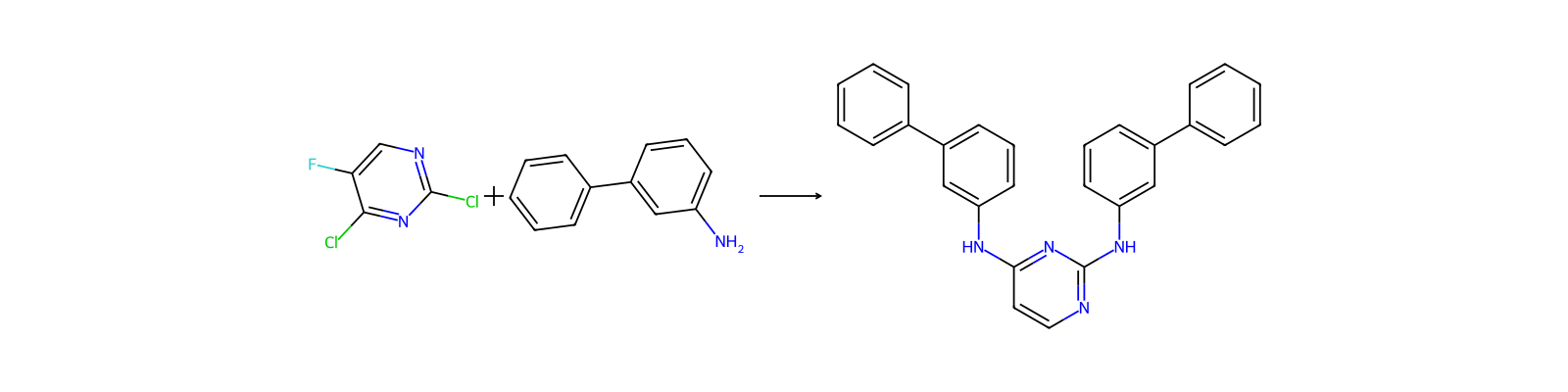
Cl[C:2]1[N:7]=[C:6](Cl)[C:5](F)=[CH:4][N:3]=1.[NH2:10][C:11]1[CH:12]=[C:13]([C:17]2[CH:22]=[CH:21][CH:20]=[CH:19][CH:18]=2)[CH:14]=[CH:15][CH:16]=1>>[C:17]1([C:13]2[CH:12]=[C:11]([NH:10][C:2]3[N:7]=[C:6]([NH:10][C:11]4[CH:16]=[CH:15][CH:14]=[C:13]([C:17]5[CH:18]=[CH:19][CH:20]=[CH:21][CH:22]=5)[CH:12]=4)[CH:5]=[CH:4][N:3]=3)[CH:16]=[CH:15][CH:14]=2)[CH:18]=[CH:19][CH:20]=[CH:21][CH:22]=1Participants
3

Procedure
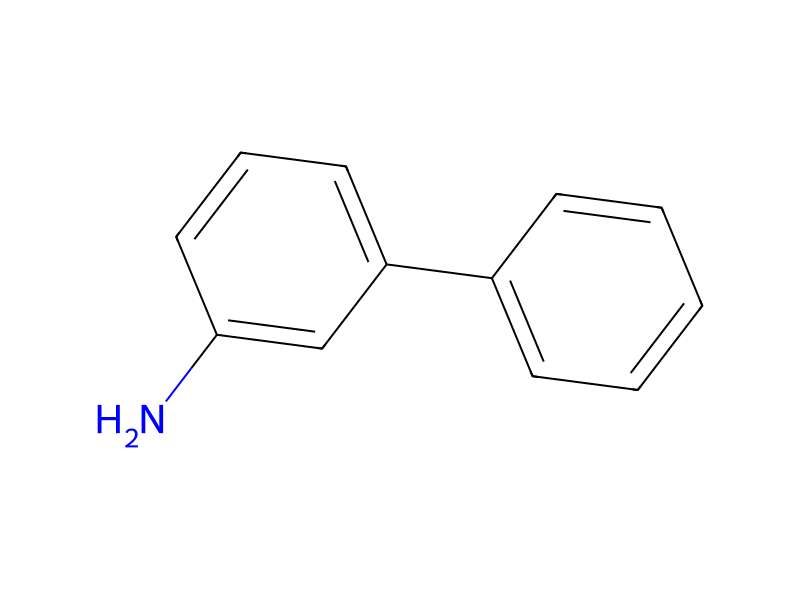
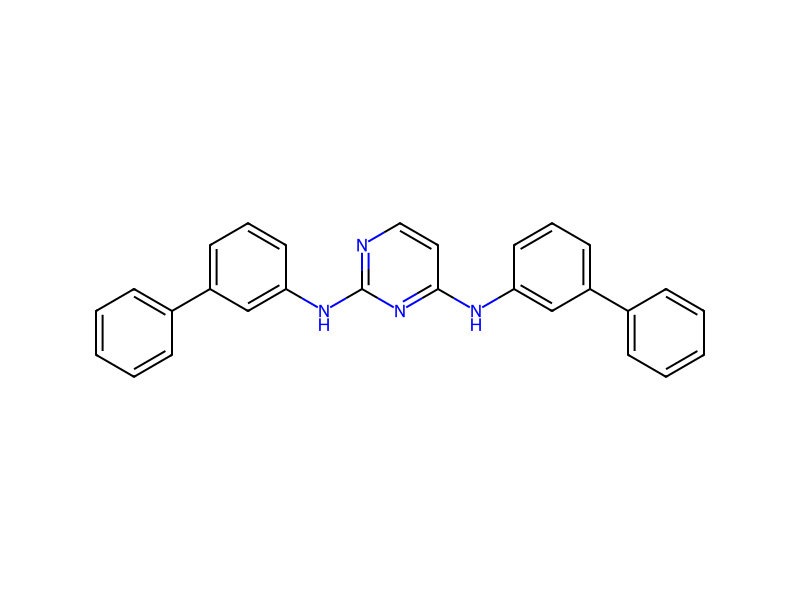
In a like manner to the preparation of N2,N4-bis(3-hydroxyphenyl)-5-fluoro-2,4-pyrimidinediamine, 2,4-dichloro-5-fluoropyrimidine and 3-aminobiphenyl were reacted to provide N2,N4-Bis(3-phenylphenyl)-2,4-pyrimidinediamine. LCMS: purity: 98%; MS (m/e): 415(MH+).
Workup
- customwere reacted
Sources & evidence
- ORD record
- ord-30e71c652c6f468e8f076d7f634a13ba
- Source dataset
- uspto-grants-2014_09
- Patent number
- US08822685B2
Linked notes
Loading…