HomeMCPWorkbenchSkills
HomeWorkbenchNotificationsMe
llms.txt · MCP GuidePrivacy Policy · Terms of Service · Supportv1.8.3
  1. Home
  2. /Reaction

Phenylacetylene → 1-(5-Bromo-2-isopropoxyphenyl)-3-phenylprop-2-yn-1-one

HRID 717674
Print

Reaction equation

HRID 717674 reaction equation
[C:1]1([C:7]#[CH:8])[CH:6]=[CH:5][CH:4]=[CH:3][CH:2]=1.[Br:9][C:10]1[CH:11]=[CH:12][C:13]([O:18][CH:19]([CH3:21])[CH3:20])=[C:14]([CH:17]=1)[CH:15]=[O:16]>C1COCC1.O1CCOCC1.O=[Mn]=O>[Br:9][C:10]1[CH:11]=[CH:12][C:13]([O:18][CH:19]([CH3:21])[CH3:20])=[C:14]([C:15](=[O:16])[C:8]#[C:7][C:1]2[CH:6]=[CH:5][CH:4]=[CH:3][CH:2]=2)[CH:17]=1
ParticipantsProcedureWorkupSources & evidenceReaction notes

Participants

6

Reactant 2

HCID 10821PhenylacetyleneHCID 8199735-Bromo-2-isopropoxybenzaldehyde

Product 1

HCID 666149551-(5-Bromo-2-isopropoxyphenyl)-3-phenylprop-2-yn-1-oneYield 76.5%

Reagents, catalysts & solvents 3

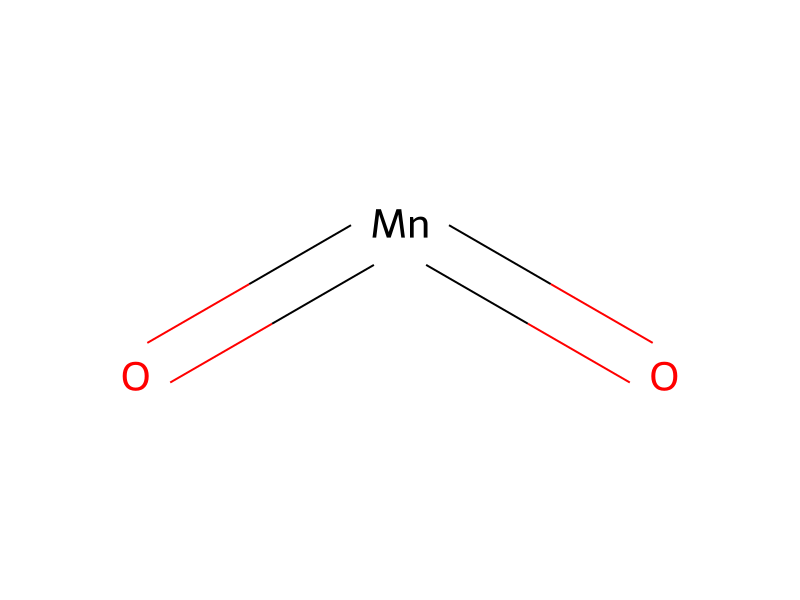
HCID 14801Manganese dioxideCatalystHCID 8028TetrahydrofuranSolvent3×
HCID 31275
1,4-Dioxane
Solvent

Procedure

To a stirred solution of phenyl-acetylene (0.27 ml, 2.46 mmol) in anhydrous THF (3 ml) 2M iPrMgCl in THF (1.25 ml) was added drop wise at 0° C. under N2. After stirring for 15 min, the solution of product of Step A (0.5 g, 2.06 mmol) in anhydrous THF (2 ml) was added drop wise and the mixture was stirred for 1 h at room temperature. The mixture was quenched with saturated NH4Cl and extracted with EtOAc (50 ml). The organic layer was washed with H2O, dried over MgSO4. and filtered. The filtrate was evaporated to dryness to give a creamy paste (0.59 g; 83%). [1H-NMR (CDCl3) 7.68 (d, 1H, J=2.49 Hz); 7.46-7.43 (m, 2H); 7.36 (dd, 1H, J=8.75, 2.54 Hz); 7.32-7.28 (m, 3H); 6.79 (d, 1H, J=6.77 Hz); 5.79 (d, 1H, J=5.23 Hz); 4.64-4.58 (m, 1H); 3.13 (d, 1H, J=5.91 Hz); 1.37 (d, 6H)]. This was dissolved in dioxane (10 ml) and MnO2 (1 g) was added to it. The resulting suspension was stirred for 6 h at reflux, then filtered through Celite and the solvent was evaporated to dryness to give the title compound (0.54 g, 76.5%), as light yellow paste. 1H-NMR (CDCl3) 8.00 (d, 1H, J=2.61 Hz); 7.61-7.52 (m, 3H); 7.44-7.35 (m, 3H); 6.88 (d, 1H, J=8.91 Hz); 4.68-4.60 (m, 1H); 1.36 (d, 6H).

Workup

  1. stirringthe mixture was stirred for 1 h at room temperature
  2. customThe mixture was quenched with saturated NH4Cl
  3. extractionextracted with EtOAc (50 ml)
  4. washThe organic layer was washed with H2O
  5. dry with materialdried over MgSO4
  6. filtrationand filtered
  7. customThe filtrate was evaporated to dryness
  8. customto give a creamy paste (0.59 g; 83%)
  9. stirringThe resulting suspension was stirred for 6 h
  10. temperatureat reflux
  11. filtrationfiltered through Celite
  12. customthe solvent was evaporated to dryness

Sources & evidence

ORD record
ord-e5929431dfe04fe4a9d37a8b12db66b2
Source dataset
uspto-grants-2015_11
DOI
10.6084/m9.figshare.5104873.v1
Patent number
US09193716B2

Reaction notes

On this pageParticipantsProcedureWorkupSources & evidenceReaction notes